
PHOTO
The world is waiting for a Ukrainian counteroffensive in the east of the country as the ground becomes dry enough to support the movement of heavy equipment.
Neither the Ukrainians nor the Russians have made much ground over the past six months. The war on the ground has become a stalemate.
By contrast, the advantage in the marketing war clearly lies with the Ukrainians. Despite being heavily outnumbered, and with their country, industrial base and economy in ruins, the Ukrainian leadership and its media advisers have quite remarkably managed to create the belief within Ukraine and the wider world that a complete Ukrainian victory in this war is highly likely.
The coming offensive is expected to go a long way towards delivering that victory, but now that the offensive is imminent, there appears to be a hesitancy and a sense of nervousness about the Ukrainian leadership and its backers.
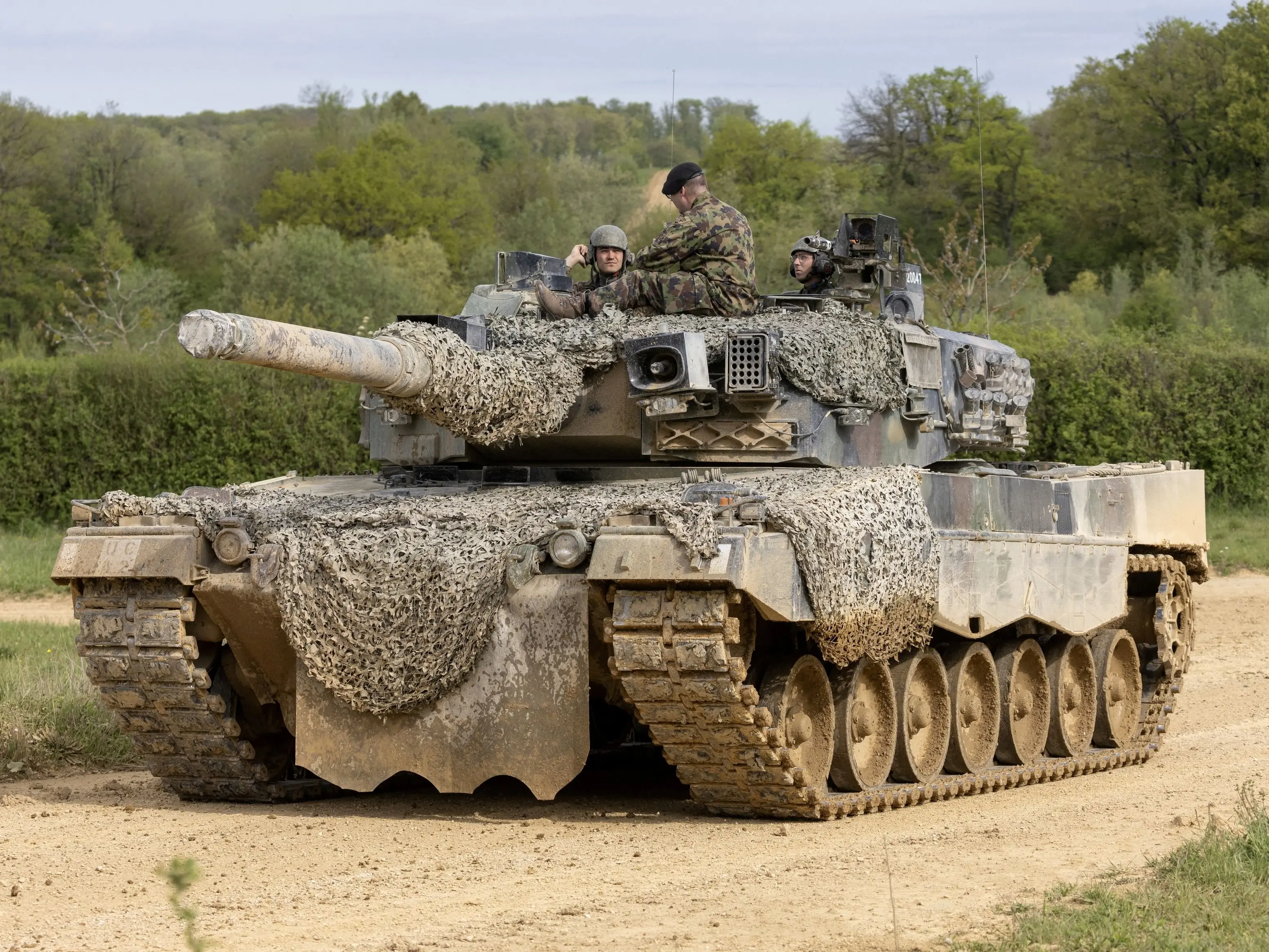
This may well be related to one specific aspect of the Ukrainian-Western marketing campaign. This is the promotion of Western tanks, especially the German Leopard II, as war-winning weapons that only have to turn up in order to deliver the inevitable victory.
Recently the Ukrainian marketing campaign has been built around the "Mighty Western Tank" brand with almost saturation coverage in all media of Leopard IIs, Challenger IIs and Abrams M1 tank images, along with brand slogans such as "Free the Leopards!" and graphic descriptions of what the Ukrainians are going to do to the Russians with them.
This has been great for Ukrainian morale and drumming up overseas support.
However, it comes at a price because any brand eventually has to deliver the goods. If it fails to do so, there is usually serious trouble in store.
The reality is these Western tanks may only enjoy a marginal advantage over the Russian T90 and the T14 Armata in the combat conditions of the Ukraine theatre. They are also simply not going to be present in sufficient numbers to make much more than a local tactical impact.
The Kremlin spokesman Dmitry Peskov noted that Western tanks "will burn like all the rest", and he is probably right. It is the role of weapons of war to destroy, and their fate to be destroyed in their turn.
However, if a weapon has had a political brand built around it, then it is more than just the weapon that gets destroyed when it goes up in flames. If these Western tanks do indeed burn in the Donbas, and if they are thus implicated in any failure to deliver the expected victory, then the political and social significance of the failure of the Mighty Western Tank may go well beyond the immediate strategic significance of that event.
The implosion of the Mighty Western Tank brand could trigger a crisis of Ukrainian morale and a similar crisis in western support of the Ukrainian war effort and its objective of complete victory. You may be sure that the Russians will also be aware of this attractive opportunity, and will make western tanks a priority target for their weapons and cameras.
By far the best historical example of a catastrophic branded weapon failure of this type is the destruction of the British battlecruiser HMS Hood by the German battleship Bismarck in 1941.
The Hood emerged in 1920 as the largest warship in the world, and it retained this status until 1940. For two decades the Royal Navy hid its own weakness behind the ever-growing brand image of "The Mighty Hood".
She was worked hard as she sailed round the oceans representing the British Empire. She was not modernised; such was the pressure placed upon her alone. Consequently, when she was confronted by the much more modern and powerful Bismarck in the North Atlantic on May 241941, the Mighty Hood brand status in no way reflected the actual capabilities of the ship.
Bismarck disposed of HMS Hood in under three minutes. Hood not only took 1500 members of her crew down with her: she also took the image and reputation of the British Empire, which had been built around her brand.
Only the extremely fortuitous elimination of the Bismarck three days later prevented the Third Reich from exploiting it to its full and possibly decisive extent.
The strategic and political marketing contexts of the fragile Mighty Hood and the equally fragile Mighty Western Tank brands are uncannily similar.
Great Britain was saved from the devastating consequences of a brand implosion by a combination of great personal courage and a good helping of blind luck. The Ukrainians may not be so fortunate.
The Russians have a solid track record for springing very unpleasant military surprises on those who blindly assume they have a God-given technological edge over them.
So, as the Ukrainian leadership reviews the current situation, it may well have good cause for jitters.
— Robert Hamlin is a senior lecturer in the department of marketing at the University of Otago.