
PHOTO
Last Friday was International Women’s Day.
"Why do you need a special women’s day? We don’t get a men’s day," you might hear some men say.
Honestly, in my case I agree. I don’t need a special day; my opportunities are equal to that of men: in fact it’s probably swung the other way. There are other communities in New Zealand and around the world where women are still at a massive disadvantage to men, and so personally I think we should use International Women’s Day as a platform to promote their causes, not our own.
But let’s look at the positives. If the situation is now that there is too much focus on women, then we’ve come a long way. If it’s at the expense of men, then we’ve gone too far.
I got a group of girlfriends together for the annual Women You Can Bank On (WYCBO) event at the Dunedin Town Hall last Wednesday. I go every year: one year I even spoke at it. WYCBO is an appropriate forum to talk about women’s issues such as working through menopause, domestic violence and abysmal statistics in female-backed venture funding and for sharing inspiring stories of growth.

But are some of these "empowering women" events actually doing more damage than good? I tend to avoid any "women in industry" events and awards.
Personally, I think they undermine attempts at equality — if women make up the minority of a workplace or industry, they’ll achieve nothing by only clustering together. We need to infiltrate the 80% of the rest of the industry and the 95% that make up the decision-makers.
I won the Otago Business Leader of the Year Award last year. Even my mum initially congratulated me on being the Otago Business "Woman" of the Year. Not leader, woman — there’s such a plethora of special women’s-only categories, people just assume it was a women’s thing. I’d rather take on 100% of the population, not just 50%, thanks very much.
Similarly, directorships. If I am appointed to a board, I want to know I’m there because I’m the best person for the job, not to tick a "female quota" box.
And this isn’t men’s fault. A lot of it we’ve done to ourselves.
We’ve all been programmed into gender roles and identities. These have been handed down over generations and it’s going to take several more to come right — or longer, if we continue this rhetoric of women "taking back" power and drive our young men to resent us.
At 42 in my lifetime no men have "taken my power", but for a while there it’s fair to say I didn’t "own" my own power. The concept of taking back power screams of a zero-sum game, where for women to do better it comes at the cost of men. That’s just not right.
Last year Master Fin, when he was 7, came home one day and asked me why I wasn’t in the kitchen like "mums were supposed to be". He obviously plays with some kids at school whose families are perpetuating the gender stereotypes — and at risk of being unpopular, ladies we have a big role to play in that.
I don’t recall Mum playing with us kids that much. She did the housework, fed us and made sure we got to All The Things. But it was Dad who got us outside for games of bullrush, backyard cricket, swimming and Playstation battles on wet days.
Disclaimer: Mum at 60+ is totally different from Mum at 30. I think you’d be hard-pressed to find a more outgoing grandmother, but I don’t think Mum found that until we’d all left home. When we were at home, her primary role was to mother.
I’ve observed that a lot of the time as women we complain about carrying the domestic load and we resent that. We project that on to our partners and our male colleagues, believing that they "have it easier".
Our kids notice this too. We model our behaviour to them. What do you want your girls and boys growing up to believe — that dishes are more important than playing and engaging together? That dads are more fun than mums? That girls don’t do outdoorsy stuff? That men and women are so different?
I was coming back from a run and swim at the beach on Sunday night and while scrambling up the sandbank in my togs to retrieve my rogue dog I bumped into another local mum. She couldn’t believe I’d been for a swim on my own. Why would a fellow woman think this is so unusual in this day and age?
Maybe this programming drives women’s behaviour at work too. Making women less likely to get involved in the events, participate in the golf days or corporate challenges, or simply go for a drink after work.
As women we need to take a leaf out of Sheryl Sandberg’s book and ‘lean in’ to life more – stop worrying about society’s domestic gender programming and build our confidence. We need to find a way to be part of the whole conversation, to share the room and build better working relationships with men.
Ultimately, build your confidence so you can put it to work. And therein lies a clue to finding my point: confidence. If we women had more confidence, we wouldn’t need to hide at these separate events. We could share the room and build better working relationships with men.
Because if 8-year-old boys are growing up in this culture we now have of separating women out, at the expense of men, then we’re going to come full circle — we’re going to raise a generation of boys who have been judged and discriminated against because they’re boys, and who resent women because of the unfairness of it all.
So let’s think about it ladies. If we’re having events to talk about menopause, I’m all for it — pretty sure the boys don’t want to be part of that conversation. But if we’re simply separating women out in the workplace to the exclusion of men, then instead how can we make a forum for all of us to work better together?
In fact I’m speaking at an upcoming women’s event — Elevate: Mind + Business Journeys. I think I’ll flesh this topic out into the subject of my speech.
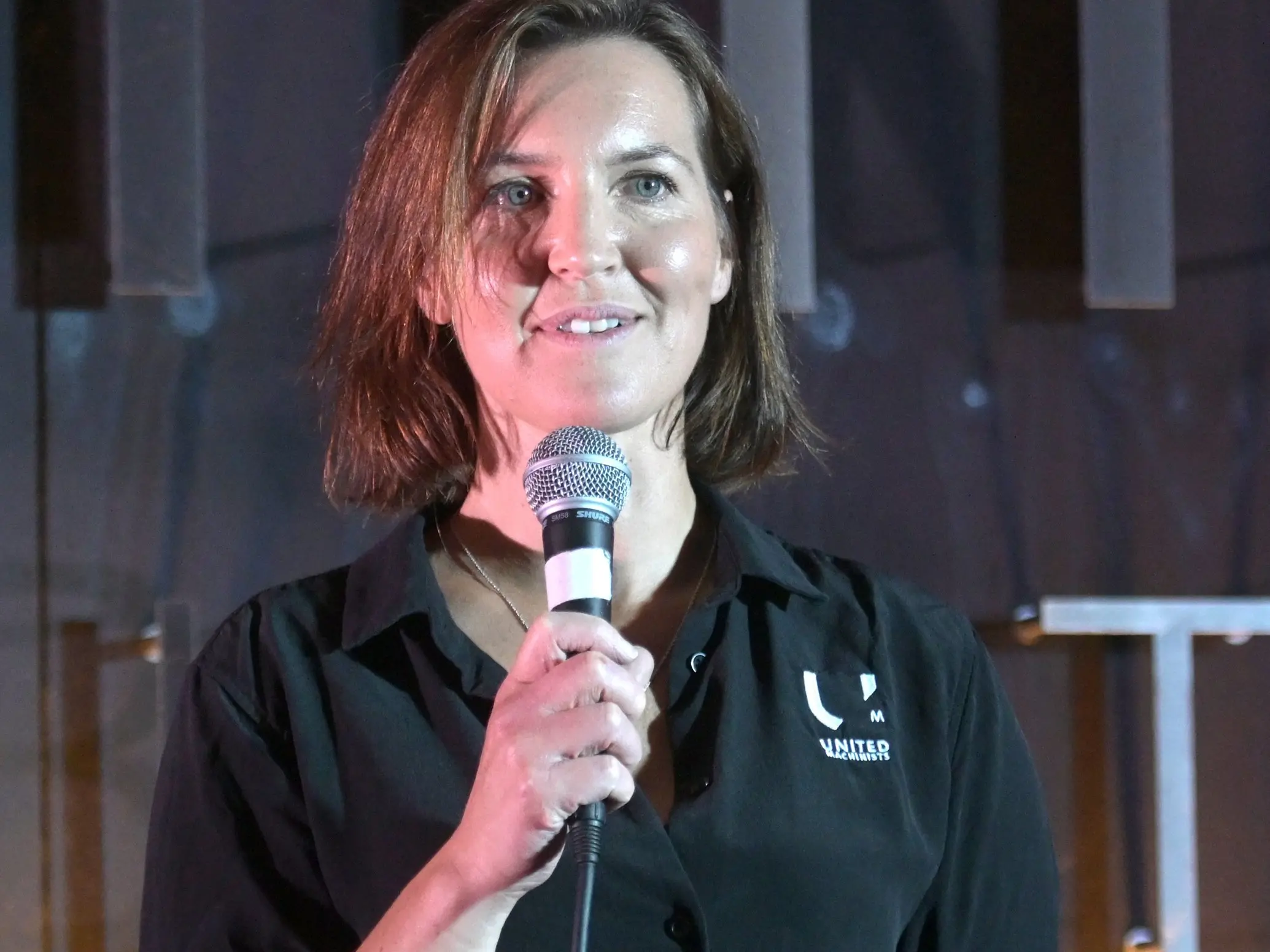
- Sarah Ramsay is the chief executive of United Machinists.