
PHOTO
Gold fever is set to grip Central Otago this month, as it is transformed into a battleground for about 200 of the world’s elite gold-panners.
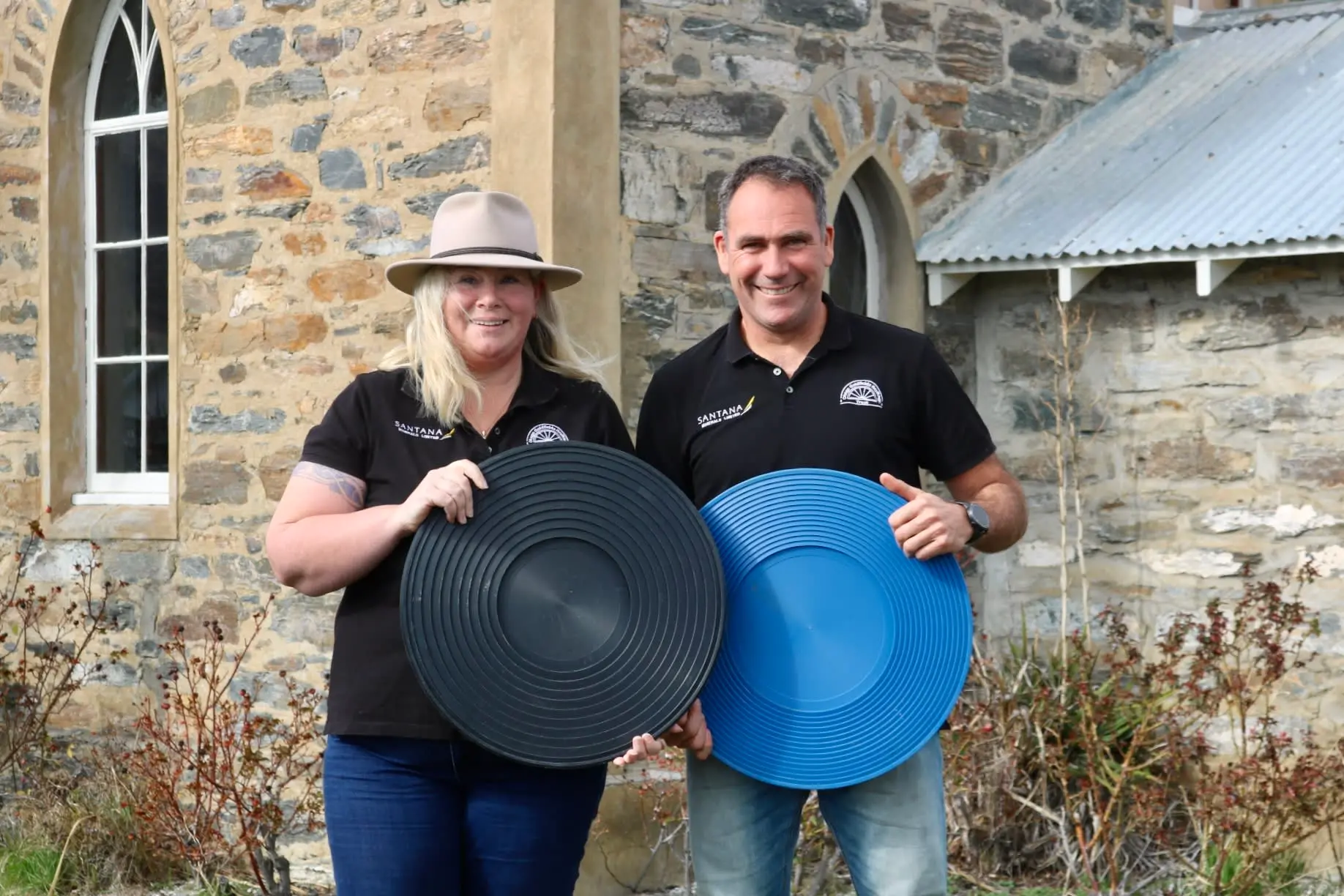
The World Gold Panning Championship is being held in Cromwell from September 26 — a multi-day event where competitors face off in troughs of water, racing to sift and swirl their way to specks of gold.
Event manager Terry Davis said the rules of speed-panning were strict.
Each competitor would receive a 16kg bucket of clean, gold-free gravel, which had been seeded with a top-secret number of local gold flakes between 1mm and 1.5mm.
He said the fastest panners could retrieve all of them in under a minute.
“They’re racing to be the fastest to wash all the dirt. That means get through the whole bucket of gravel and just be left with their gold, which they then have to collect and put in a vial.
“Once you’ve done all that, you put the lid on, click the stop button.
“For every flake you’ve missed, you get a three-minute penalty added,” he said.
Among the competitors will be Phoebe Ide, 19, New Zealand’s reigning gold-panning champion.
Once the timer started, she said her focus was absolute.
“Nothing’s going through my head for that minute that I’m panning.
“I’m just like staring down and trying to find the gold,” she said.
Ms Ide was introduced to panning by her grandparents before she became hooked on competitions a few years ago.
She said she was looking forward to seeing how she compared on the world stage.
“My goal at the competitions in New Zealand is generally just to beat my dad or my granddad or my auntie.
“I guess that’s still my goal but just on a larger scale and hopefully try to win something like my granddad did back when he competed in the worlds.
“Another goal is to try and top him,” she said.
David Gatward-Ferguson, a three-time gold-panning champion, said quick, accurate gold extraction was all about understanding the science.
“The first thing is Archimedes’ principle — density.
“Gold’s the densest thing around here and then the second one, water, negates friction.
“So you give it a good shake in the water and the gold drops straight to the bottom,” he said.
His wife Amanda Gatward-Ferguson had previously taken out second place in the world ‘’Panning with an Unusual Tool’’ competition in Scotland.
She said panning had taken her family around the globe.
“We’ve attended three or four different championships so it’s quite nice actually. We’ve been to Spain.
“We’ve been to Czech Republic.
“We’ve been to the [United] States,” she said.
New Zealand was just a tiny part of the world gold panning scene, she said.
“There are really only two or three families that compete every year.
“To get around 150 international panners down here from all over the place is quite exciting.”
The event will include competitors from Canada, South Africa, the Czech Republic, Poland, Papua New Guinea and beyond, with organisers hoping to see at least 50 New Zealanders take part.
Event co-ordinator Odette Hopgood said the Otago Goldfields Heritage Trust launched a huge, multi-year campaign for the championship.
The World Gold Panning Association had to be convinced that Central Otago was a suitable destination, she said.
“I was very pleasantly surprised when I was sitting at my kitchen table in 2019 during lockdown at 3am talking to the World Gold Panning Association, which was 21 countries live streaming and when they did the vote it was a resounding roar of ‘yes, we’re going to New Zealand in 2026’.”
Ms Hopgood said she hoped the international visitors would take away a deep appreciation for Central Otago’s rugged environment and mining history.
The week-long championship will feature an opening parade, held in conjunction with the Alexandra Blossom Festival, markets, a kapa haka performance, a hoedown and novelty events like blindfolded panning.
Winning the hosting rights was one thing but finding 20 tonnes of competition-grade, gold-free gravel was another, Mr Davis said.
“A big problem we have in Central Otago is if we get local gravel, there’s blimmin’ flecks of gold everywhere.
“As a competition organiser, it’s a real problem,” he said.