
PHOTO
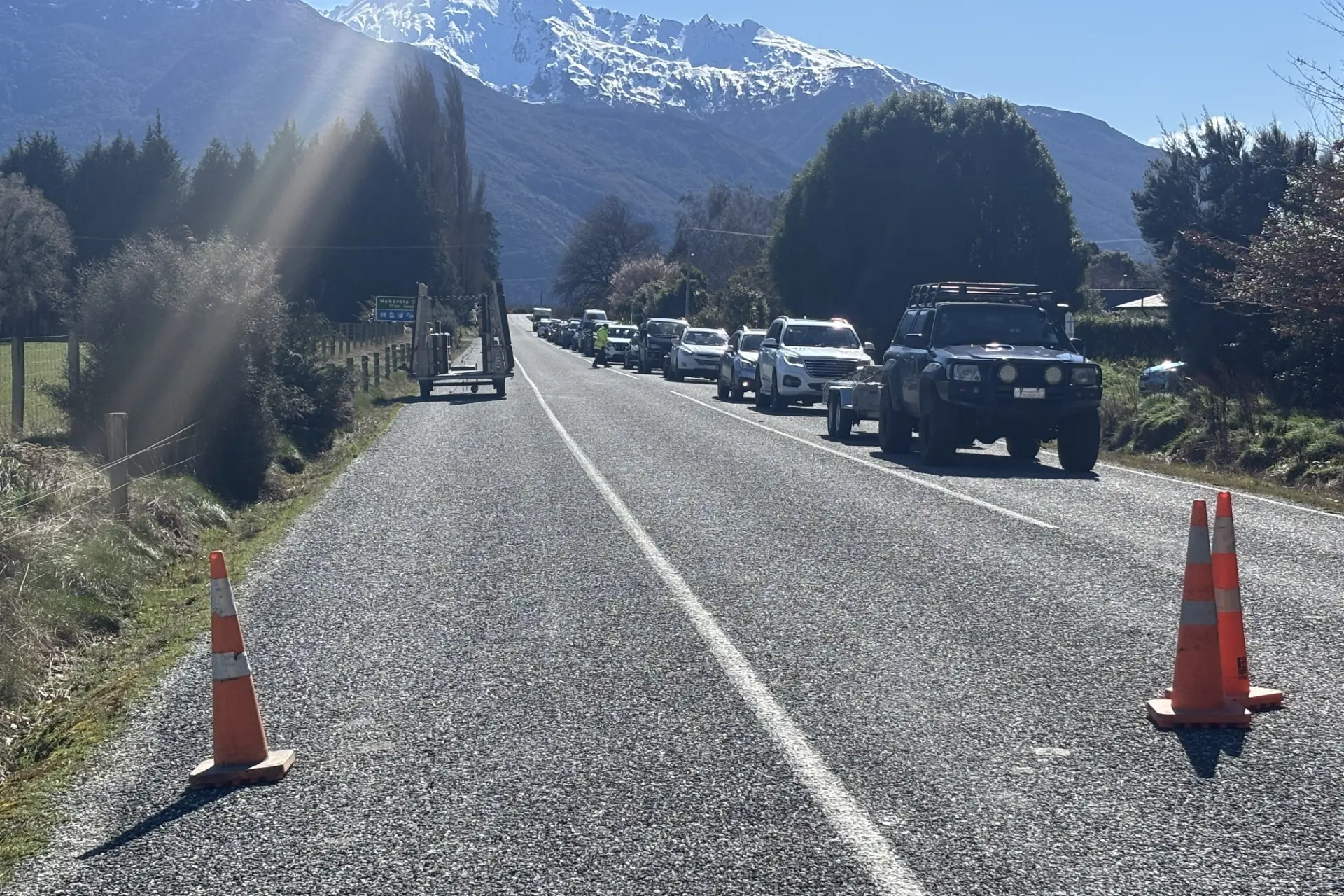
Escorted convoys along a damaged section of State Highway 6 are under way, but could be paused due to more rain forecast for Wednesday.
The daily convoys between Makarora and the Isthmus Peak Track car park (north of Lake Hāwea township) started on Tuesday, with dozens of vehicles taking part in each run, the NZ Transport Agency Waka Kotahi (NZTA) says.
“Feedback received so far has been that people have appreciated the opportunity to get their children back to school, to get back to their workplaces, or to travel to their favourite destinations for the start of the whitebaiting season,” a spokesman said in a statement.
The section of highway between Makarora and Lake Hāwea township, near Wānaka, has been closed since Friday after heavy rain caused multiple slips that blocked roads and bridges.
Progress continues with clearing of rock and other debris, and assessments of the infrastructure for any further work needed, ahead of a full reopening, the spokesman said.
“A concern for NZTA and its roading crews is the potential for further rain or snow to trigger more slips on sodden hillsides where material may already be unstable.”
MetService’s weather forecast for the Southern Lakes region on Wednesday is for showers and snow flurries, along with potentially gale-force winds.
People interested in joining the convoys should stay up to date on the latest notifications, including any cancellations, at NZTA’s Journey Planner site.
The scheduled departure and return times for the convoys are:
- Convoy 1 departs Makarora village heading south at 7.15am; then returns north at 8am from Isthmus Peak Track car park.
- Convoy 2 departs Isthmus Peak Track car park heading north at 12pm; then returns south from Makarora village at 12.45pm.
- Convoy 3 departs Isthmus Peak Track car park heading north at 5.30pm; then returns south from Makarora Village at 6.15pm.
Only vehicles weighing up to 21 tonnes can join the convoys due to a temporary bridge in use.
Road users who do join were asked to travel in a reasonably tight formation so that gaps between vehicles are at a safe distance, but not too large, the spokesman said.
- Allied Media