
PHOTO
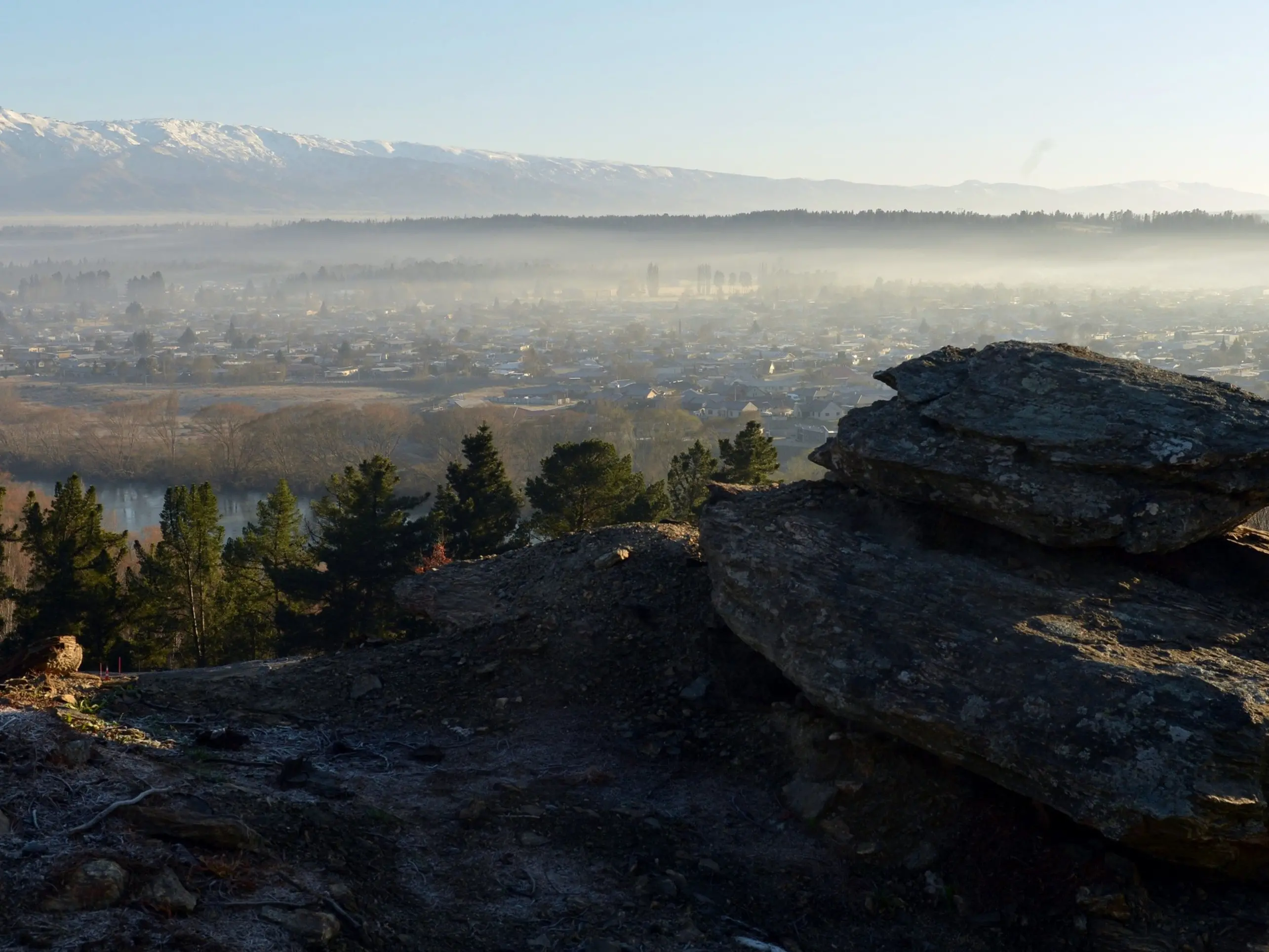
A ban on woodburners might be needed to improve health in smoky Otago towns, the Southern District Health Board (SDHB) says.
Read more:
SDHB medical officer of health Prof John Eastwood acknowledged reducing wood smoke pollution must not come at the cost of warm homes.
However, he said the Otago Regional Council should consider banning solid-fuel burners in towns where residents could be inhaling dangerous smoke particles.
In towns such as Arrowtown, Cromwell, Alexandra and Milton, high wood smoke concentrations in the air, evident in winter months, meant residents could be inhaling health-damaging pollutants, including several carcinogenic compounds, Prof Eastwood said.
People who were routinely exposed to high wood smoke concentrations were at increased risk of poor health, he said.
He confirmed the SDHB was asking the council, though its submission to the council’s overarching regional policy statement, to consider ‘‘the option to ban solid fuel burners altogether’’.
Earlier this year, SDHB public health policy and strategy team leader Tom Scott called for the same at the council’s long-term plan hearings.
He said if the regional council was to look at phasing out solid fuel burning for home heating, the council would need to ensure a reliable electricity supply was available to those communities.
But when Cr Michael Laws asked Mr Scott if he was aware low-emission burners did not significantly lower the concentrations of dangerous smoke particles in the air, he said that was the reason the SDHB wanted consideration of a total ban.
Council policy and planning manager Anita Dawe said the proposed regional policy statement did not include any provisions that would ban home heating with fires.
She said a relevant policy in the proposed regional policy statement required phasing out household solid fuel burners that did not comply with the standards set in the national environmental standards for air quality.
The regional policy statement sets the direction for management of Otago’s environment; it does not contain rules.
Instead, it establishes the framework for regional and district plans, which set the rules.
Ms Dawe said how non-compliant burners were phased out would be determined through the council’s air plan review.
After regional policy statement submissions closed next month, there would be a period for further submissions, at present planned for October.
Then the proposed regional policy statement would go through the new freshwater planning process.
A public hearing of submissions on the regional policy statement would be conducted by a freshwater hearings panel.
Following its deliberations, the panel would make recommendations to the council.
The new regional policy statement was expected to be made operative in the first half of 2023, she said.