PHOTO
"Take a light."
That is the prime piece of advice offered to trampers, hunters and mountaineers by the man soon to be in charge of searching for those who get lost or injured in the Southern Lakes region.
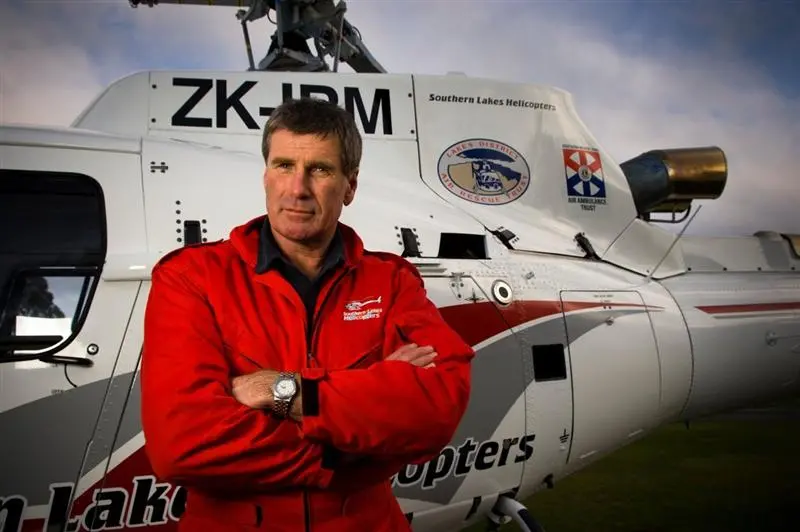
From January 1, helicopter operator Richard Hayes, of Te Anau, will run all airborne search and rescue operations for the Lakes District Air Rescue Trust.
So, for those who are lost, it is likely to be one of five Squirrel helicopters operated by his Heliworks or Southern Lakes Helicopter companies they hear coming to the rescue.
Mr Hayes says because the helicopters are equipped with night-vision goggles during a search, shining a light at night will ensure a swifter rescue.
"People need to understand when they go into the remote environment, to help us to help them they do need to think outside the square and take some form of light source."
Mr Hayes says this applies equally to those carrying an emergency beacon.
"The outback fraternity really need to think, 'If I need to be found, what's going to make it easier for the searchers to find us?' And that is a light source."
An LED light or a fire are two options although Mr Hayes says night-vision goggles can pick up even a candle from 8km.
People could also signal helicopters with the flash of a digital camera.
Mr Hayes says sometimes after a fruitless daytime search, rescue crews will do a run just after dark.
"And there they go. And they can be in the deepest, darkest bush of Fiordland, even with just a little tiny fire going, and we can see them. Unbelievable."
Night-vision goggles have become a standard requirement for rescue helicopters across New Zealand, although it is only seven years since he and Graeme Gale, from Dunedin-based Helicopters Otago, first introduced them here.
Mr Hayes says the night-vision goggles provide a "quantum leap forward" and he would not contemplate going out on a search at night without them.
The main problem with night-vision goggles is the expense.
Each set costs $US20,000 - Mr Hayes has 10 sets - but it costs another $50,000 or more to modify a helicopter's cockpit and external lights to make them compatible - from altimeter and radar to cellphone.