
PHOTO
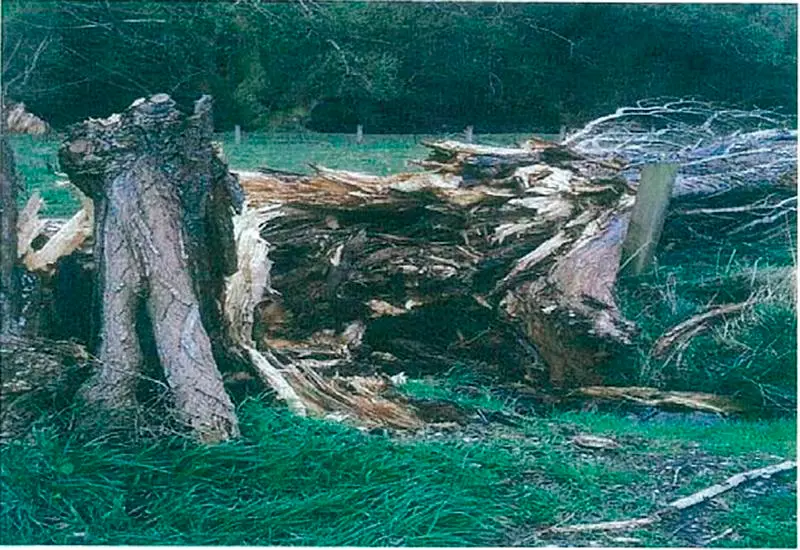
An arborist's call to fell old Lombardy poplars in the Lawrence Picnic Reserve has been supported by the Lawrence-Tuapeka Community Board.
Shortly before the board's meeting last week, members and council staff looked at the poplars at the reserve on the corner of Peel St and the Beaumont Highway.
A report by Clutha District Council staff said in 2009 the council's consulting arborist David Glenn identified poplar trees in the Lawrence Picnic Reserve to be removed due to decay in the base of the trunks.
Mr Glenn hoped at that time that the remaining large poplars could be saved, but a re-inspection in December revealed the trees were decaying.
In a letter to the council in December, Mr Glenn said the last two poplars had fallen because decay in the base of trunk had weakened them.
He said initial inspections several years ago identified the problem, and the tops of the trees had been trimmed.
The two fallen trees had decayed to such an extent that they fell under ''modest weather conditions''.
Two fungi caused the decay - armalleria or honey fungus (a root rot fungus) and a ganoderma (heartwood decay fungus). Mr Glenn said the honey fungus caused more vigorous decay than the ganoderma and was probably the principle reason for the trees' failure.
He advocated the council consider felling the group of poplars as he could not be certain how far the honey fungus had spread.
The fungus spreads from root to root, through natural grafts of the roots underground.
The board supported a recommendation that the remaining poplars be felled and that the area is replanted with a different species of tree.
Council staff advised the board the condition of the remaining poplars on the Beaumont Highway would need to be investigated.