
PHOTO
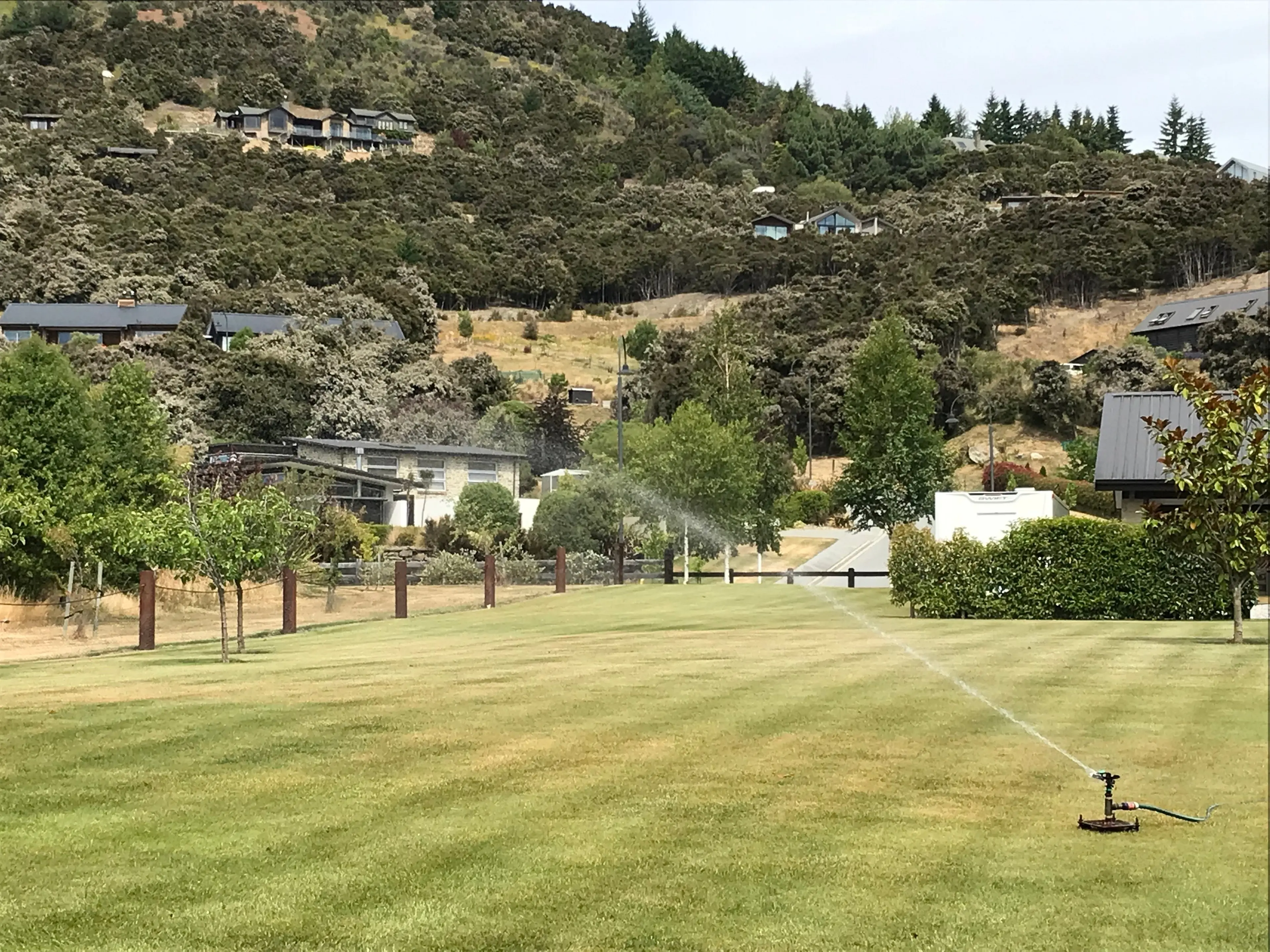
Water use has sky rocketed in the Queenstown Lakes area, with demand more than double the daily national average and some intakes predicted to increase by more than 300%.
Residents have also been warned though the area has some of the biggest freshwater lakes in the country, it does not mean the supply is bottomless.
The Queenstown Lakes District Council issued a statement yesterday encouraging residents and visitors to conserve water, as demand for the precious resource soars early in the summer season.
Council infrastructure operations manager Simon Mason said a significant increase in water usage had been observed, and that conservation measures were important to avoid temporary restrictions over the holiday season.
"We are seeing some incredible demand on water much earlier than usual," he said.
"For example, in Wānaka, draw from the Beacon Point intake has increased from a daily average of 5000cu m per day in June to nearly 18,000cu m per day this month, with a peak day observed in December so far of over 22,000cu m per day.
"Average per person usage was over 600 litres per day in November and this is set to increase further over December.
"This is significant, especially when you compare it to a national average of 229 litres per person per day."
The council was asking residents and those visiting to reduce water usage to help avoid temporary water restrictions being introduced over the holiday period.
Current areas of concern include Wānaka, Hāwea, Luggate, Lake Hayes and Arthurs Point, but increased demand has also been observed at all water schemes.
The increased usage was largely driven by irrigation.
Irrigation should be done between 10pm-6am, avoiding the typical peak water usage times, as well as the heat of day, and thus reducing water loss through evaporation.
"Ensuring irrigation is targeted and volumes are appropriate is also critical.
"The issue is not the availability of water — yes, there is plenty in our rivers and lakes. To provide this water to households, it’s pumped from lakes or bore supplies, treated and piped into reservoirs on a hill or other elevated site. From there the water is distributed via gravity through pipes to users.
"Our water supply schemes are designed for a calculated demand for each household, commercial and industrial site. Pumps, pipes and reservoirs are built to service that calculated demand.
"Our water systems come under pressure when the demand exceeds the available treatment and conveyance capacity. As this occurs we start to erode our ability to accommodate emergency situations and mechanical failures," he said.
"We’re often asked why we can’t just increase supply. While that sounds like an obvious solution, the reason is at peak times some of our supply schemes are operating at their maximum capacity. Increasing the capacity would mean upgrading treatment plants, reservoirs, pipes and pump stations which would have to be funded by ratepayers.
"This raises the question of affordability and environmental responsibility when there is collective steps we can all take to reduce use," he said.