
PHOTO
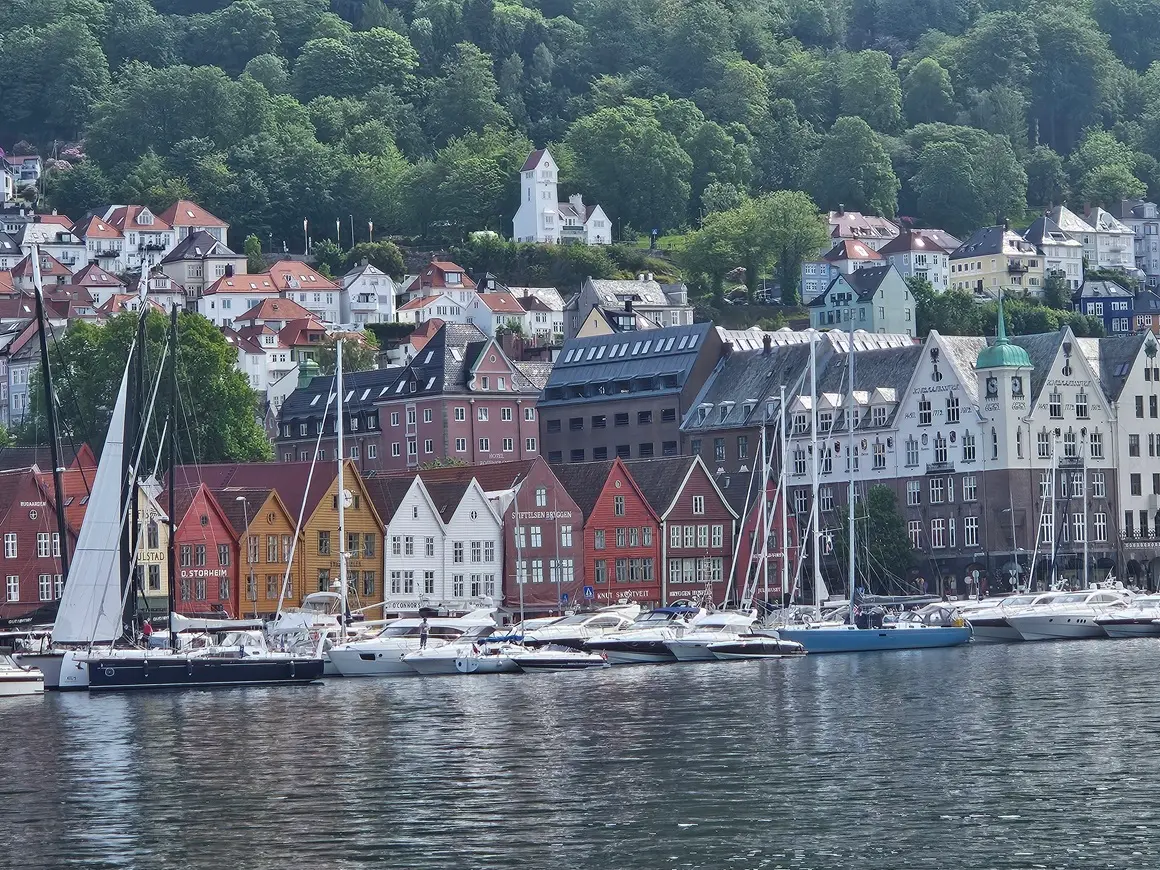
It’s so hard to do justice to Norway’s scenery — in either words or photographs.
I heartily recommend going to see it for yourself, and realise how lucky I am to have done so.
My recent voyage on the Viking Neptune finished by sailing down Norway’s west coast, from the very top to its home port of Bergen.

The temptation is to photograph absolutely everything, because there is outstanding natural beauty everywhere. But you really need to simply stare in awe to get the full effect.
Nordkapp is the furthest north that roads take you in Norway. A giant metal globe at the end of a plateau atop rugged cliffs is in constant demand as a site for souvenir photographs.
We were lucky to have excellent visibility when we arrived after a 40-minute bus ride from the port of Honningsvag.
On the way we passed reindeer with calves, Sami camps where the reindeer herders stay while their animals graze fresh pasture for the season, and a tiny sandy beach that the locals call Copa Cabana.
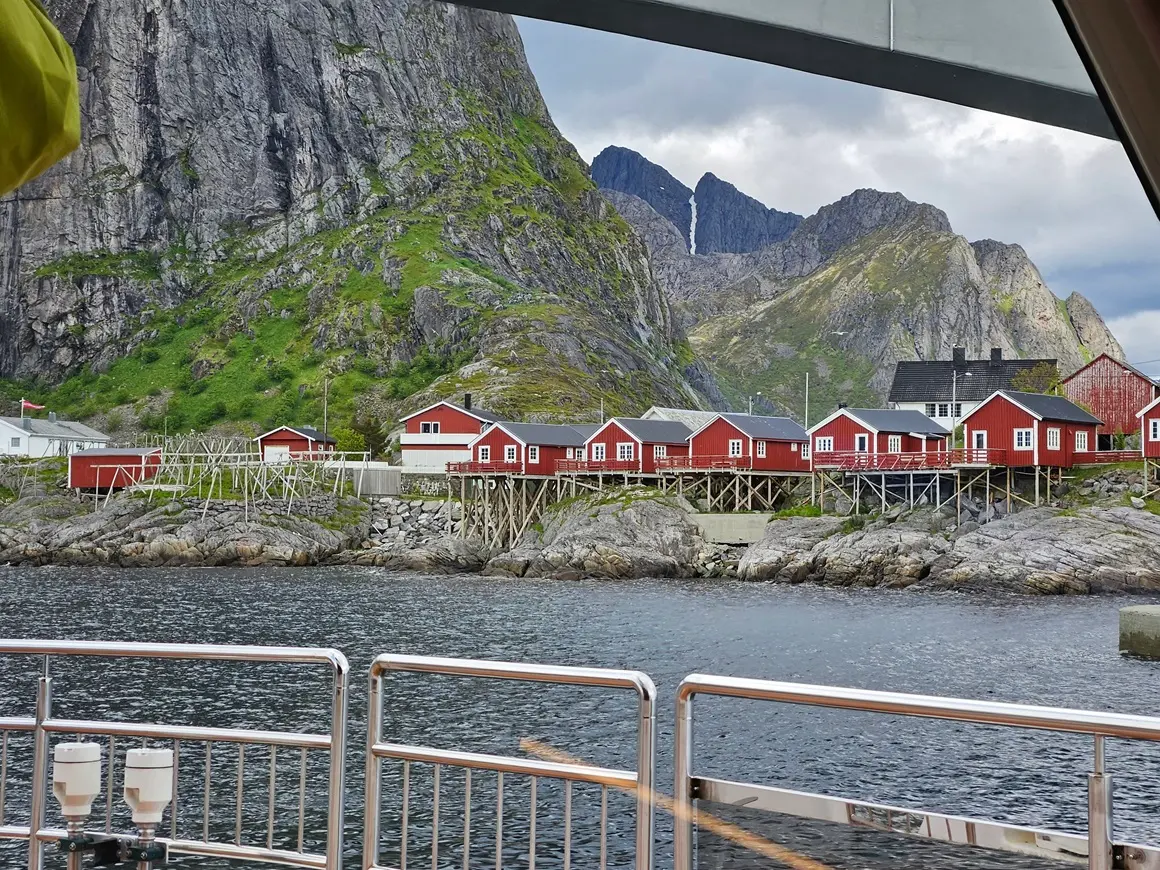
Tromso was the next port of call. Built mostly on an island, it is a vibrant city connected to the neighbouring land masses by impressive bridges.
We visited a planetarium with a big circular gallery and reclining chairs that were far too comfortable, a modernist church designed to capture the Arctic light, and a long stretch of sand along part of the island’s coast that’s a popular recreation area.
Heading south, we docked in Narvik the following day. This is where the German invasion of Norway in World War 2 began.
Although it’s still well within the Arctic Circle, the harbour never freezes in winter due to the Gulf Stream. That, and the resulting iron ore exports from the nearby Koruna mine across the border in Sweden, made it an attractive target.
We visited a historic octagonal church that was hit by nine bombs during the war, but miraculously only two exploded.
Leknes in the Lofoten Islands was our next stop.
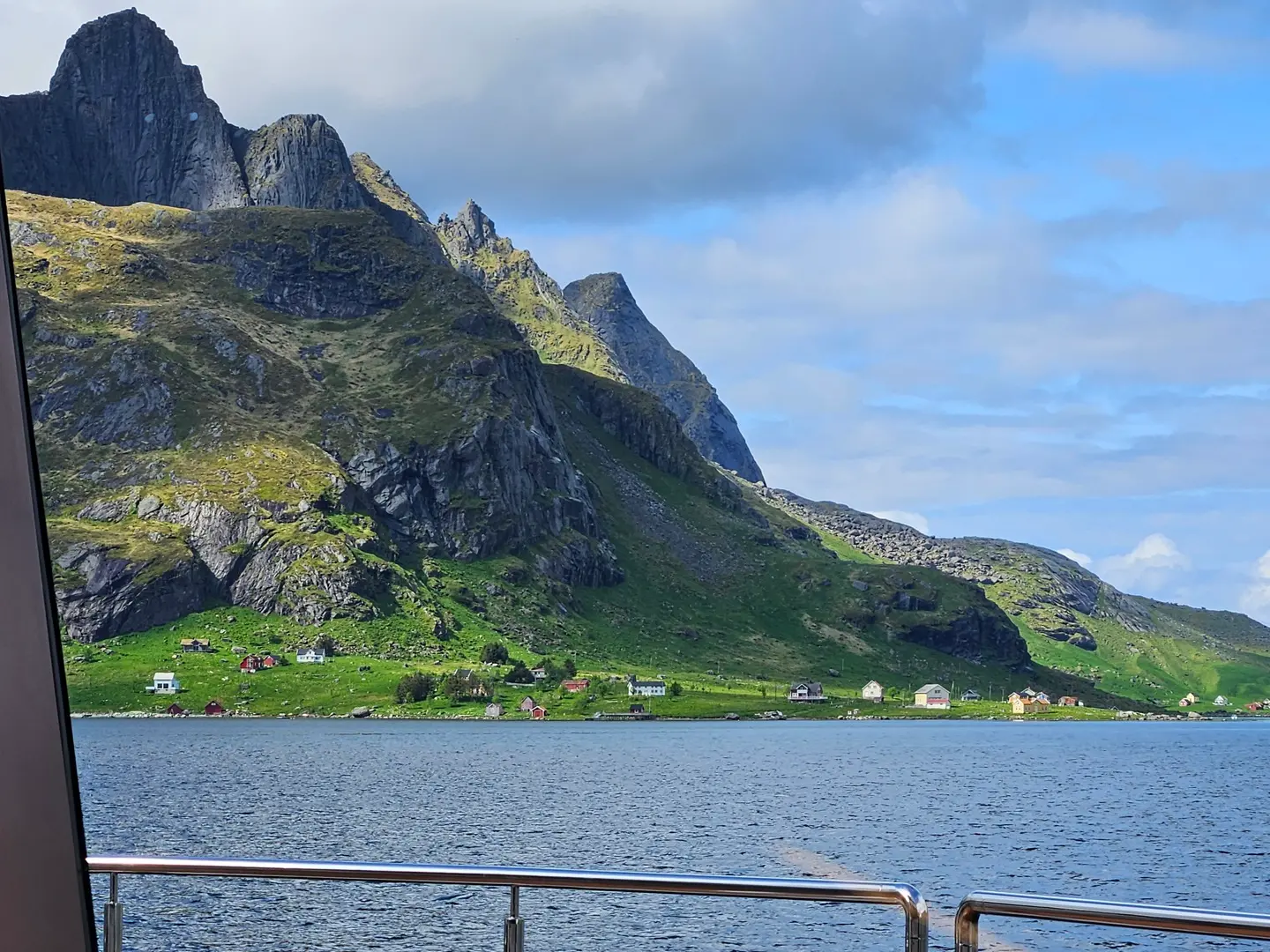
A trip across several of the islands by boat and bus revealed craggy mountains, charming villages, and sheep and lambs grazing high on ledges.
A day’s sailing past more islands took us to one of the most beautiful places I have ever seen — the Geiranger Fiord.
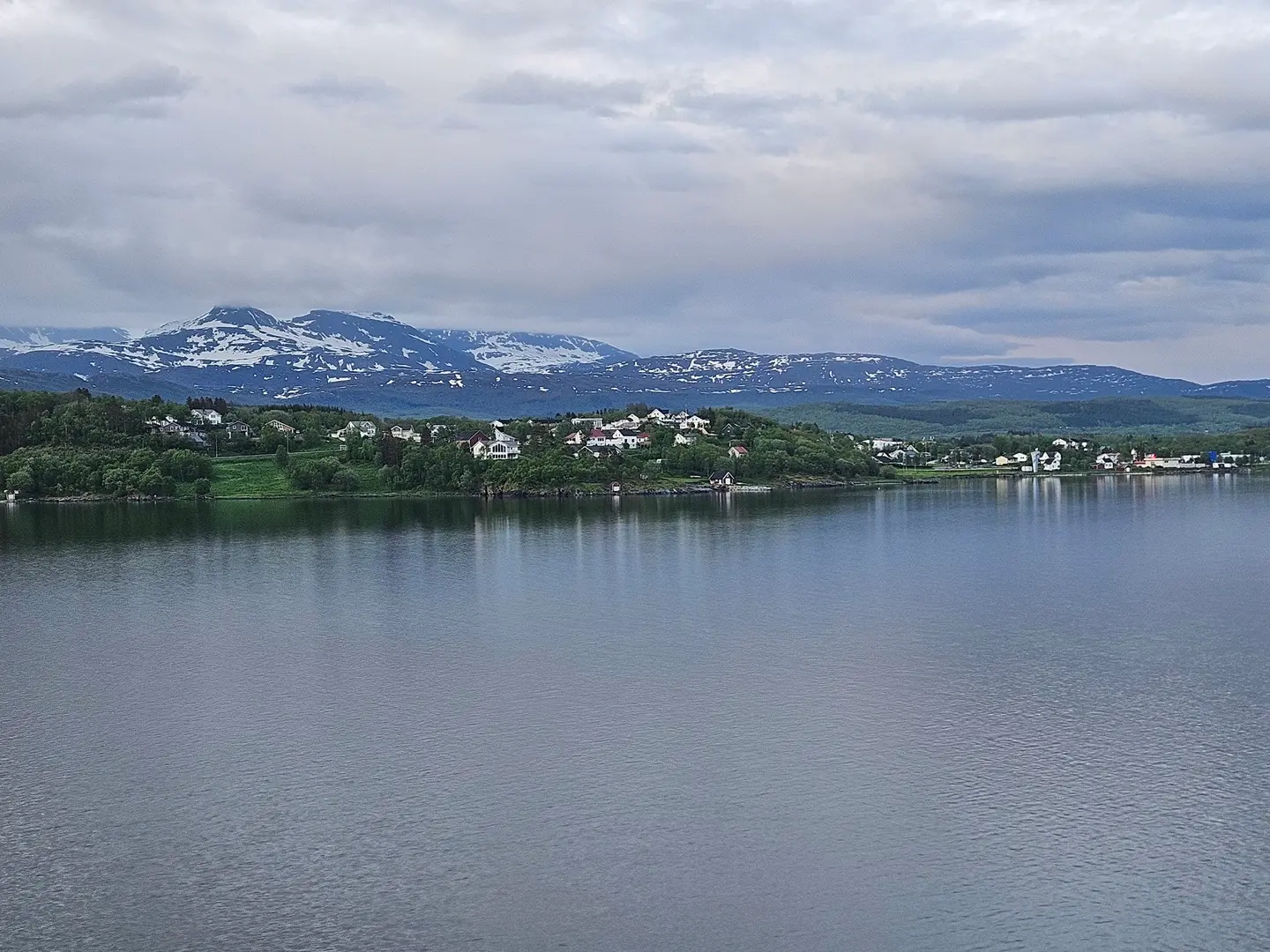
We anchored near the town of the same name and bussed our way up a famous zigzag road to gaze down on the deep teal water framed by steep-sided mountains. Snow was melting to boost the many spectacular waterfalls.
We couldn’t help but have huge grins on our faces as we soaked up the sights.
The bus took us to a lake 1000m above sea level, which was still mostly frozen. On the way we passed little wooden huts on stilts.
When asked what they were, the tour guide said "troll toilets".

Turns out they hold grit to be applied to the road in snowy conditions.
The little town was horribly crowded that afternoon as our 900 passengers were joined by another 3000 from a much bigger cruise ship.
Tourism is a mixed blessing for Norway.
We headed on to our final stop, Bergen. Although famous for raining two days out of three, we struck sunshine and a temperature in the mid-20s.
That made the world-famous fish market a tad whiffy.
But the city has many other attractions to admire — the row of tall, narrow, brightly-painted buildings dating back to medieval trading times, a large leafy central park with linden trees flowering and a fountain and a brass band playing, and elegant old buildings separated by narrow streets.
Disembarking a day later was a bit sad, but in many ways I was ready to return to reality.
Having so many people waiting on me never became comfortable, and a few of the more demanding, self-centred passengers were just too much.