
PHOTO
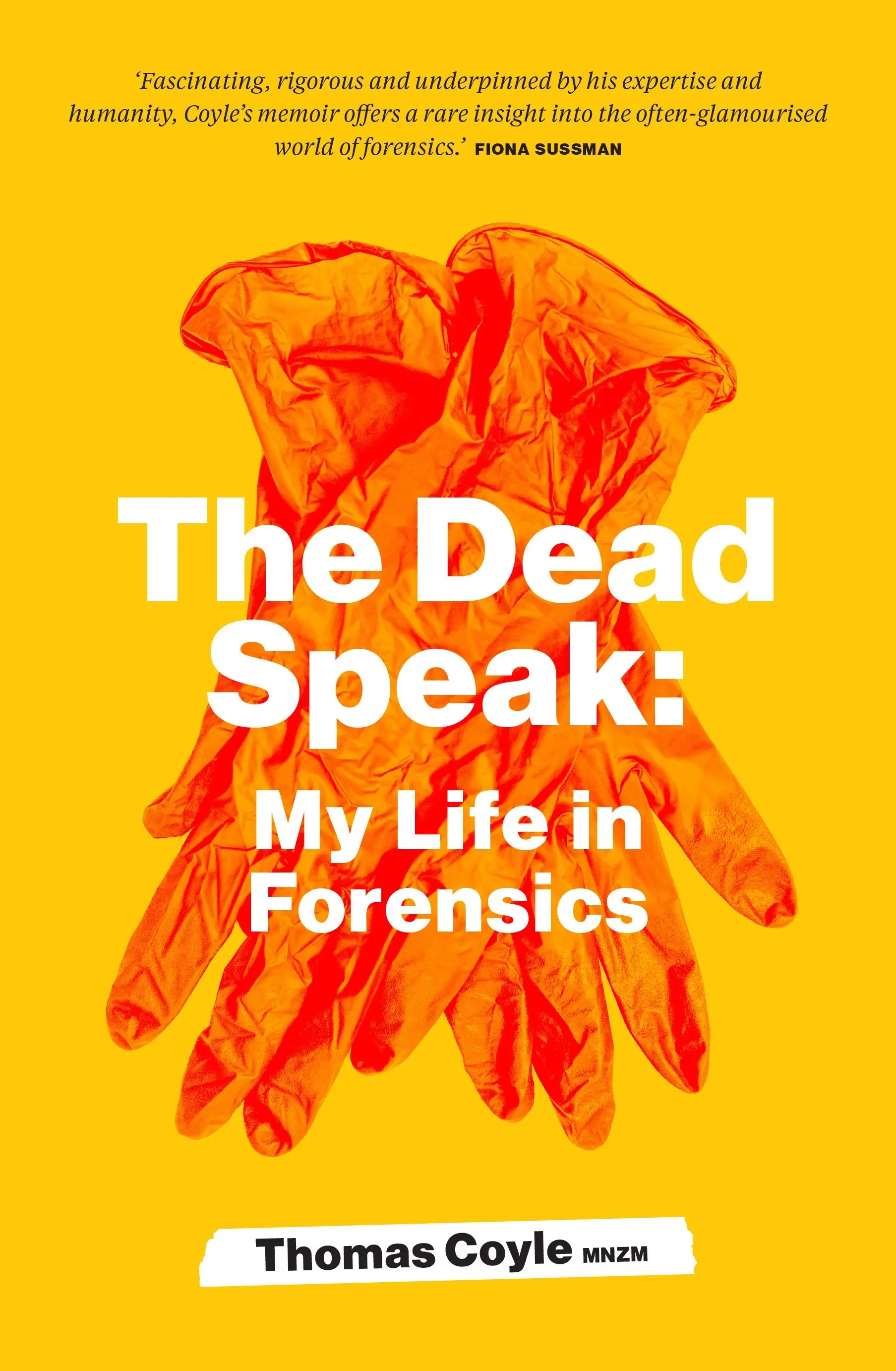
Forensic expert Thomas Coyle provides an engaging insight into the world of postmortem investigation in The Dead Speak: My Life in Forensics.
For anyone who might think forensic analysis resembles what you see in CSI-type television dramas, this book will set you straight.
In this field, there are seldom instant answers — it involves painstaking and time-consuming work — but the results have given Coyle immense satisfaction when they have led to criminal convictions or the correct identification of disaster victims, allowing closure for grieving families.
It is a well-written account of his decades working for the British and New Zealand police, and later in the private sector.
His expertise has been recognised with an MNZM and it is easy to see why given the dedication to his profession evident in this book.
Coyle looks back on his intensive training in the UK and how he honed his skills, first in fingerprint analysis and then broadening into crime scene investigation.
His anecdotes are precise reconstructions of how he and his colleagues collected evidence of suspicious or unexplained deaths or did their utmost to identify the remains of disaster victims.
The processes are exhaustive and some of the techniques are well beyond what most readers would expect.
It is also fascinating to learn how far technology has advanced and the tools of trade (for want of a better term) have evolved since Coyle’s early days working in London when even DNA records were not yet available.
There is an element of the grotesque in some of his stories — unsurprisingly — but he describes the more gruesome deaths without sensationalising them, focusing instead on his methodology and care in analysing complex scenes and bodies that, at times, were in dire condition.
Coyle never loses sight of the fact he is dealing with someone’s loved ones.
There are lighter moments, too ... a few of his rookie mistakes could be lifted from a black comedy and an incident with a senior officer’s car could have propelled him straight into unemployment.
Fortunately for him, he got away with it.
What struck me most was Coyle’s compassion, which comes to the fore when he recounts his involvement in disaster victim identification in Thailand after the 2004 Indian Ocean tsunami and in Christchurch after the 2011 earthquake.
That work was gruelling for rescue, recovery and forensic teams and Coyle doesn’t shy away from explaining just how demanding it was — physically and emotionally.
But, above all, his grief for those lost and his respect for the religious and other rituals that honoured the dead before they were returned to their families convey a profound sense of humanity.
In a job that could have hardened him to tragedy, his emotional intelligence has kept him intact.
The Dead Speak: My Life in Forensics is authoritative but never dull.
Coyle is a natural storyteller with a catalogue of work anecdotes few could match.
• Caroline Hunter is an Allied Media subeditor