
PHOTO
Every interior hides a little bit of acting somewhere.
You might walk into a city apartment to find a breezy living room decorated to feel like a beachside bach. Or, discover "marble" tiling that has never been anywhere near a quarry but looks chic and elevated.
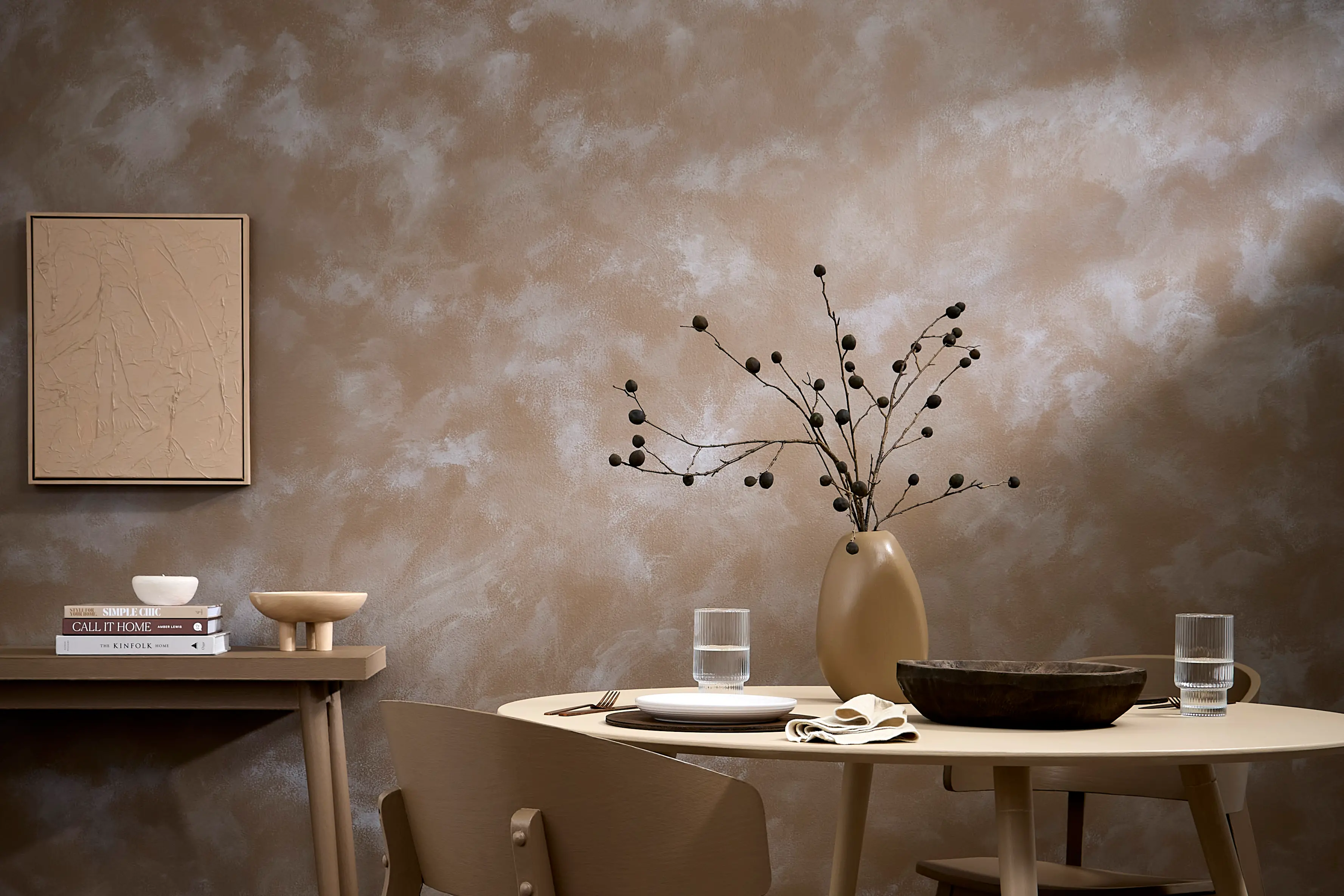
A Mediterranean villa style plaster wall, a tiled floor, the patina of aged rust, even the salt-washed calm of a beach house, can all be conjured up with the right technique, no matter what the home was built from or where it is.
None of this design fakery is about pulling the wool over anyone's eyes. It is about borrowing the feeling of a place, a material or an era, and recreating it at home for a look you love and which reflects your personality and taste, and doing it with the materials and budget available to you.
Start with the feeling, not the material
Before reaching for a tool or a tin, it helps to think about the mood being chased rather than the surface being copied. Whether you’re looking to create the weathered driftwood look associated with coastal living, or the textured terracotta of a Moroccan courtyard, both start the same way: identifying the feeling first, then working backwards to the colours, textures and finishes that will deliver it.
Your feeling may start with a particular type of finish, but spending a little time working out what you want the whole room to feel like is the best way to create curated and cohesive spaces where your design touches work together. It’s also a good way to make sure your finished room feels authentic to you and is a liveable, practical space for the way you use it, rather than simply being a pastiche of something else.
Top tip: If you have a specific colour, finish or technique in mind, have a chat to the staff at your local Resene Colorshop or contact a Resene Colour Consultant, who can help guide you on the technical aspects of creating your feature, and how to pull a complete look together.
Classic ‘broken paint’ techniques
Weathering, colour-washing, limewashing, rag rolling and sponging are always popular techniques for adding some design flair and visual texture to rooms.
Colour-washing and limewashing both deliver a softened, weathered look that suits Mediterranean or coastal styling, while sponging and ragging build up texture in looser, more organic patterns for a relaxed, washed look. Dragging, where a brush is pulled through wet paint in long, even strokes, gives a more refined, almost linen-like texture that suits a more tailored room.
Fortunately, there is a simple way to “fake” these techniques, and that is by using Resene FX Paint Effects Medium.
Resene FX Paint Effects Medium is a tintable acrylic that can be tinted with any Resene colour and will break down the finish of that colour so it appears ragged, or weathered. Use it over a base coat, usually of a different colour so the effect of the broken top coat is similar. For example, try a basecoat in Resene Sante Fe then apply Resene FX Paint Effects Medium mixed with Resene Alpaca on top, applied with a sponge for a weathered, sunbaked terracotta finish.
Different application methods such as brush (try different brush sizes and strokes), roller, rag or sponge will create different finishes.
Top tip: Resene Colour Consultant Amy Watkins recommends experimenting on spare surface material when using Resene FX Paint Effects Medium so you get comfortable with how much to use and how to apply it to get your desired effect. “Try different colour combinations and adjust how much paint you mix with the medium, making notes as you go so you can replicate the look.”
Remember, adding these types of textured looks to your rooms to fake a certain finish doesn’t have to be an all-or-nothing option. Try just adding a faux-limewash finish to a planter or two or a picture frame. They also work well as a feature wall. In fact, if you’re new to working with Paint Effects Medium, starting with small projects can help you refine your ideas and techniques.
Fake materials
For a faux marble effect, apply Resene FX Paint Effects Medium over a contrasting base coat using a large brush in a swirling motion, then wipe back with a clean, dry rag while still wet to reveal soft veining beneath. The result reads as convincingly stone-like from a distance, at a fraction of the cost and weight of the real thing. Try a base coat in Resene Splash. Then mix nine parts Resene FX Paint Effects Medium to one part Resene Chalky and apply over the base with a small piece of cloth to create a blurred effect.
Then mix equal parts each of Resene Alabaster, Brown Derby, and Warrior with Paint Effects Medium. These colours are your marble “veins” applied by dragging a feather through the paint on your surface. Finish by blotting and blurring any harsh edges.
Create a textured plaster-style base using Resene MyArtisan Foundation Coat to build a subtly roughened surface that works beautifully as a foundation for further faking. Applied with a brush in a loose, criss-crossed motion, often called a crow's foot finish, it can be left as is for a plastered look, or layered with Resene FX Faux Rust Effect for the appearance of aged, oxidised metal on anything from a feature wall to a piece of furniture. For an exterior or interior villa-style plaster finish, Resene Sandtex in its Mediterranean Effect gives a roughened, sun-baked texture reminiscent of a rendered courtyard wall.
Faux tile and cement looks can be approached the same way: a coloured concrete stain for a polished, industrial floor, or careful masking and two-tone paint for a checkerboard or geometric tile illusion on an existing floor that does not warrant a full re-tile.
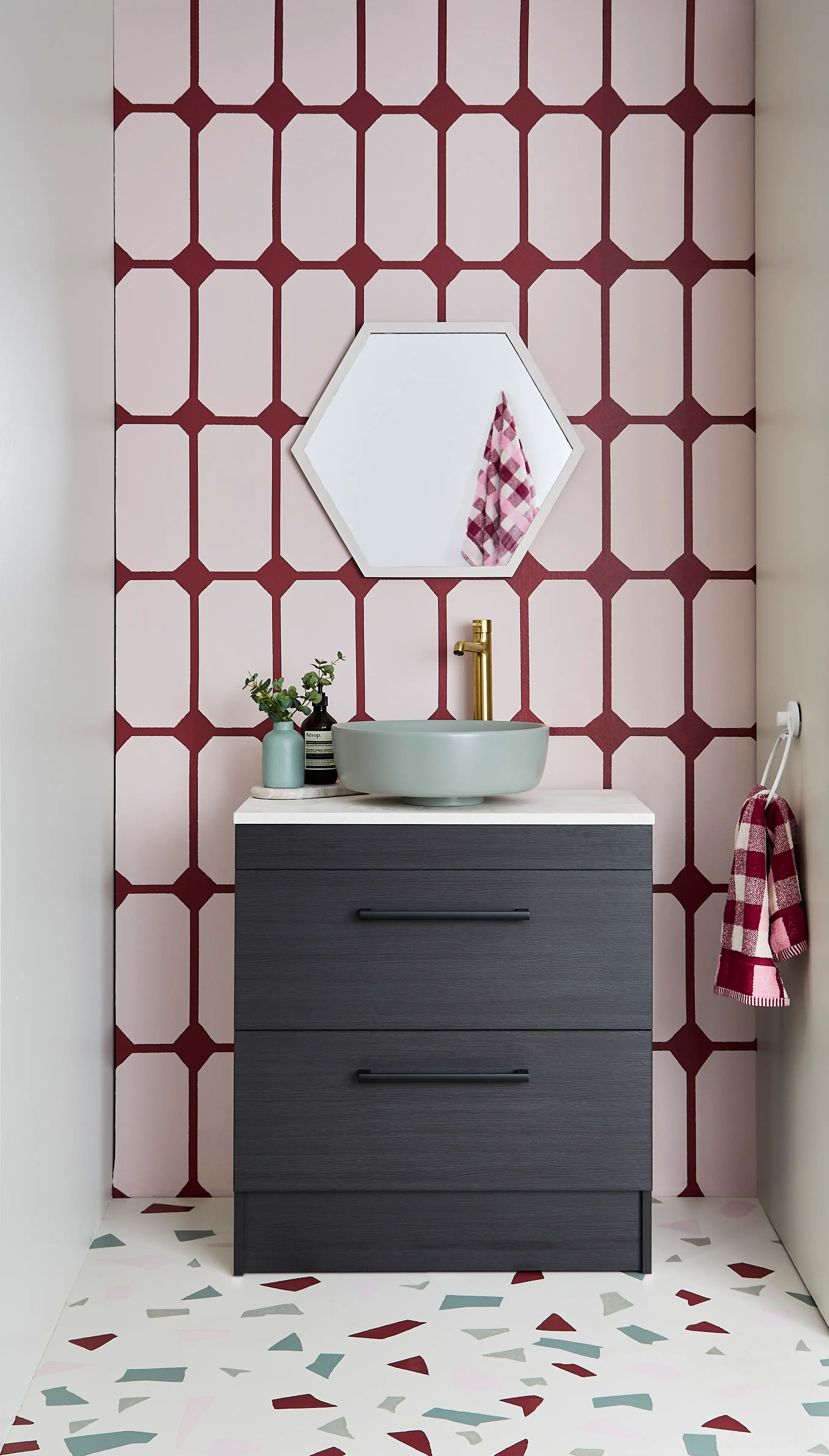
Painting a patterned faux tile-effect on a floor, splashback or other surface can be a fantastic opportunity to add design flair. Keep it simple with a two-tone checkerboard by painting your floor in a basecoat of Resene Walk-On in one colour, then pencil in and carefully mask out squares to be painted in a contrast colour. Try a classic Deco-style black and white with Resene Quarter Alabaster and Blackjack or try something different like tonal neutrals, Resene Oilskin and Spanish White, or go for drama with complementary shades like Paradise and Vegas.
For more intricate, repeating tile designs, stencils can be a useful tool. Take a similar approach as the checkerboard and paint your floor in one base colour. When thoroughly dry work methodically around the room placing your stencil and painting in a second colour.
Top tip: To fake the look of metallic surfaces try Resene FX Metallic wallpapers or use colours from the Resene FX Metallics paint range to upcycle inexpensive picture frames into gallery worthy gilt-edged style.
Wood works
A wood stain can completely change the character of a timber surface without changing the timber itself. A darker, richer stain such as Resene Colorwood Mahogany suggests an older, more formal home, while a mid-toned option like Meranti leans towards mid-century. Lighter stains, including Resene Colorwood Natural, push a piece towards a contemporary Scandinavian feel, and softer washes such as Whitewash let the timber grain show through while shifting its overall tone. The right stain can make a budget pine piece read as something considerably more refined.
The wallpaper shortcut
Wallpaper deserves its own mention as one of the fastest ways to fake a finish. A linen-look, textured wallpaper delivers the appearance of an upholstered or fabric-lined wall instantly, without the cost or upkeep of real textile panelling. Try Resene Unify Wallpaper Collection E333211 or the natural woven style of Nomad M688-07. You can even play with pebbled leather textures using The Icon Edit - Black and White 64504 or a woven herringbone look in 24545.
For tiled or marble-like surfaces try 15529 from the Resene Eldorado Wallpaper collection or Perfect Harmony A65001.
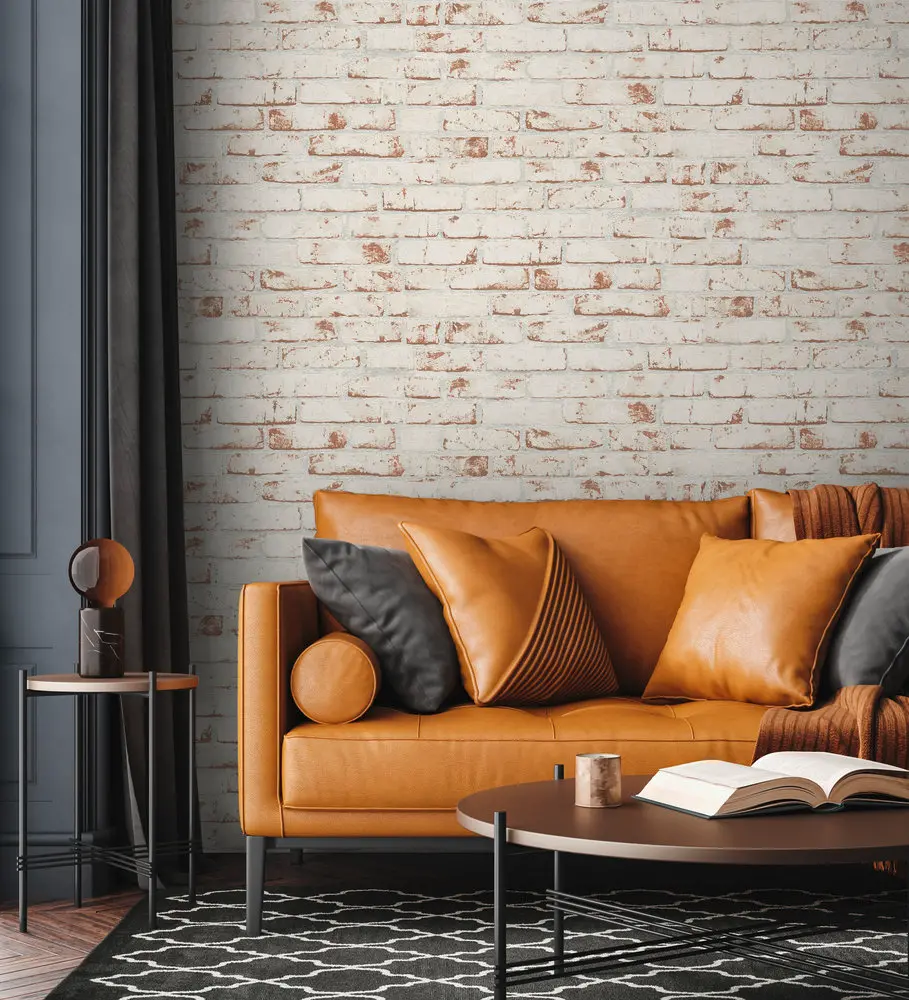
At the more playful end, photographic and optical illusion wallpapers can convincingly mimic exposed brick (Jade Collection 90781-3), weathered timber (Essential 34794) or even a graffiti mural (Fashion for Walls 2539V-11), instantly transporting a room without a single structural change.
Top tip: Fake expensive artwork by finding a painterly wallpaper design you love and hang sections of it in your room.
Keep it believable
A few things are worth keeping in mind when faking any look. Always test your chosen technique or product on a sample area first, and view it in the room's actual light, both natural and artificial, since this changes how a finish reads more than almost anything else.
Consider scale too: a faux effect that looks wonderful on a small swatch can feel overwhelming, or oddly busy, across an entire wall.
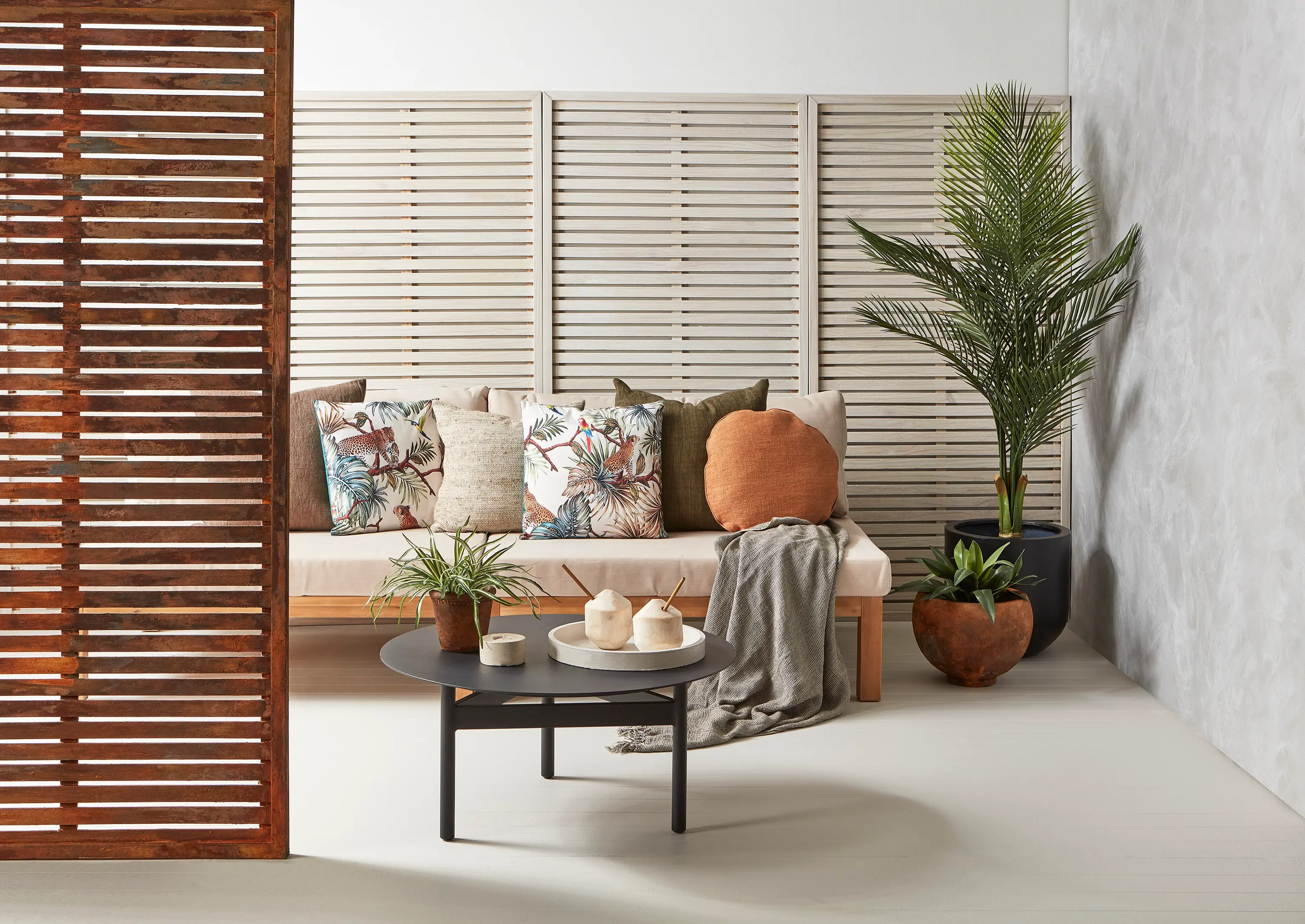
To avoid a result that feels pastiche, restraint matters more than technique. Choose one hero effect per space rather than layering several different faked finishes together, and pair it with at least a few genuinely tactile or natural elements elsewhere in the room, whether that is real timber, woven textiles or natural light. A single, well-executed faux finish, given room to breathe, will always look more convincing and considered than several competing for attention.