
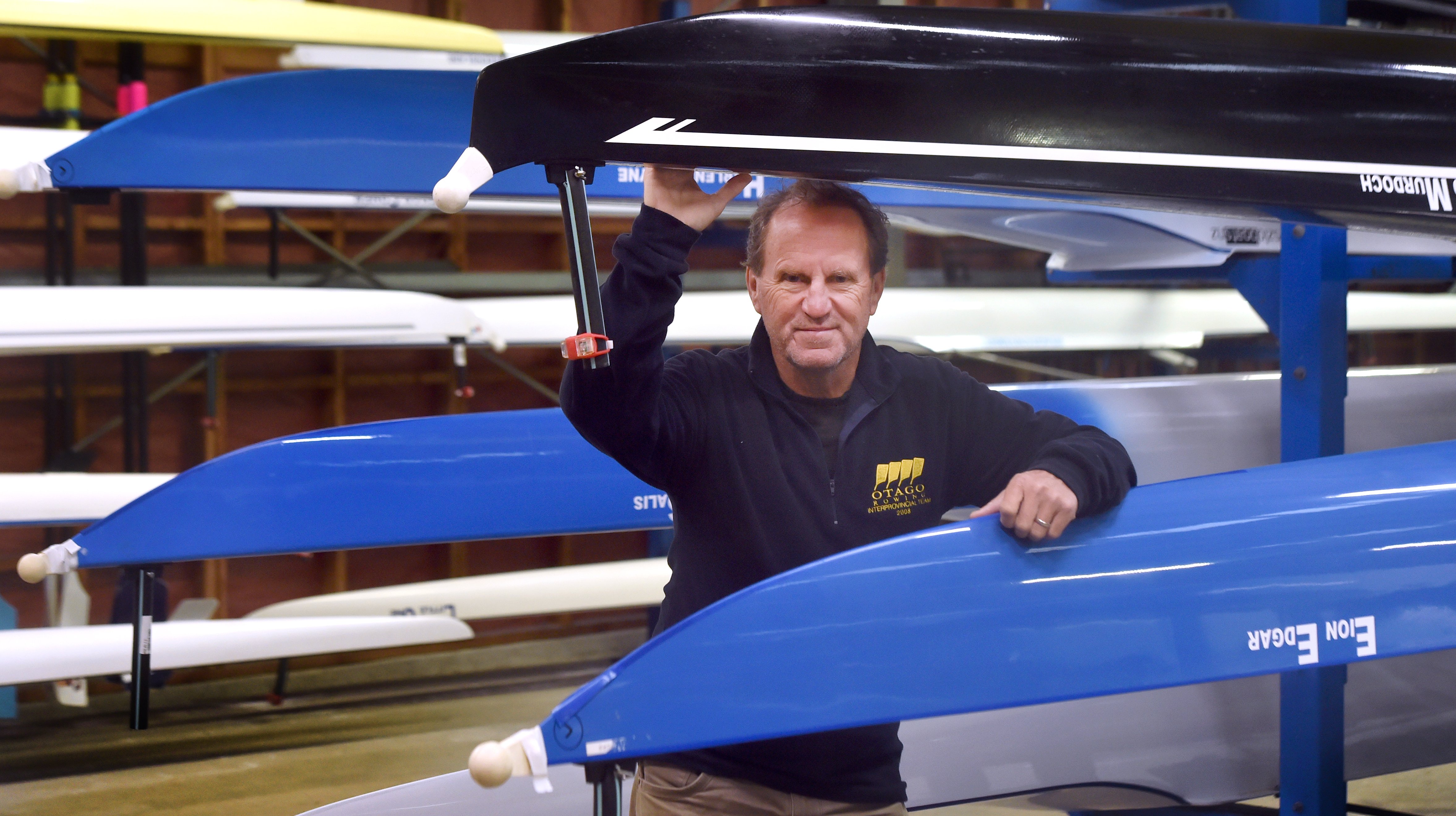
The Canadian rowing coach’s association with the region dates back more than 20 years and now he has returned to lend a helping hand in a coaching support role for Otago Rowing over the summer.
"[Otago] suits me and it suits my personality," Parr said.
"The fact that it’s a very outdoors place, the fact that it’s obviously beautiful, the fact that there’s so much enthusiasm by largely volunteers, and that combined with ... the academic side of Otago as well - the polytech and the university - I’ve had ties with both.
"I think it’s just sort of pace of life and a country that’s style suits me a a lot."
Parr will be based in Dunedin, helping coaches throughout the region, including Central Otago and Oamaru, and has an impressive resume.
Growing up in Canada, Parr was a cox, and was then head coach of Canada’s junior national team in 1996.
He moved to New Zealand soon after; he was the head of the New Zealand junior team from 1998 to 2002, where 17 athletes - including Dunedin’s Hamish Bond - went on to become Olympians.
He then moved to Ireland, where he was the director of high performance from 2003 to 2004, and returned to New Zealand, becoming teaching fellow at the University of Otago and helping coach around the region.
Parr, who also coached at Vashon Island in the United States, arrived in Dunedin again last week and was inspired by the coaches and rowers he had connected with already.
"There is a lot of enthusiasm, there’s a lot of good administrators, there’s a lot of really good young coaches.
"I think that’s probably one of the things that struck me the most right now. It’s nice to see the sort of next generation of young coaches coming up and they’re doing a great job.
"I’m impressed with the quality of their knowledge, their crews and their willingness to learn - it’s great."
Otago Rowing had changed since his last tenure.
The number of secondary school crews had improved, but nationally, apart from Avon and Waikato, club rowing was not as strong as 30 years ago, he said.
But Parr felt there was a desire to improve that across the country and credited Otago University manager Glen Sinclair for his programme and work in Otago.
"He’s made the university programme what it is, but he’s also done all sorts of things that other people may not see and I think he’s integral here."
Parr wanted to support Otago’s coaches however he could in the next few months, and sharing knowledge as a group was useful and could benefit his own career.
"One of the reasons I came here was I think I was maybe getting a little stale and wanted to learn.
"Already in a week here, sometimes young coaches have a new perspective on things. It’s funny - having done this a long time, you think ‘oh, why didn’t I think of that?’.
"There’s that, which is really exciting for me personally, just the chance for growth and development.
"As a coach you should always keep growing and developing."
He wanted to see the region be competitive, had faith in the potential of great Otago coaches and loved being back in Otago.
"I’m just really grateful to be given the opportunity in a place that I really like."
Parr will be based in Dunedin until January 20, when he returns to his club Burton Beach, near Seattle.


