
PHOTO
Curling's first professional league is striking while the iron is hot, launching just over a month after the sport captivated audiences at the Winter Olympics.
Boasting an Olympic-heavy roster that includes several medallists from the Milano Cortina Games, the Rock League features six mixed-gender franchises competing across men’s, women’s, mixed team and mixed doubles events in Toronto this week.
The league is operated by the Curling Group, a company which also owns the Grand Slam of Curling series.
‘‘Curling is always among the most watched winter Olympic sports ... it was incredible, it was super fun and electric,’’ Curling Group chief executive Nic Sulsky said.
‘‘We knew when we founded The Curling Group that capitalising on the Olympic momentum was going to be core to our business.’’
The condensed inaugural season of Rock League will offer up a taste of the format and rules, before the league returns in 2027 with five weeks of competition.
‘‘The goal with Rock League is to reframe the sport, to showcase the incredible energy in curling events and the amazing personality that a lot of these curlers have,’’ Sulsky said.
‘‘From a business perspective, this is the first true professional ecosystem that the curlers have been able to participate in. We’re creating a new format, we’re creating a broadcast-friendly product where the games will be two hours.
‘‘There’s going to be lots of excitement when fans come to the arena. They’ll be cheering for teams that have logos and jerseys. What we want to be able to do is create a platform where curlers can dream about one day being an actual professional athlete.’’
The Curling Group also acquired the Grand Slam of Curling in 2024, a series of tournaments that have been running for over two decades. Asked how the target audiences for Rock League and the Grand Slam of Curling differed, Sulsky said: ‘‘We want to appeal to the traditional curling fan, but we also are very focused on bringing a new casual fan into the sport. We want to grow the total audience.’’
The franchises in Rock League are owned and operated by the Curling Group, but Sulsky said they were already planning for future sales of franchise rights.
‘‘Different leagues have different strategies as they go to the capital markets. Some emerging leagues decide to sell franchises right away to help fund operations. We decided on a different model, similar to SailGP and Major League Soccer, where the league owns and operates it.
‘‘Then as you grow the league, two, three, four years down the road, you sell majority stakes of the franchises that you’ve built to partners within the regions where the teams are based.’’
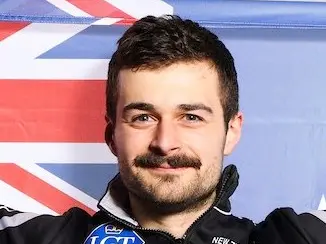
New Zealand curler Anton Hood is in the Typhoon team representing the Asia-Pacific region. They are joined by two Canadian teams (Shield and Maple United), two European teams (Shield and Alpine United) and a United States team (Frontier).