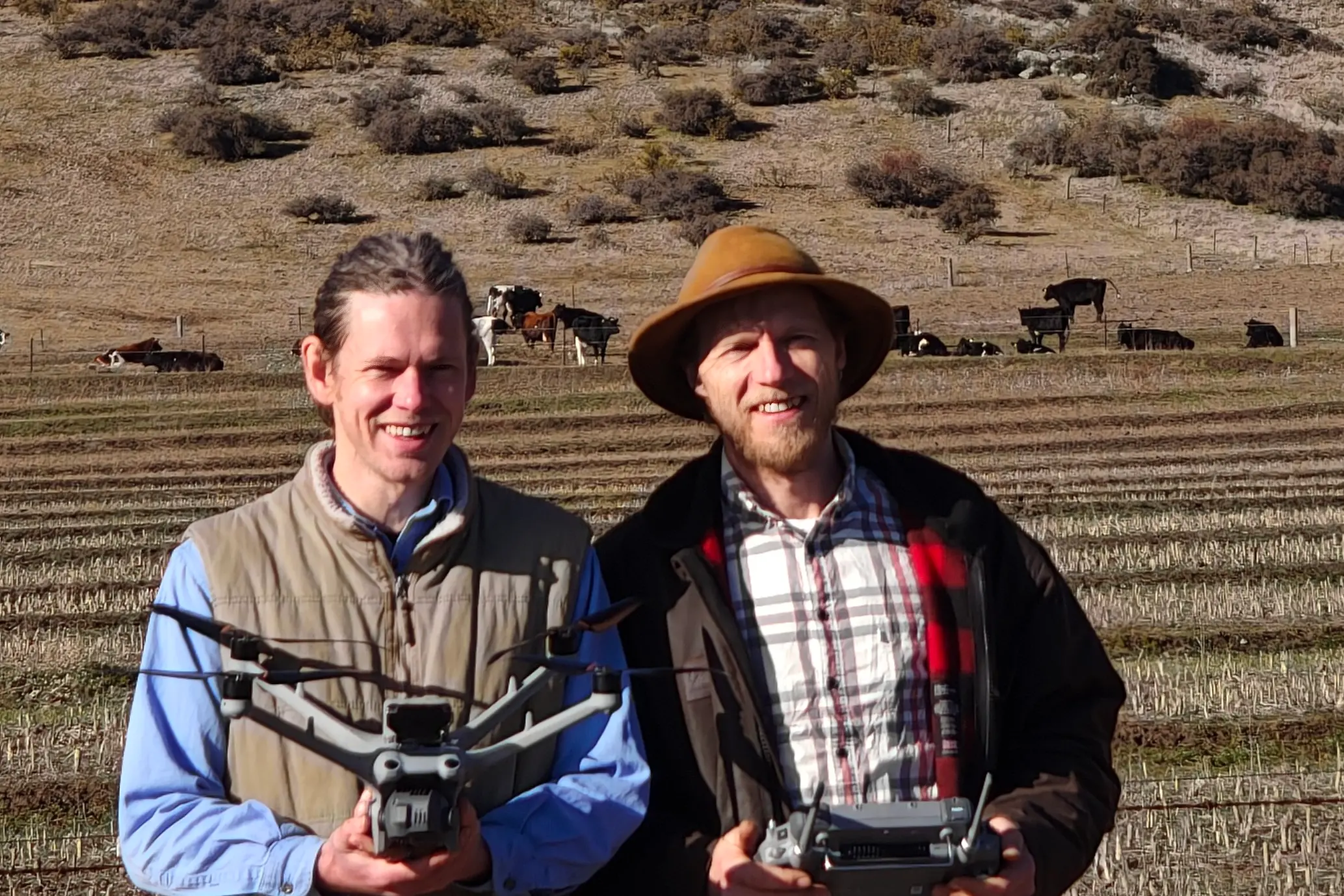
It’s a long way from Hāwea to Silicon Valley. But a Central Otago startup has a shot to pitch for a share of a $US1 million investment prize in front of global investors and tech leaders in the global technology and innovation hub. AgRhythm is one of 12 New Zealand startups selected for the Startup World Cup New Zealand final in Wellington on Monday. Up for grabs is a place at the Startup World Cup Global Grand Finale in November, the world’s biggest pitch competition which is run across more than 70 countries. AgRhythm is a drone-enabled farm intelligence platform built with and for farmers. It brings technicians, services, tools and data together for each farm, making technology easier to adopt and turning information into better farming decisions. What began as a chance meeting through social tennis, a conversation about drones and a practical question about life on farms led to co-founders Tim Jacobsen, Henry Boyle and Peter Grantham developing the platform. They have taken it from exploring a range of uses for drones on farms to a public software beta and its first customers. Initial applications included drone-mapping, terrain-aware flight planning and livestock mustering concepts. Conversations with farmers shifted the team’s attention to a broader problem: useful farm information was often scattered across devices, applications, imagery, records and people’s knowledge, leaving farmers to connect it all. AgRhythm developed a timeline-based map that connected drone imagery, pasture readings, observations, tasks and farm records to where and when they happened. Its first commercial focus was practical pasture intelligence, but the larger goal was to make new technology give farmers time, rather than another system to manage. “AgRhythm began with a chance conversation about drones. It’s been surreal seeing a chance conversation turn into a product with customers,” Mr Boyle said. Artificial intelligence was getting sophisticated, which meant ideas could be worked on fairly quickly. Within a week or two after their initial meeting, the trio had created AgRhythm. While AI was taking some jobs away, in some areas like farming, they believed it could actually create new roles. Their motivation in the start-up competition was not financial — rather, it was about being judged and having their idea assessed along with the networking opportunities. It would be nice to build momentum to the point where the team could be expanded, he said.