
PHOTO
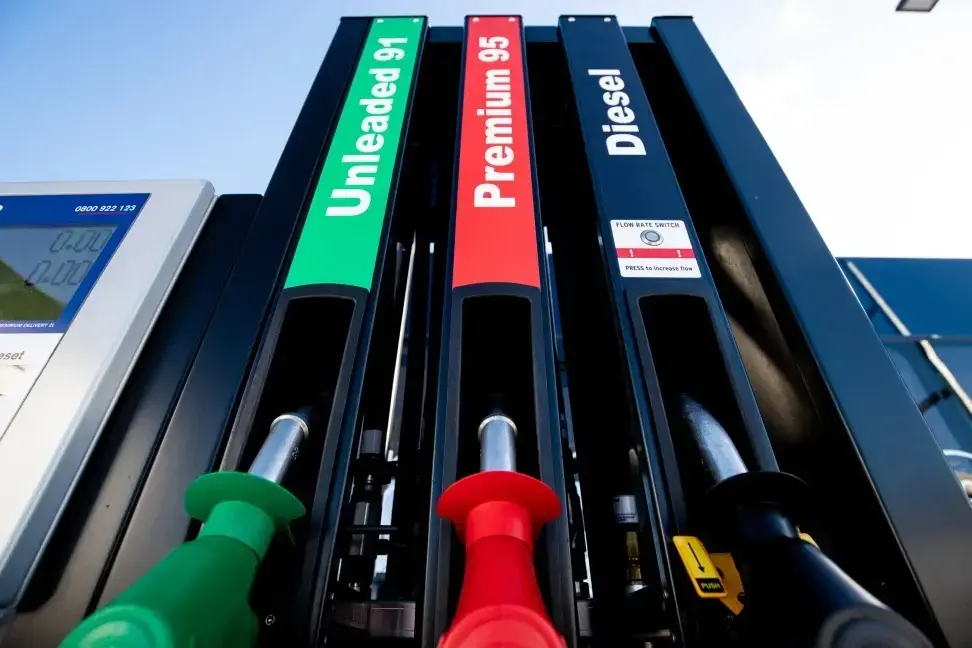
Fuel prices have reached a tipping point where they start affecting New Zealanders' driving decisions - and the longer they stay high, the more the effect is likely to be felt.
Fuel prices have reached new highs in recent days. Gaspy says 91 petrol is at $3.52 a litre on average nationwide, up 15.9% over 28 days. Diesel was at $3.23 up 18.25% and 95 was at $3.70, up 15.03%.
Z said people were buying less petrol.
"Petrol demand was down about 6 percent through the second and third quarters of 2026, while diesel demand was down around 3 percent to 4 percent.
"New Zealand imports all of its refined fuel, including petrol, diesel and jet fuel, so local prices are heavily influenced by global supply conditions including international fuel prices, freight costs, and exchange rates.
"Recent increases have reflected unprecedented disruption in international fuel markets."
It is understood September fuel trading was softer again.
Auckland and Wellington transaction sizes were down about three or four litres per visit, on average.
ANZ data showed fuel spending up 11.2% year-on-year in September and 2.4% month-on-month.

Simplicity chief economist Shamubeel Eaqub said prices were already past the point where it had effect on the normal functioning of the economy. The impact was being felt the most in provincial parts of New Zealand. In some parts of the country, essential workers were driving more than 40km per day on average for work.
"The South Island is particularly affected - because in those rural areas everything is far. It also affects places like Wairoa, central Hawke's Bay, Carterton and Ōtorohanga in the North Island."
People who needed to pay for fuel to get to work would have to reduce spending elsewhere, he believed.
"They'll drive less on the weekends, they'll use public transport, they will do carpooling - all those things that are possible. When you can't, it's other discretionary stuff that gets cut. That's why this kind of inflation is so pernicious because when you've got the cost of living, of necessities, going up, you cannot afford to buy the other stuff.
"My view is the Reserve Bank has got us completely and utterly wrong. They still think this is the kind of inflation that creates a feedback loop. My view is that it just makes people poorer and they don't have money to spend."

At Otago University, economist Murat Ungor said there was no clear level when fuel prices would be a problem.
"Households and firms respond to petrol prices gradually and unevenly, not at a predictable threshold.
"What matters is not just the price level, but how fast it rose, how long it stays high, and whether people believe the change is permanent,” he said.
"The distinction between short-run and long-run responses is important.
“In the short run, most of the big decisions are locked in where people live and work, what car they own, how they get to work, and what public transport is available. All that is left to adjust is how much people drive, so demand barely moves.
"Over time those constraints loosen, and people can move, change vehicles or change how they commute, so the long-run response is larger.
"A short spike may prompt some belt-tightening, such as fewer discretionary trips, but that tends to fade if prices fall back. A sustained rise is what reshapes those bigger decisions."
He said persistence mattered, as had been seen in the past few months.
"Since the Middle East conflict began in late February, global oil prices have been very volatile. Brent crude had fallen back to about $US72 a barrel by early July as shipping through the Gulf recovered, but it has since climbed back to around $US100 amid renewed military action.
"New Zealand imports its petrol as refined product from Asian refiners, whose prices follow those global benchmarks, so we feel the swings quickly.
"When prices spike, ease and spike again, it is hard for households to judge what is permanent, which may be one reason people hold off on bigger decisions, such as changing vehicles, until the path is clearer."
Because petrol was a necessity, lower-income households would respond more to price changes than higher-income ones, he said.
One interpretation would be they had fewer ways to avoid the cost and a larger share of their budgets tied up in it, so a price rise hit them harder.
"So rather than asking whether there is a set price point that changes how the economy works, I would ask: how persistent is the price shock, what alternatives do people have, and who is bearing the cost? The economy doesn't flip a switch at $3 or $4 a litre. It adjusts at the margins, and the adjustment is uneven."
