


Opposition parties are criticising the coalition for having "secret" talks with the United States about the supply of rare and critical minerals.
New Zealand is in discussions with the US about the supply of rare and critical minerals, as President Donald Trump seeks to reduce America's reliance on China for material it sees as pivotal for tech innovation and national security.
While no decisions have been made, the Ministry of Foreign Affairs and Trade confirmed officials are working through analysis, targeted consultation and providing advice to relevant ministers.
Prime Minister Christopher Luxon stressed no Cabinet decisions have been made but said the government would "develop in [its] own brutal self-interest".
But Labour's energy and resources spokesperson Megan Woods says mining opportunities should not be exploited at the expense of the environment - especially New Zealand's conservation estate.
"We are not against mining, as long as it is done in an environmentally sustainable way. Under the Labour government, we were doing work on critical minerals that would help us decarbonise and move away from fossil fuels like coal in a way that ensures jobs in the long term.
"However, the government's plans as outlined in the MineraIs Strategy for New Zealand, combined with the Fast Track law and refusal to phase out fossil fuels, have lead to greater environmental and climate risks with no public scrutiny.
"Most New Zealanders would be upset that talks about mining and exporting critical minerals are taking place without transparency or accountability."
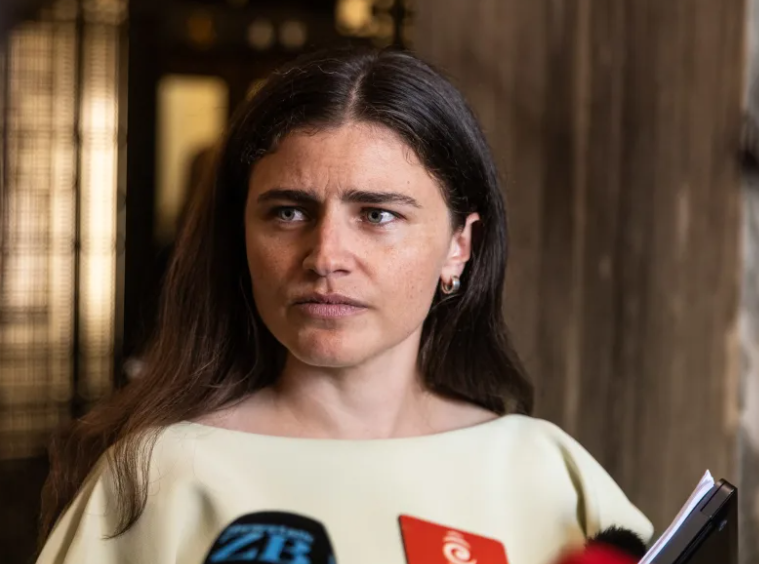
Green Party co-leader Chlöe Swarbrick said the critical minerals discussions were happening "largely in secret and on terms dictated by the United States".
Luxon's government had not campaigned on this, she said.
"When exactly did we agree as a country to be in Trump's corner? There are far better decisions that we can be making if we are to, even for sake of argument, be thinking about mining more of these rare earth minerals.
"If we return to some of the rhetoric used by both Christopher Luxon and even Shane Jones last year, as they were trumpeting doing more of this kind of mining, they were telling everybody that it was about our clean, green energy transition.
"So it doesn't take much to put two and two together and figure out that this is a house of cards."
Te Pāti Māori has been approached for comment.

Coalition parties' positions
New Zealand First's and self-proclaimed "pro-mining Minister" Shane Jones said the talks followed the coalition releasing its mining strategy and critical minerals list.
"Then there was an invitation for us to sign a global accord shared by the Koreans last year and now America has invited a whole host of nations to work with it and enter into a compact or an accord.
"The status of those negotiations and the final result lies with Cabinet and that's covered by confidentiality."
Asked exactly what the government had signed up to in the global accord, Jones said it was about cooperation.
"This is the puzzling thing. We've got all these sort of frothy milk fed critics of mine but basically contemplated a lot of cooperation in terms of research, technology, opportunities for nations to work together, both financially and strategically, and boost the availability and access to these valuable minerals."
The ACT Party's resources spokesperson, Simon Court, said his party supported expanding mining in New Zealand.
"We want high paid jobs and we want an economy that can pay our own way so yes, ACT supports more mining, including for these critical minerals.
"That's why we secured the coalition commitment to create a critical minerals list that provides a simplified pathway for essentially prospecting, getting mining permits and eventually consenting mineral developments."
ACT was also supportive of New Zealand's critical minerals talks with the US.
"The United States is a key defence and security partner and it's important that we are responsive to the markets when we have something to sell.
"We'd also be hypocritical to try and stop it. We all use and benefit from these devices made from these minerals so restricting mining here just means that [if] the US can't get those minerals from New Zealand, they will be dug up somewhere else, probably somewhere with poor environmental oversight and more child labour."
Minerals Council advocates more mining
Josie Vidal, CEO of the Minerals Council - the industry association representing mining in New Zealand - told RNZ's Midday Report programme today the country could and should scale up mining - arguing it could be done responsibly.
"We believe that we should mine what we can here because of the high standards that we have when it comes to looking after people and the environment.
"There are some parts of the world that can't claim that and we can claim responsible mining.
"We have some of the strictest environmental conditions in the world and that's evidenced every day in responsible mining here and that that will become an important part of the significance of our minerals because we can really back the provenance, whereas some jurisdictions can't do that.
"A lot of people in supply chains for expensive tech do want to know that they're not using child labour and things like that so with all of our primary production, we've got a really good story to tell."
Vidal said the release of the government's critical minerals list last year was an "exciting moment" for the mining industry.
"[It's] something we've been asking for for a long time. It's a highly productive industry with well paying jobs and you'll note that in the areas that there is established mining, it's a big contribution to GDP in those areas.
"For us in New Zealand, the big issue is it has to be economically viable to mine and it requires huge investment. That investment comes from offshore, so quite a lot of what I do is talk to investors about the environment here for investing which at the moment is seen as pretty good for the mining industry."
Vidal said the Minerals Council had not been consulted by the government on specific discussions with the United States, adding it was "encouraging" to hear Luxon say he wanted to develop the critical minerals sector.
"We couldn't agree more. The critical minerals that there's a lot of interest in obviously do include the rare earths vanadium and there's a substantial vanadium mining project in the fast track process to extract vanadium-rich titanomagnetite off the Taranaki coast.
"There's also interest in antinomy, which is associated with gold, and there are deposits of that around the West Coast, Marlborough and Otago.
"There's a big deposit of Tungsten, which is another one, in Otago that is being looked at as a possibility. So there's a lot of excitement around these minerals and we believe we should be part of a global supply chain. We're a trading nation, so we trade with all comers and that needs to be clear."
Asked if there was a risk New Zealand could be "caught up" in the geopolitics of mining, Vidal said it was about answering the door when someone knocked.
"Our industry is made up of private companies and listed companies who trade all around the world and do so very successfully and I think they will continue to do so.
"It doesn't really matter what the geopolitics are. As I say, if demand comes knocking on your door, you say, yes, I can supply or no, I can't, and it's up to individual companies how they do that."


