
PHOTO
“That's not what a thriving inner city looks like.” Christchurch city councillor Nathaniel Hertz Jardine is standing in the residential heart of a rebuilt Christchurch. During the earthquake recovery phase, this, it was promised, would be a place for people – the “most liveable city in New Zealand.” The problem is that most of the time it appears empty.
A wide swathe of the centre of Christchurch is now made up of rank upon rank of newly built apartments. But most look shuttered and barely used. Green areas designed for people to gather are empty. Streets are devoid of foot traffic. “It’s just a sense of blankness,” says Jardine. “There's no washing out. Where are the kids? Where are the families?”
Over this scene of unease looms the new One New Zealand stadium, projected to generate more than $50 million dollars annually for the local economy. For a few hours on game days, which come around once a week at best, the streets here are pumping. But when the crowd goes home, silence returns. And herein lies the problem.
Jardine says Christchurch’s rebuild happened at the same time that Airbnb arrived in New Zealand, and the rising city was primed for a short-stay rental takeover. Many of the apartments in the new Christchurch, he says, have been built and marketed with this in mind. “The surge pricing on Airbnb and other websites,” he explains, “is so extreme that as long as you hit those big nights–Robbie Williams, Six60 and the Crusaders–you can just leave it empty the rest of the time.”
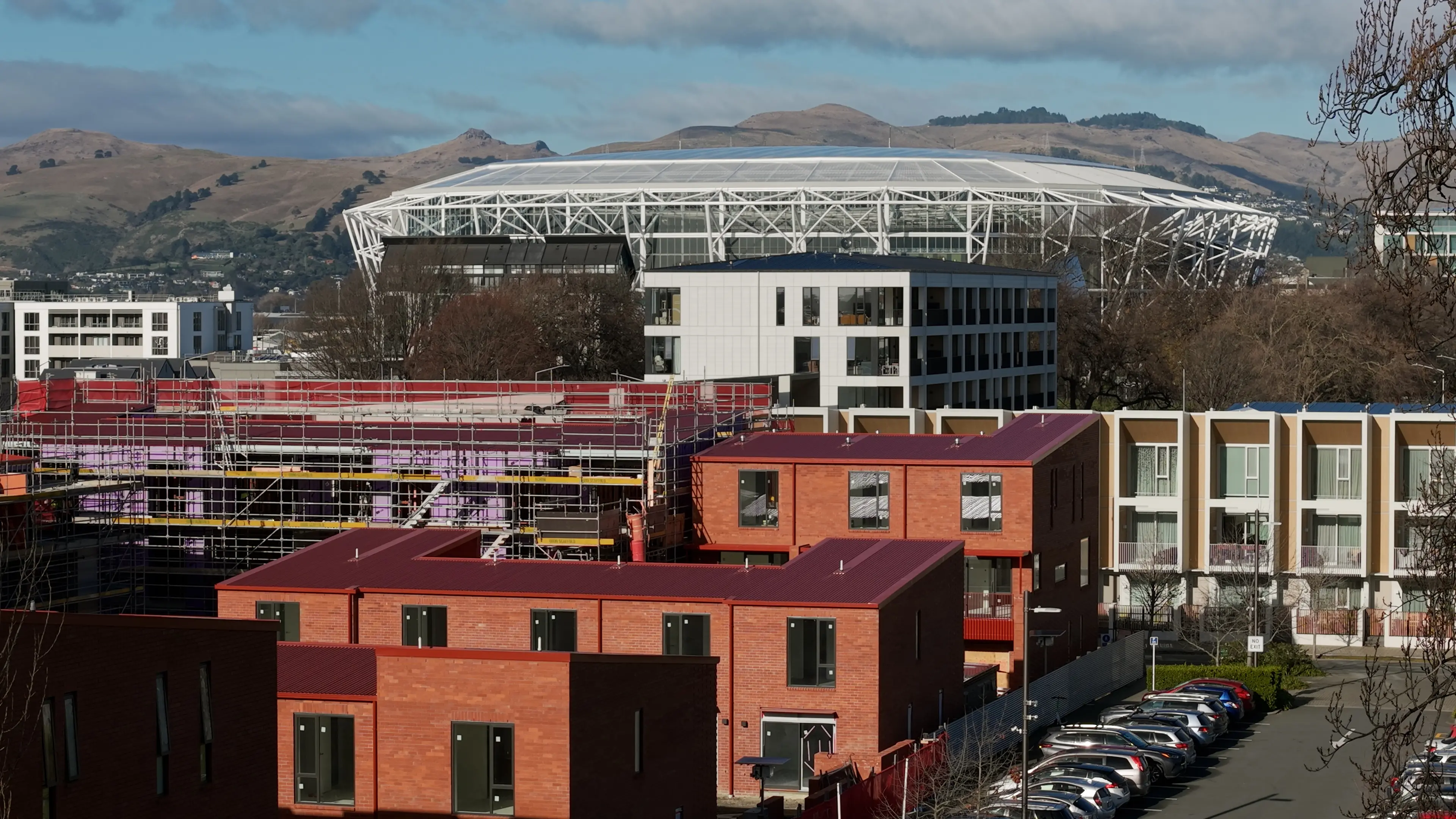
One statistic says it all– 484 new dwellings have been built in the inner city in the last year, but only 50 people have moved into the area. “Some of the ones that are being built now aren't even really studio apartments,” says Jardine. “They just have a bed that falls down over the couch.”
When Frank Film visits this desolate dormitory town, there are few people about, but producer Gerard Smyth manages to find a couple of permanent residents, who seem somewhat bemused by where they’ve found themselves living. “I wanted to live in a community, and a neighborhood with permanent residents,” says Bernard.
“You sort of give up talking to people,” says Dale, “because you're going, "oh, this is a new neighbour, but it's not. It's someone who's here for 24 hours or 48 hours.”
It’s not necessarily, says Jardine, the developers’ fault. “They're just doing what the market tells them.” The blame, he says, lies with the Central Government, which has allowed this situation to unfold without giving City Councils the necessary tools to override the process.
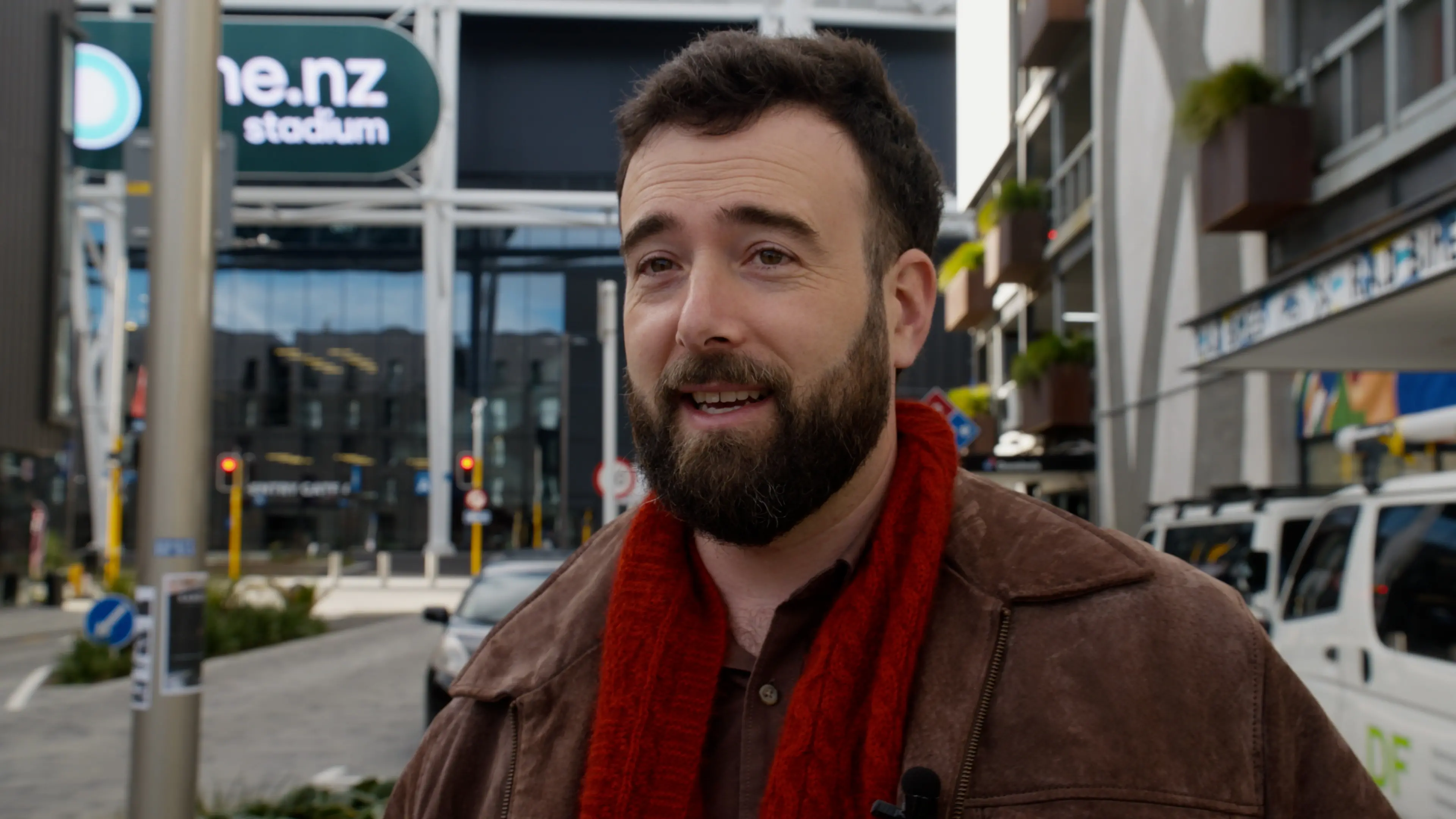
Jardine is asking for a bed register and a bed tax, so that property owners can be taxed correctly based on the usage of the dwelling, and for that money to be made available to support local infrastructure. The Council, he says, has been seeking this for a decade now.
He’s also asking for more power in zoning, so that “as a Council, we can actually say, ‘this area is for residents. We are not going to have any short stay accommodation in this area.’” This approach, he says, has been taken in other cities around the world, and “it brings vibrancy back to the inner city.”
It’s not too late, says Jardine, to save Central Christchurch. “We can have this amazing, thriving inner city if we just change the incentives. There is still so much land in Christchurch where we can build medium-sized, two-three bedroom homes, where families can live.”
Existing apartments, he says, can be used to home single people and students.
“We still have a real chance to make this city work if we do something about it now.”