


PHOTO
A 75-year-old woman has spent years watching rats multiply, rubbish pile up and her fence collapse at a vacant property next door — but Christchurch City Council says it may not have the power to make the owner clean it up.
Christine Hart had hoped the city council’s review of its Dangerous and Insanitary Buildings Policy would offer residents more protection.
“It’s absolutely crazy. The whole thing has just gone on and on and on,” she said.
“Nothing has changed, us poor people have to live with it.”
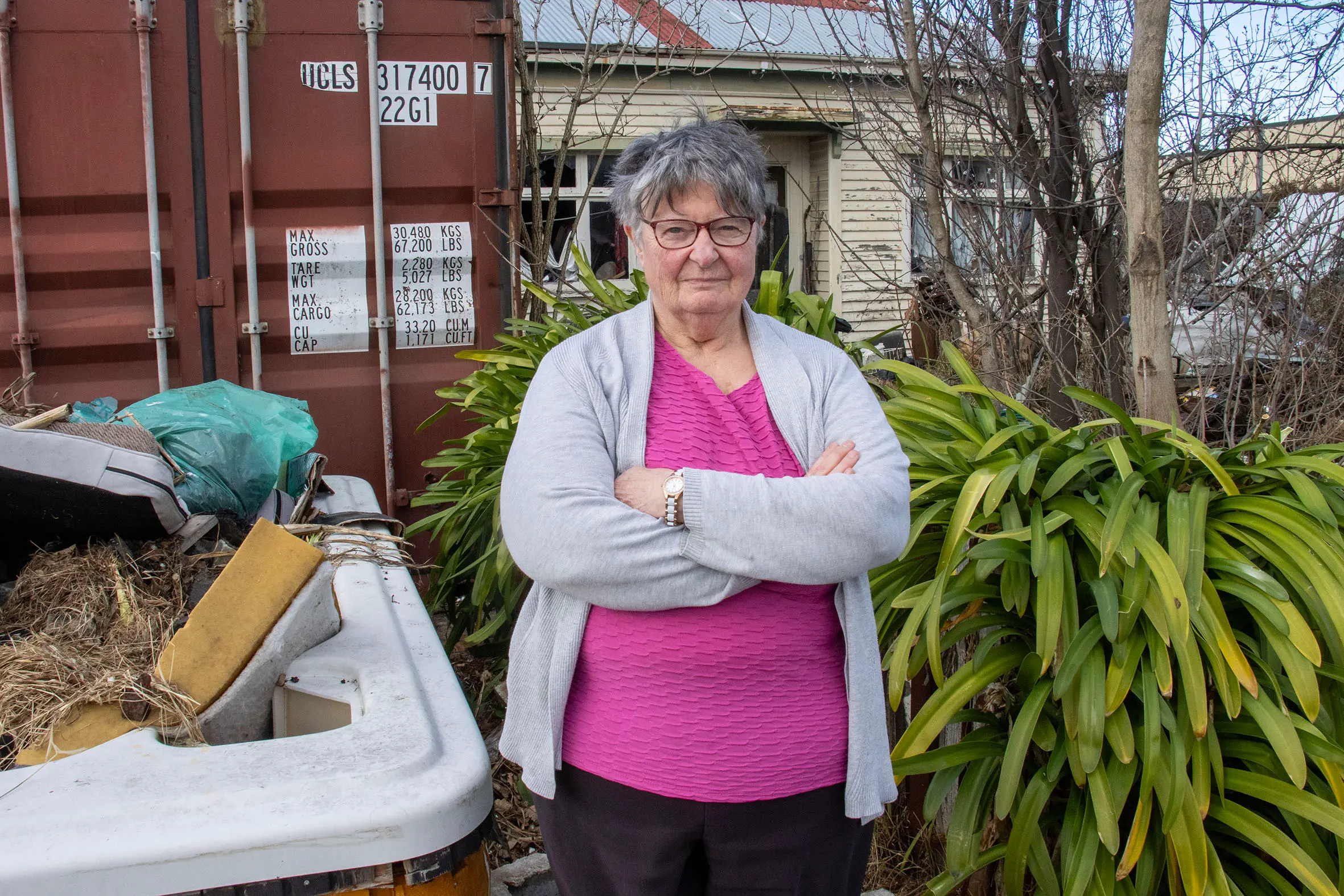
The retired nurse has lived in her Bordesley St, Phillipstown, home for 30 years and has complained to the city council and Fire and Emergency New Zealand about the neighbouring property.
The house was left vacant after its elderly owner moved into long-term care and died about two years ago.
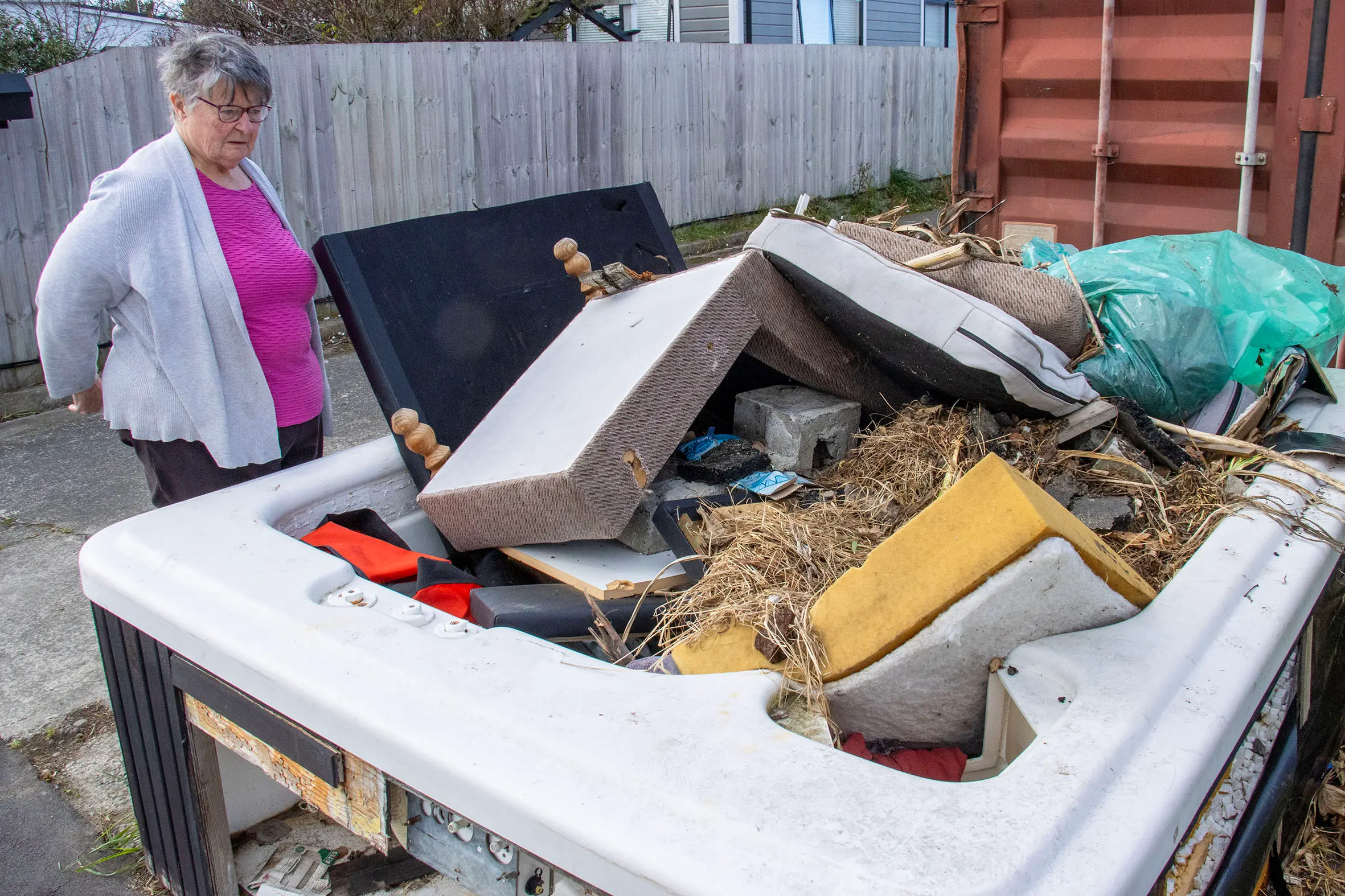
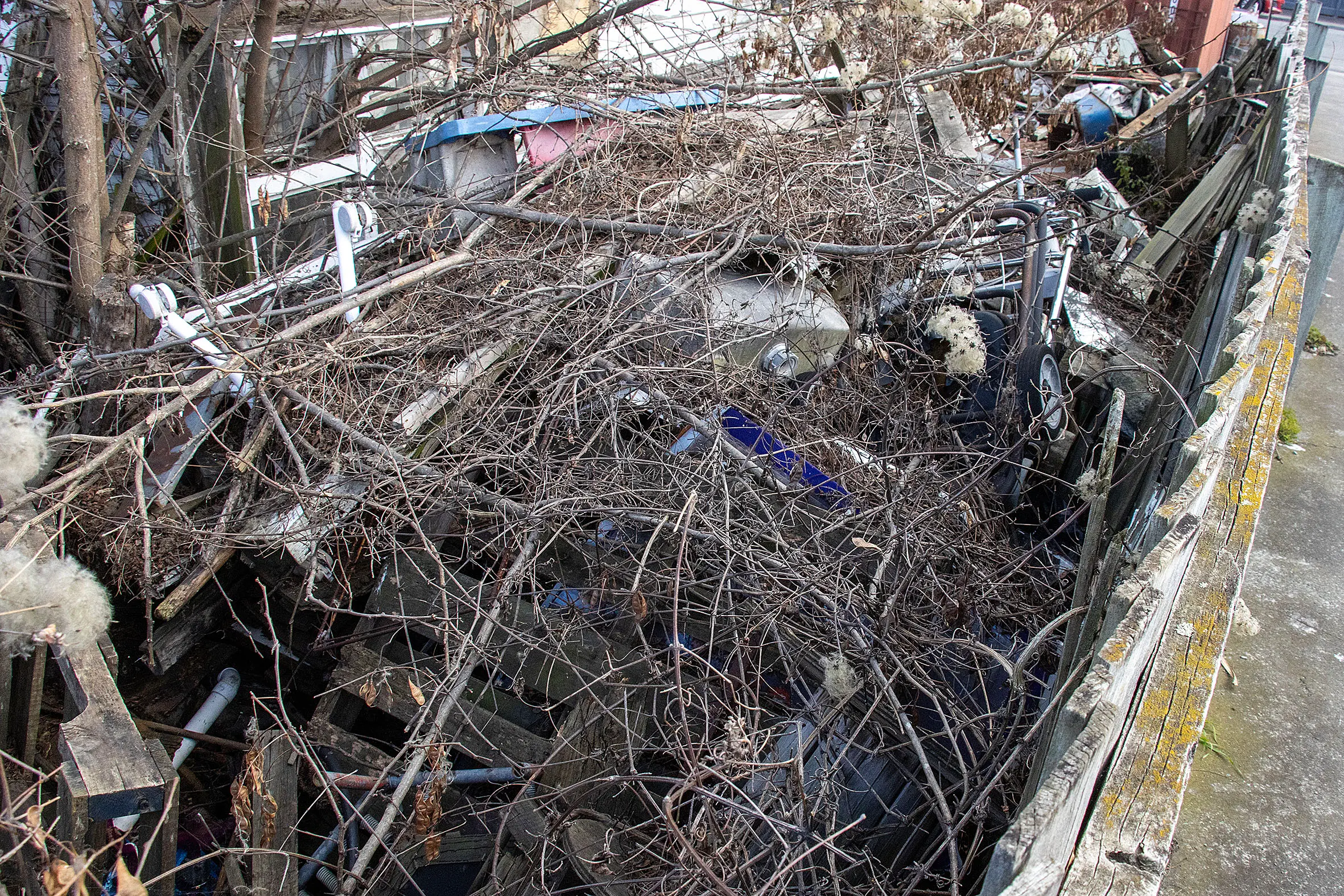
Hart said the property had deteriorated over the past five years, with rubbish piling up, rats multiplying and her fence collapsing under the weight of dumped material.
Her biggest concern is the rats.
“It’s a f***ing health hazard because of the rats,” she said.
She said her cats had caught rats over the years and brought them into her house.
“I woke up in the middle of the night, and one cat was running across me with a live rat.”
Hart said illegal dumping had also become routine, including a full-sized spa pool that appeared on the section last year.
“I came home just late morning and there was this f***ing spa there,” she said.
Her fence has collapsed twice because of rubbish piled against it and now needs timber bracing to keep it upright.
“But just the last two years of absolutely nothing happening and not hearing anything has been so frustrating,” she said.

The city council has admitted it is effectively powerless to act against many derelict properties – even when residents complain they are health hazards, fire risks and magnets for rubbish, crime and vandalism.
The issue came into focus as councillors voted last week to adopt an updated Dangerous and Insanitary Buildings Policy, with changes to terminology and clarity taking effect by November.
City council head of regulatory compliance Tracey Weston said the policy was a narrowly defined statutory tool under the Building Act 2004 and was not intended to deal with every derelict or nuisance property.
“The change does not alter the process for assessing dangerous and insanitary buildings or the way compliance action is undertaken,” she said.
“With respect to the policy – the bar has not been lowered.”
She said 74 complaints relating to dangerous and insanitary buildings were received during the last financial year to July 30.
“Five of the reported concerns meet the threshold for Dangerous Building classification,” she said.
Four submissions were received during consultation, with a common theme being that the city council should be able to intervene at a lower threshold.
City councillors used the debate to highlight their concerns.
Councillor Yani Johanson said he had heard from “very, very frustrated” residents who had made “multiple complaints over multiple years about the same property” that was a hazard and a fire risk, only for it to eventually burn.
“Letters sent, responses given, deadlines missed. It feels like things just drag on and on.”
He said the city council needed to take a more proactive approach and should consider lobbying central government for stronger powers if the existing law was inadequate.
Councillor Kelly Barber said the public struggled to understand why the city council appeared unable to intervene.
“I’ve learnt that the bar is high. It’s way too high, really,” he said.
“The general public don’t really understand how high the threshold is, and they can’t understand why we’re so powerless to actually do something.”
He said abandoned properties were “inviting fires and vandalism”.
For Hart, the city council’s limited powers mean years of complaints have left her and her neighbours feeling stuck.
“I’d like them to definitely sort something out. This is ridiculous that it goes on like this,” Hart said.
The city council plans to hold a workshop before November to review its New Brighton derelict buildings trial, including progress, lessons learned, gaps and whether it should be extended.
The New Brighton trial saw city council staff working with the owners of several vacant, underused and untidy properties to improve the appearance of the area.
Councillors will also examine how the VADE compliance model works in practice and consider improvements, further city council action and possible changes to its compliance strategy.
The VADE (Voluntary, Assisted, Directed, Enforced) model is a compliance approach allowing the city council to work with property owners to address issues before formal enforcement action is required. It provides a framework for escalating action when voluntary compliance is not achieved.
For now, Hart says she and her neighbours remain stuck waiting for a solution the city council itself says it may not have the power to deliver.
“We are left in the lurch here. We’ve got no contacts apart from the council, about who we talk to when everything starts happening,” she said.