
PHOTO
“World best” and a “game changer”: That is some of what is being said about the new communications system being built for police, ambulance and fire frontliners.
So what does it take to build a $1.6 billion system required to do much better both day in and out, as well as in the next Cyclone Gabrielle-type mass disaster?
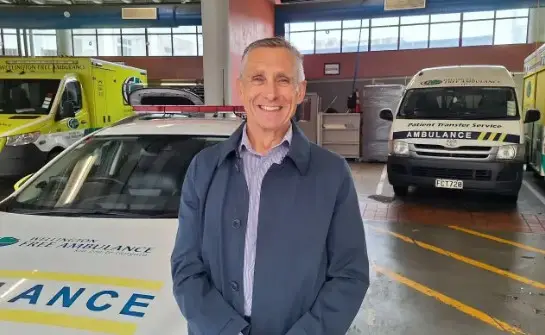
It takes installers like Rob Hardgrave with Novacomm, who has been in the garage among the vans at Wellington Free Ambulance in Thorndon.
“We are tasked with fitting the new PSN [Public Safety Network] radios to them,” Hardgrave said.
They had 104 Wellington Free vehicles to do, removing all the interior panels — “lower panel, B pillar, top and bottom, C pillar, top and bottom, all the visors, all the grab handles, the interior light … so we can put the antennas up top”.
The job, repeated over and over nationwide, is to wire all four emergency services into 19,000 terminals of the same digital radio technology for the first time, wherever they are.
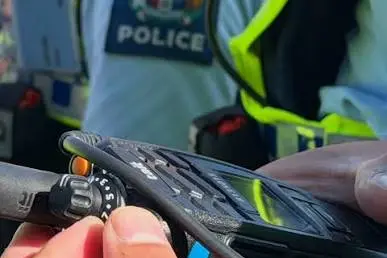
Hardgrave uses a new ambulance handset to beep across the zones.
“So all these zones that are in the radio… Wellington and Wellington New Zealand Police Network, South Island, South Island Mass Incident, North Island Mass Incident.
“So if you have an incident where you’re attending outside of the zone, outside of your district, then you should be able to get onto the same channels as everyone. … You jump on the Taranaki zone and you go into Taranaki and you’re on their channels.”
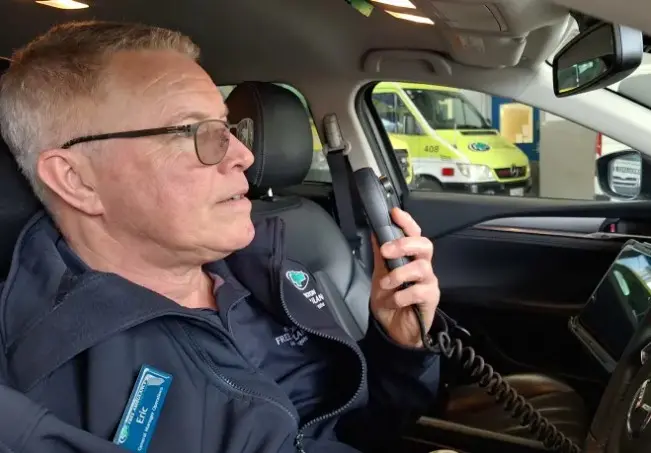
Ambulance general manager of operations Eric Tibbott has juggled keeping the fleet on the road, as well as off it for each vehicle’s day-long fitout.
He has just four to go.
It’s all about timing. “Every call, it saves lives you know, so time is of the essence. So in order to ensure we’ve got a reliable, resilient communications network, it’s just this game changer,” Tibbott said.
“I feel really confident now that we’ve got the best system, probably one of the best systems in the world.”
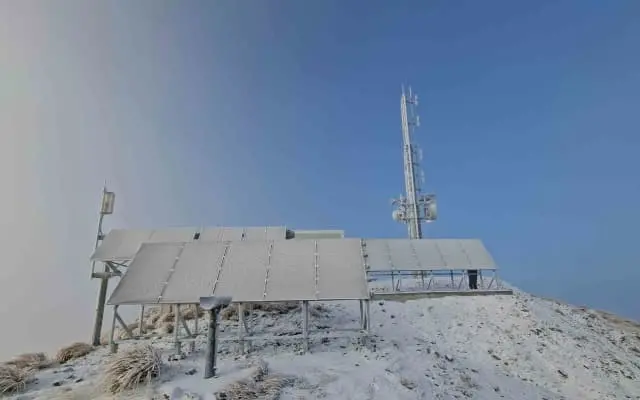
The network would have far fewer blackspots than the existing fragmented comms, plus it would be fully encrypted outside the main centres for the first time.
“We don’t want people rushing in,” Tibbott said.
But the timing is off in some ways: The system was meant to be running about now — alongside a network of hardened cellphones that 30,000 frontliners are already using — instead, construction is yet to start on over half the 500 relay sites.
Steve Mellsop is with main contractor Tait Systems.
“That was on the back of everybody assuming that the sites would be a bit of a cookie cutter, so once you’ve done 10, then you can replant,” said Mellsop.
“[But] every single site is different and every single site is hard.”
A Treasury report in March said the project had spent less than a third of its budget but used up over 80 percent of its time.
At this point, Tait has acquired 351 of 500 transmission sites; 187 have been built for testing, with 40 under construction.
The Christchurch company, which will operate the network for a decade, had more than doubled its design engineers, from seven to 15 or 16.
“They’re just churning out site designs.”
Once they were ready, they would be tough.
“In [Cyclone] Gabrielle the radio networks held up a lot better than the cell towers. Even the existing networks have a lot more resilience,” Mellsop said.
They use microwave for connecting rather than the fibreoptic cables that got taken out when the 2023 cyclone snapped bridges. And the batteries on key remote sites are designed to be longer lasting.
Canterbury is expected to go live with the radios first, and all regions by 2028.
Meantime, responders will keep using their existing radios — and Rob Hardgrave will keep on getting all the new gear onto the same frequency.
