

PHOTO
On a Wednesday afternoon in 1975, 3M technician Karl Marshall answered a phone call that came through to the Christchurch office on Kilmore St, completely oblivious it would lead to fulfilling a lifelong dream.
The call was from a logistics officer at McMurdo Station in Antarctica, which was having printing issues with its 209 photocopier. By Saturday, Marshall found himself on a Hercules, flying to the frozen continent to repair the machine.
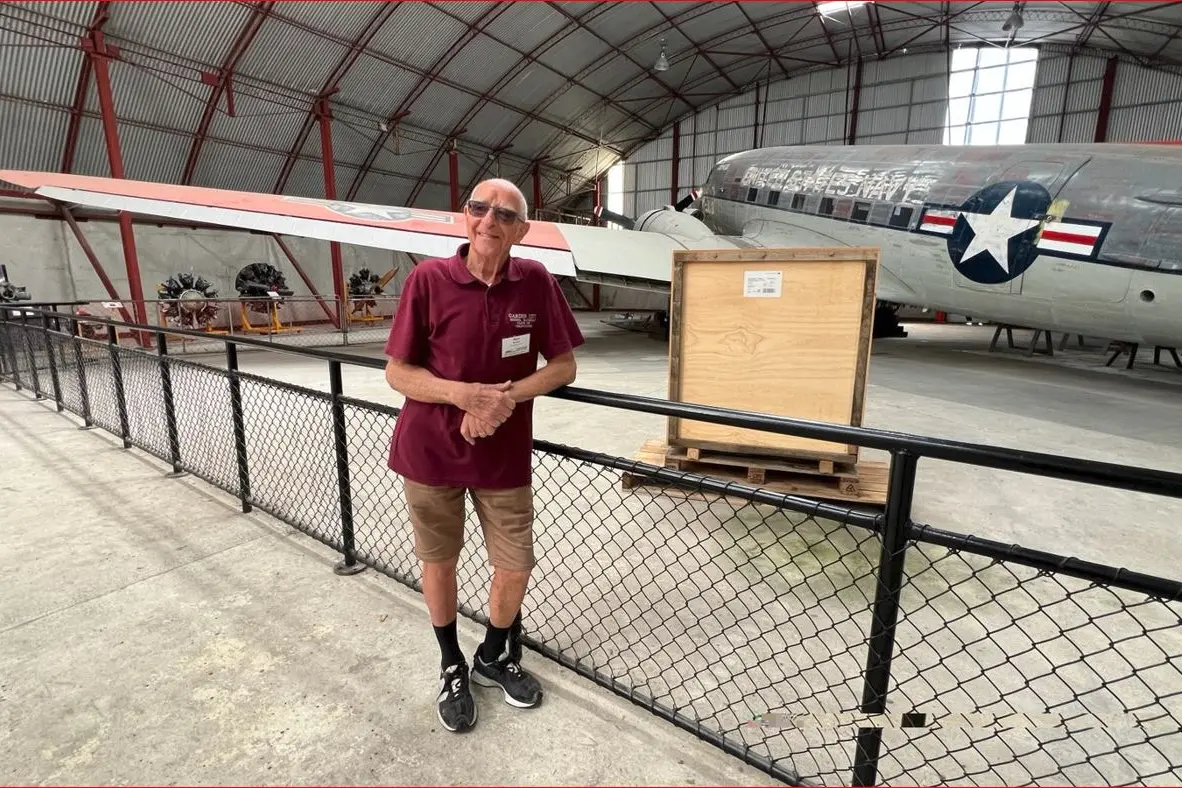
Fifty-one years later, Marshall’s story has formed the basis for 209 Antarctic Connections, a new exhibition at Ferrymead Heritage Park which opens on Saturday (2pm) as part of the Christchurch Heritage Festival. An exact replica of the photocopier will be unveiled at the opening.
The machine will sit beneath the US Navy Douglas LC-47, a military transport aircraft that was developed from the civilian Douglas DC-3 airliner, which used to carry cargo around Antarctica.
The interactive exhibition will be hosted by artist Rewa Rendall and polar historian Dr Ursula Rack.
Typically, McMurdo, the largest scientific research facility in Antarctica, would send the machines to Christchurch every summer to be serviced.
But due a number of mishaps with its Hercules on the ice there was a shortage of cargo space. The logistics person asked if someone could go and service the photocopier at the station instead.
Marshall had always been fascinated by Antarctica’s extreme weather conditions and the folklore surrounding early expeditions from explorers Sir Ernest Shackleton, Robert Falcon Scott and Roald Amundsen. But he never imagined he would be able to visit the continent.
He happily offered his services.
The next day – a Thursday – Marshall had an appointment with the United States Navy Hospital in Harewood where he had a thorough medical examination and an electrocardiogram, and received a certificate declaring him physically and mentally fit to travel to the Antarctic.
On Friday, he was asked to report with tools and spare parts to the Navy personnel office at 9am Saturday.
He received his extreme cold weather outfit, which he was required to wear on the flight in case they had to disembark unexpectedly. That night, Marshall was on his way.
The seating arrangement in a Hercules aircraft was fairly basic. Marshall described it as something between a hammock with a seatbelt and a cargo net.
Upon arrival at McMurdo, the temperature was just as freezing as he expected.
Marshall was chaperoned to his accommodation. He was informed if he stayed on the ice for longer than a week, was he entitled to a ‘McMurdo shower’, a procedure he said most parents would love for their teenage children to abide by.
“You enter the shower cubicle and turn on the water long enough to wet the body, you turn the water off, you soap yourself down, you turn the water on long enough to remove soap just applied. Turn the water off. Exit the shower.”
The work itself was fairly straightforward as Marshall was familiar with the equipment, but he had to keep his eye on the clock as to not miss dinner. The sun gave no indication to what time of day it was and did not get below the horizon while he was there.
During his stay he went to the Chapel of the Snows, a McMurdo landmark built by the US Navy Seabees in 1956 while off duty, using surplus materials like packing cases. He was also chaperoned to Antarctica’s first and only nuclear power plant, which had been decommissioned and was being dismantled at the time of his visit.
Marshall climbed Observation Hill, which overlooks McMurdo Sound and base. At its peak stands a 9ft-tall wooden cross which is a memorial to Scott who, along with his party, perished on the way back to their ship from the South Pole in 1912.
Marshall finished the job after several days, but was advised no flight was available to take him back to Christchurch for several more.
He was asked if he could fill his time servicing the machines at the South Pole, which he happily obliged to.
He was flown the 850 miles to the South Pole then transported to the old Amundson-Scott South Pole Station in a snow cat, a caterpillar bulldozer fitted with an enlarged passenger cabin.
The station built in the 1950s had just been replaced with a geodesic dome, which contained three research and living quarters buildings and an annex for fuel tanks, workshops and a power plant.
Marshall said it was like being in a snow cave, with sound of the poles and beams creaking under the weight of the snow making the experience feel eerie.
About midnight one night he went for a walk away from the station, a decision he looks back on as a “real dumb idea”.
He became aware of the total stillness and silence surrounding him. All he could see was bright, white snow, the dark blue sky above and the dead straight horizon separating the two.
When he turned around and saw the dome far away in the distance, it struck him, if a white out was to happen, he would not be able to see his way back to safety.
“I didn’t waste any time getting back and I couldn’t find the need to go for another walk while I was at the South Pole,” he said.
The next day he spent three hours on a plane back to McMurdo and another eight back to Christchurch.
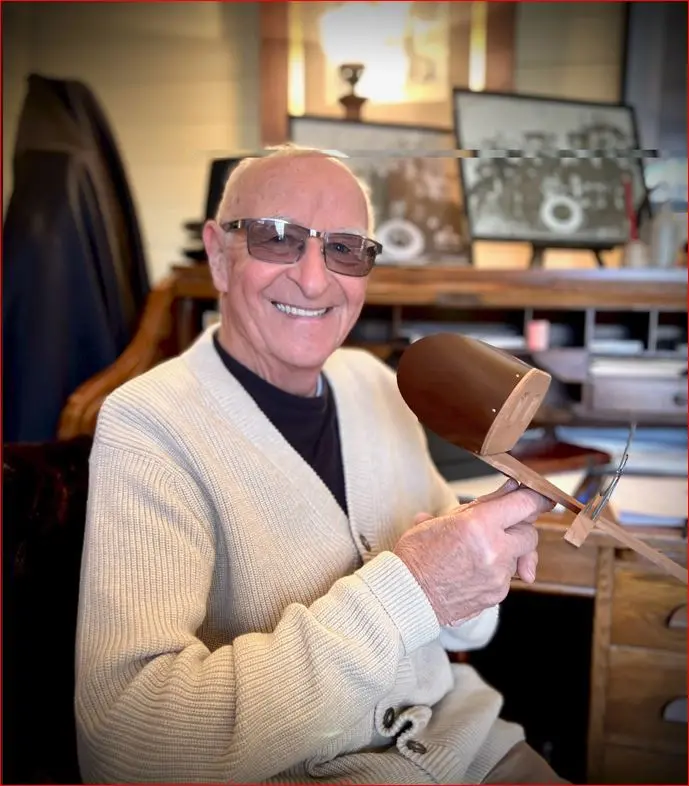
The 82-year-old regards his 10 days in Antarctica as one of the highlights of his life.
“A lifelong dream come true,” he said.

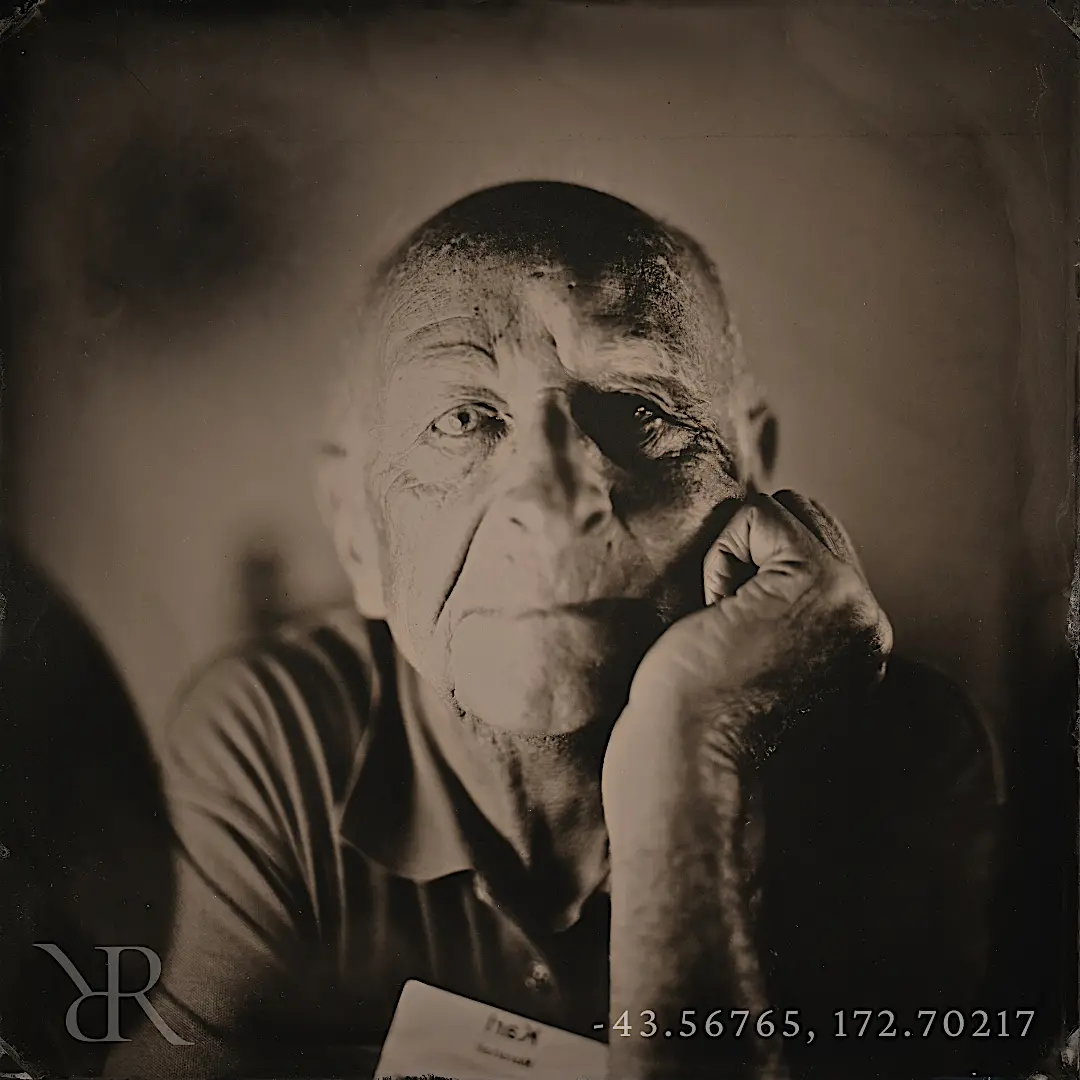
Rendall’s inspiration for the exhibition came after she heard Marshall’s story firsthand while taking his portrait two years ago.
She had just opened up a studio and darkroom at Ferrymead, which had been under utilised since it was salvaged from a property on Papanui Rd.
It had belonged to Sir Joseph Kinsey, who was involved in Shackleton and Scott’s Antarctic adventures.
The space was known to be utilised by photographer and cinematographer Herbert Ponting to process his images from Scott’s fateful expedition, she said.
When Rendall brought it back to life two years ago, she invited anyone who was curious to come through the doors to be photographed, using historical techniques to handcraft wet plate portraits.
Marshall was intrigued by her unusual, traditional methods and decided to go along.
He was surprised his story has been used to inspire Rendall’s exhibition, but the process has brought back a lot memories for him.
For the past two months Rendall has been inviting people through various networks to submit a story about their relationship with Antarctica.
Those who go along to the interactive exhibition will read the stories and are encouraged to add their own page on what the continent means to them.
Said Rendall: “Antarctica doesn't have a voice, it sort of happens through the voices of everybody that it touches who have gone there or had somebody that they know go there.”
Similarly to Marshall, she has had a long fascination with Antarctica, ever since she was given a National Geographic subscription as a child.
She dreamt of going there and taking pictures of landscapes never been captured before.
About 20 years ago she did just that, making first ascents of peaks on the Antarctic Peninsula, capturing it all with a little Russian stereo camera.
After her return she followed in the footsteps of Ponting, working with alternative processes like wet plate collodion, glass, ambrotypes and tintypes to develop the photos and has continued to do so ever since.
She published Marshall’s portrait with his story attached, which was seen by Doc Edge, New Zealand’s premier documentary festival, and put an immersive exhibition together in Auckland.
“How do we turn that photograph into something that lets people access the story? So that’s what seeded the idea of bringing the photocopier back to life,” she said.
“It’s literally a portal, it’s making a copy of your story and passing it on so it doesn’t get lost.”
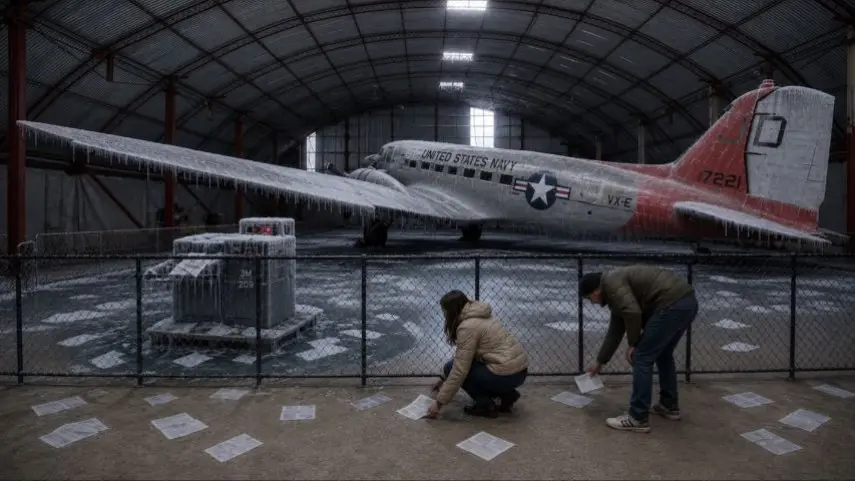
That exhibition, The Visitors Book, was a three-part narrative installation that links Marshall’s accidental adventure with the tragic final letter of Scott, written to Kinsey in 1912.
It was held in a silo last year and was awarded best New Zealand Immersive Impact Project at the festival.
The pages scattered on the ground were all copies of Marshall’s story, whereas Rendall’s latest exhibition contains anecdotes from 46 people on their connection to Antarctica.
“I thought, well, let's open it up for other stories,” she said.
“The job has really been in making this thing come to life through a way that people can engage with it.”
She wanted to bring it to Christchurch, one of five Antarctic gateway cities in the world, particularly for the heritage festival which this year is themed around connection.
- The exhibition runs until next Sunday from 10am-4pm. Visit https://rewarendall.com/events to find out more