
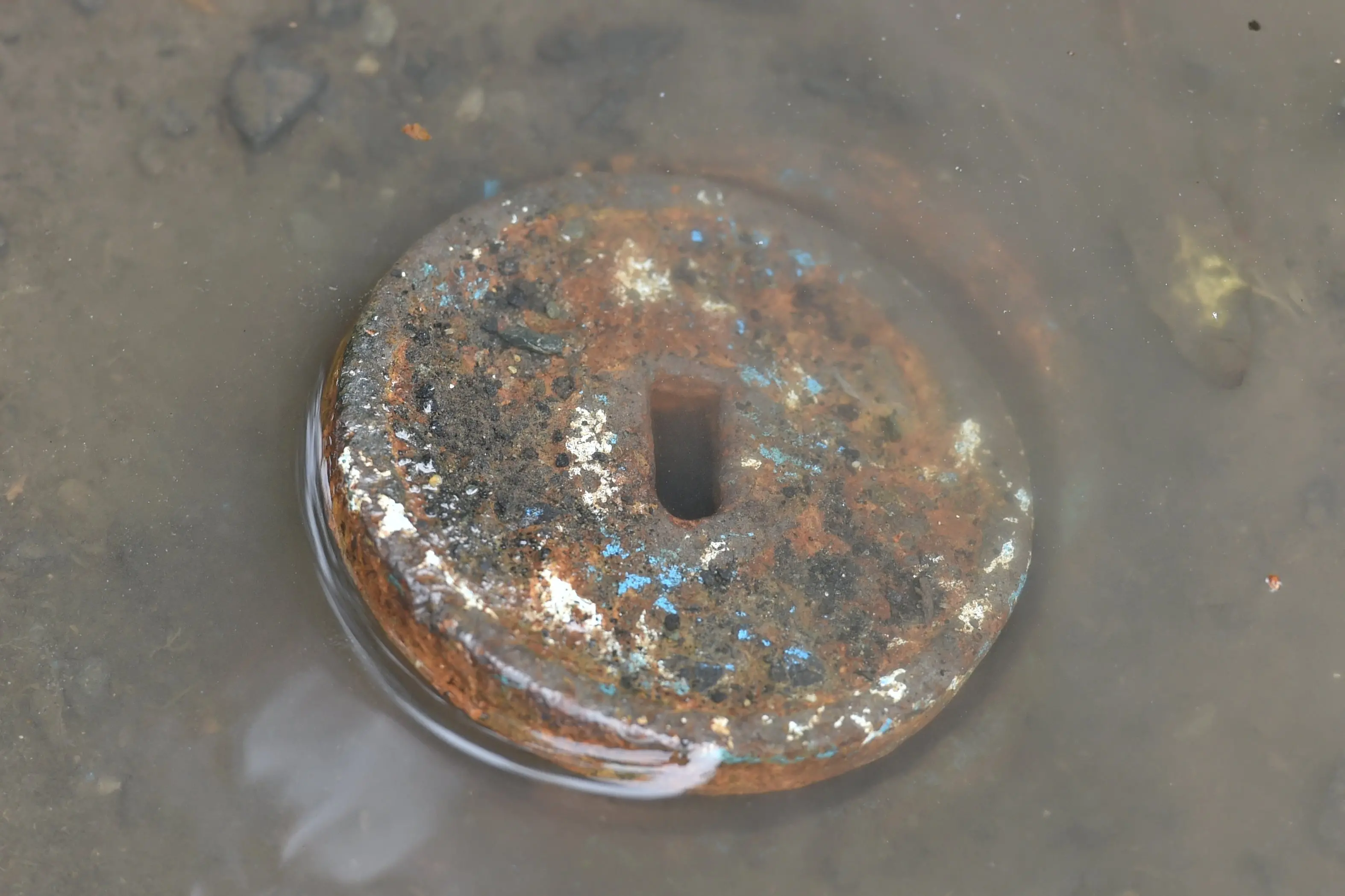

PHOTO
Water is a precious resource and the council is committed to reducing losses, infrastructure group manager Neil McCann says.
His comments come after Ashburton District, in the 2024/25 financial year was identified in the top four towns/cities in the country for 597 litres of water loss per connection per day.
Ashburton was behind Grey District Council with 1319, Far North District Council 1166 and Queenstown Lakes District Council
The findings were listed in the first comprehensive report from Water Services Authority (WAS) - Taumata Arowai which warned of "immense" and "severe" pressure across the country along with revealing New Zealand's worst and best performing regions when it comes to water management .
“We use water meters across the district to gather information about our water networks - they are a good management tool and we are currently installing 350 smart meters in Rakaia east as part of a trial,’’ McCann said.
‘‘These meters send data about water consumption every 30 minutes – about 162 have been installed so far and once they are all in we will analyse the data, which can indicate if there are leaks on council water mains, or on private property.
"As part of the trial, we have also put in three bulk flow meters on our big main distribution pipes going into Rakaia East – we will be able to do a more accurate water balance report to understand where the losses are,” McCain said
The council suggest if you have a meter, check it last thing at night and first thing in the morning – any night time use could indicate a leak in a pipe, or a toilet running because it needs a new washer in its cistern. Where a leak is suspected on private property, we alert the owner and encourage them to investigate and have any leak fixed.
The meters in Rakaia send information by wifi, whereas the meters in Methven are electronically read every three months.
“We will be looking for meters suitable for Ashburton properties in the next few years (as set out in our Water Services Delivery Plan). We already have meters on all our schemes, except the rest of Rakaia and Ashburton – and we have budget for this in the next two years,” McCain said.
Water services were regulated by the Ministry of Health, but a dedicated watchdog was set up after a campylobacter outbreak in Havelock North
It's the regulator's third annual report on water networks, but the first that brings robust wastewater statistics into the picture, using data from across all 71 managed network operators, servicing 84 percent of the population.
District council holds consents to take water from various sources for its 10 drinking water supplies, Ashburton town’s water comes mostly from eight deep wells, Rakaia’s from two deep wells and Methven’s from two infiltration galleries near the north branch of the Ashburton River.
"These consents have annual limits, that are part of the consent conditions.
Each drinking water supply has a treatment plant (some big and some small) that treats the raw water via a multi-barrier treatment process than can involve filtration as well as UV and chlorine disinfection to ensure it meets national drinking water quality assurance rules, as set by the Water Services Authority - Taumata Arowai.
‘‘These rules relate to the water itself, but also how council monitors, manages and documents it,” McCain said
The report said rural operators were spending about half as much on new capital as on operations, and "may not be investing enough in renewing and replacing existing assets to address poor-performing networks".¶Pipe conditions were typically better in provincial and rural areas with just 10 percent graded "poor" or "very poor" compared to 20 percent in cities, but cities were more up to date with monitoring.
Another problem was councils exceeding water take limits, with volumes reported for the first time.
By volume, a total of 644,810 cubic metres of water was taken above what consents allow - the equivalent of 258 Olympic swimming pools - the largest proportion of that in Hauraki (43 per cent) and Ashburton (38 per cent).
“The Taumata Arowai report relates to exceedances on the Methven/Methven Springfield supply in the 2024-25 year specifically the Methven Infiltration Gallery which exceeded its annual abstraction limit by the 258,374m3.
“Council had identified the increasing abstraction volumes a few years ago, and these are attributed to an aging pipe network (some sections are approximately 60 years old), and water losses in the network. Work has been prioritised to systematically replace pipes and focus on leak detection and installing water meters to address the high extraction, ie the areas of the pipe network identified as having the most leaks help inform our renewal programme, McCain said.