

PHOTO
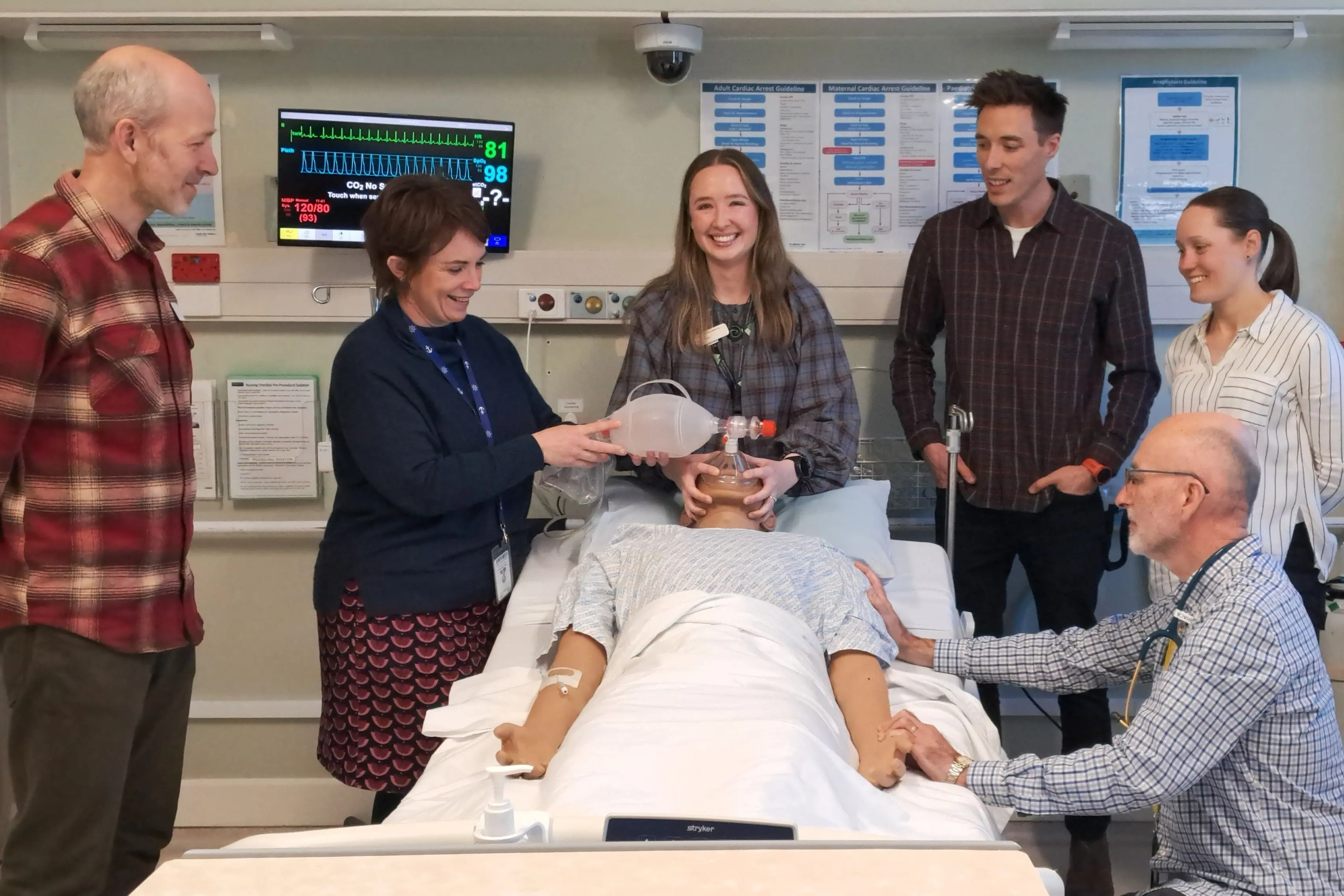
New Zealand’s first course on procedural sedation and analgesia for rural medical professionals got under way in Ashburton last week.
It aimed to help rural people to get the care they needed closer to home and whanau.
The University of Otago’s Rural Health Academic Centre Ashburton (RHACA) launched its simulated procedural sedation and analgesia (PSA).
Course director Dr Jack Haywood said in a statement said there was plenty of excitement about the process.
"We are excited to see what works well and what could be improved and will be studying feedback from both the course participants and teaching staff closely.
“It will enable participants to increase their clinical competence and courage when performing PSA in their specific rural setting,” he said.
The process involved controlled delivery of sedating medications to adults or children, to get patient comfort and cooperation during potentially painful procedures.
A previous study in New Zealand showed some rural clinicians were performing procedural sedation multiple times a month.
"In Ashburton, I suspect the hospital currently performs procedural sedation a couple of times per month but there is potentially scope for this to increase slightly with increased training and resource,’’ Haywood said.
“It is commonly used for joint dislocations, realigning fractured bones, electrical cardioversion of the heart, draining abscess, and suturing complex wounds.”
“This helps avoid the need for deeper general anaesthesia, which is typically delivered in operating theatres by specialist anaesthetists.
“In the rural context, we hope it will prevent transfers to urban centres, allowing increased access for care closer to home, whānau and whenua, with the potential to decrease rural-urban health inequities."
It could mean less time and cost for rural patients.
Dr Samantha Tait, a resident medical officer at Ashburton Hospital, is a new rural hospital medicine register and was looking for a strong foundation to build on over the course of the training.
"I am looking forward to having a strong simulation and practical element to the course as this is often where the best growth and learning is,’’ Tait said.
Tait signed up for the course advertised to rural hospital medicine doctors and trainees as it was an area she wanted to improve her knowledge.
"I am also based here in Ashburton, and it was very accessible for me to sign up as there are no additional travel barriers,” Tait said.
RHACA director Dr Chris Hill said procedural sedation and the space where acute medicine and anaesthesia collided, had been evolving over the past 20 years.
“With better evidence around techniques, drugs and the use of technology it made sense to bring everything together in a rurally delivered and contextually appropriate course.
“This course will allow rural practitioners to safely and confidently deliver procedural sedation. Thus, delivering better patient outcomes and keeping patients closer to home, rather than referring to a larger hospital for help."
The course is aimed at both rural hospital doctors and nurses.
Eight doctors and two nurses were on the course with differing levels of experience and all gained something from the course.
It is hoped to secure more funding to enable more nurses to attend courses in the future.
RHACA rural nursing lecturer Karly Burrowes said rural nurses were a vital part of the procedural sedation team.
“Being able to learn and practise alongside rural doctors in realistic simulation scenarios helps build confidence, strengthen teamwork and ensure patients can receive safe, high-quality care, no matter where they live,” she said.
What is RHACA:
RHACA is a collaboration between University of Otago, Health New Zealand, Advance Ashburton Community Foundation, and Mackenzie Charitable Foundation.
It is part of the University of Otago's Centre for Rural Health and is located in Ashburton Hospital.
It is a physical and virtual hub for inter-professional rural-health training and research. It focuses on rurally relevant education, research, clinical skills, and simulation.
Funding from the Advance Ashburton Community Foundation and the Mackenzie Charitable Foundation is helping support academic posts and student training within the centre.