

PHOTO
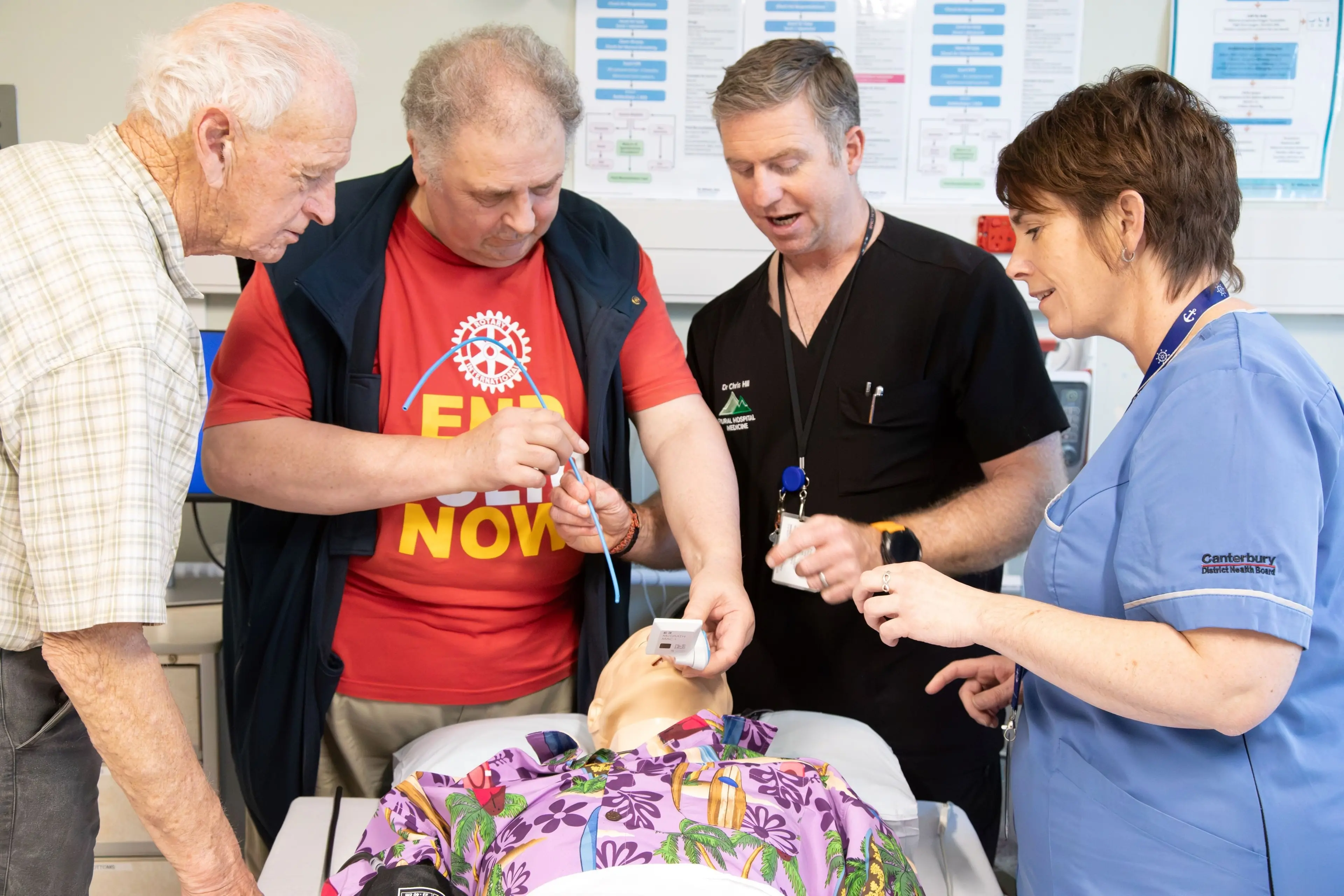
Seven Plains Rotary club members have taken a behind-the-scenes look into the workings of a digital video laryngoscope machine at the Rural Health Academic Centre at Ashburton Hospital.
It was the same machine funded by the club for the training centre.
Club member Allan Lill said funds were raised from the club’s annual classic car rally held during Wheels Week Plus.
They are running a “magnificent” training programme, Lill said.
“It’s really focused and it's got some big aims and it’s a big part of Ashburton Hospital.”
“It’s a belief that a well-equipped local doctor training centre in Ashburton really is the best way of giving to the community.”
Lill said 143 vehicles took part during the April rally which went to Hakatere Heritage Corner.
The donation was $5298.80 - the actual cost of the laryngoscope.
“We just like to support local charities or activities,” Lill said.
Past rally donations have gone to Starship Hospital, and Canterbury West Coast Air Rescue.
Clinical lead Dr Chris Hill said about 1000 students, from outside Ashburton, were likely to have passed through the centre for training in the past 10 years.
“We probably do twice as many as that from internal students,” he said.
It included resident medical officers, nurses and doctors.
“Yeah, it's pretty busy.”
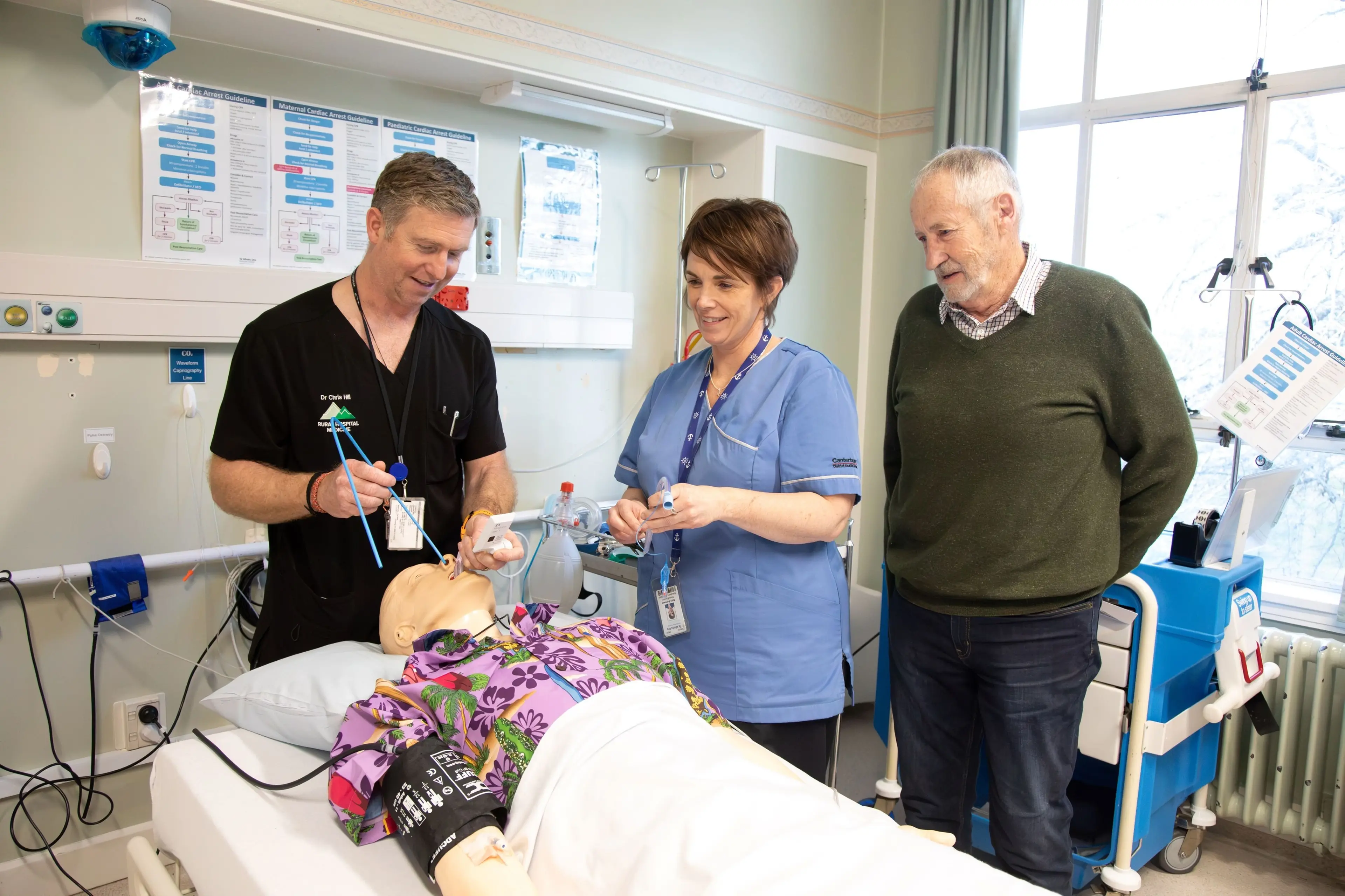
A medical mannequin was used to help with much-needed practice.
The newer models could be made to simulate breathing, crying, shouting, bleeding, make the noise of vomiting and swell the throat.
Teaching staff could also make the room noisy, to simulate real situations.
Being able to practice gave doctors procedure experience not necessarily used very often in smaller hospitals, Hill said.
The centre had two parts to its education.
“One is the undergraduates training for the rural hospital scheme and they will be people like myself that are training to work in rural hospitals.
“We do like a diploma of academic components”.
It includes simulation training for papers being studied such as an trauma and emergencies paper.
“And then there are postgraduate courses which bring in doctors from all around New Zealand,” Hill said.
“Most of them are qualified rural hospitalists, or ED doctors or GPs that work in very remote areas and they'll come and do a course as well.”
Three different options were offered in the rural interprofessional simulation course; medical emergencies, trauma emergencies or a procedural sedation course.
The facility at Ashburton Hospital generates some of its own funding but was aided with funding from Advance Ashburton Community Foundation and Mackenzie Charitable Trust. That funding was due to expire in 12 months.
“Advance Ashburton and Mackenzie have been amazing to us… (but) the reality is this stuff is workforce development and training.”
“We are looking at other ways of funding ourselves…But there is a question mark on how it looks.”