
PHOTO
School attendance is a complex issue, a Canterbury school board chair says.
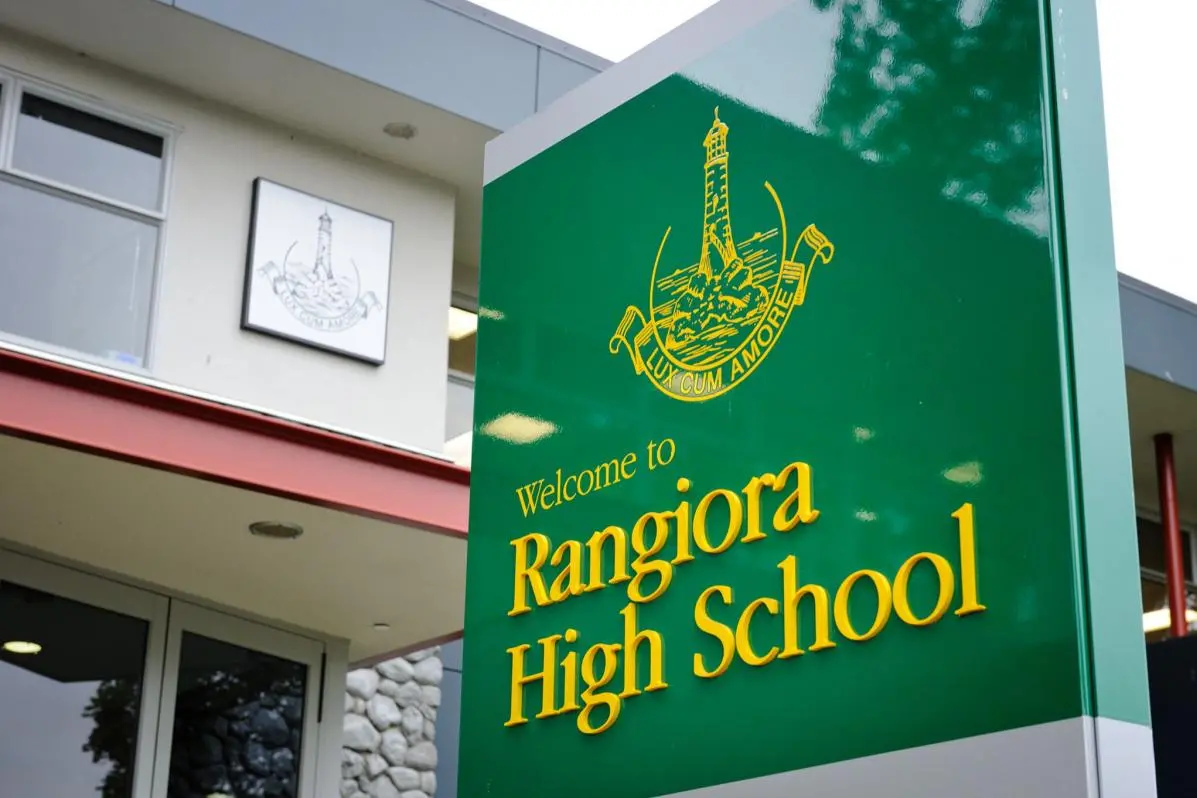
North Canterbury’s largest school, Rangiora High School, has seen an improvement in student attendance this year, but it has been ‘‘decimated’’ by staff sickness this term.
The school’s board of trustees presiding member Simon Green said schools needed to have high expectations.
‘‘But we also need to be careful not to oversimplify what sits behind the numbers.’’
School attendance is a national issue, with student absence rates skyrocketing in the wake of Covid-19 lockdowns in 2020 and 2021.
Under new Ministry of Education targets, schools are expected to aim to have 80 percent of students at school more than 90 percent of the time by 2030
Schools are required to have attendance management plans and to be more proactive responding to student absences.
While other local schools have engaged Tuahiwi Education to manage high levels of non-attendance (absent for more than 15 days in a term), Rangiora High School decided to manage it in house.
Mr Green said employing an attendance officer has been a positive move.
‘‘Having someone who is part of the school and knows the students, families and local context means the work can be much more relational.
‘‘It isn't simply about chasing up absences. It's about understanding what is preventing a young person from being at school and working with them and their family to address it.’’
Students can be absent for a variety of reasons, including sickness, a student who is disengaged, a family dealing with difficult circumstances or transport issues, he said.

The school’s principal Bruce Kearney said influenza had hit this term, with up to 35 teachers away sick on some days.
Rangiora has 1700 students and around 120 teachers, making it ‘‘a petri dish’’, with more than 2000 people passing through each day.
‘‘You can’t isolate people and my philosophy has always been to keep our school open no matter what. There has to be something really serious.
‘‘Closing our school pushes the problem back on parents and we want our students to be regularly attending school.’’
Being a rural school presented its challenges, as many students travelled to school by bus - and there was only one school bus in the morning, he said.

Calving and lambing season also had an impact on attendance.
Attendance could also take a dive in terms three and four, as Year 12 students realise they have already passed enough credits to achieve NCEA
On any given week, actual attendance might be below 50% in the classroom 90% of the time, as students navigated school sanctioned events and other activities.
The introduction of a new two-year qualification framework to replace NCEA from 2029 could make a difference to attendance, Mr Kearney said.
‘‘It will not be possible to achieve the new qualification by only attending three-quarters of the year.’’
But the majority of absences were medical, he said.
■ LDR is local body journalism co-funded by RNZ and NZ On Air.