

PHOTO
Data shows most vehicles using a now-busy road in a Canterbury township were travelling at or below the speed limit before measures were put in place to slow them down.
But Springs Ward Selwyn district councillor Denise Carrick, who campaigned for the changes, is standing by her belief that vehicles are travelling too fast on Lincoln’s Southfield Dr, despite residents’ complaints about the noise being caused by the new speed humps.
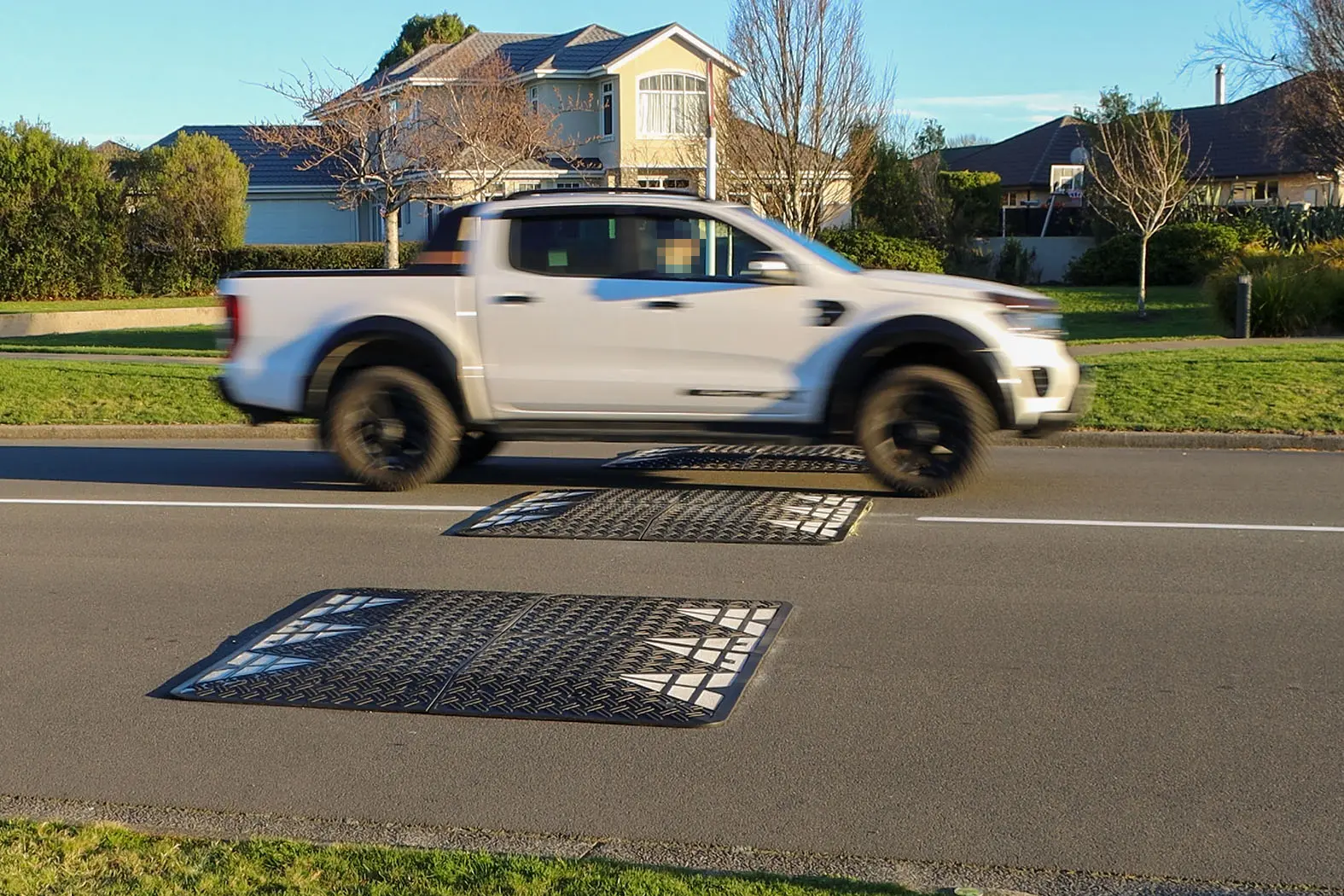
The rubber speed cushions were installed on Southfield Dr near Edward St and beside Ararira Springs School, where pupils cross the road, last month.
The changes were intended to slow traffic and deter drivers from using Southfield Dr as a bypass around the Gerald St roadworks.
The noise from vehicles, particularly those towing trailers, hitting the cushions near Edward St has frustrated residents, with one making a complaint to the council.
Before the cushions were installed, about 2229 vehicles were using the road, council infrastructure and property executive director Tim Mason said.
Road monitoring strips showed the average speed was 44km/h, with 85% of vehicles travelling at or below 50.5km/h.
When presented with the data by Selwyn Times, Carrick said her perception was that vehicles were going too fast.
“To me people seem to be driving too fast down there, and if that’s perception or reality, I don’t know. But to me and the people that live down there and me that’s what it looks like,” she said.

When asked how many residents she had spoken to, Carrick said she had been contacted by five people concerned about speed, in addition to a meeting with the school.
While Carrick acknowledged the noise is frustrating, she has not door-knocked along Southfield Dr before or after the changes because she “didn’t feel it was needed”.
“There were enough requests from the school and people who live there to slow the road down,” she said.
Mason said council staff visited the resident who complained last week.
“This is a trial which is in place in response to requests from the community, and we are looking at options for addressing residents’ concerns,” he said.
Mason said the location was chosen based on site observations, taking into account the school, the pedestrian crossing from the Liffey Stream walkway and the surrounding road environment, including lighting and visibility for drivers and pedestrians.
“The improvements were developed internally following site investigations, traffic observations, community feedback, and assessment by council staff.”
He said the package cost $33,000, with the speed cushions able to be reused.

During the trial, traffic speeds will be remeasured. There is no set date for when the data will be collected, with the council allowing time for traffic patterns to settle.
Despite the complaints, Carrick said the trial should run its three-month course.
“I’ve had several people contact me and say they want them removed and they don’t want the trial to continue.”
“I don’t think we should put things in and take them out again; you actually have to run a trial.”
Carrick wanted the speed limit to be lower, but that process would have taken much longer, requiring a cost-benefit analysis, public consultation and approval from NZ Transport Agency Waka Kotahi.