
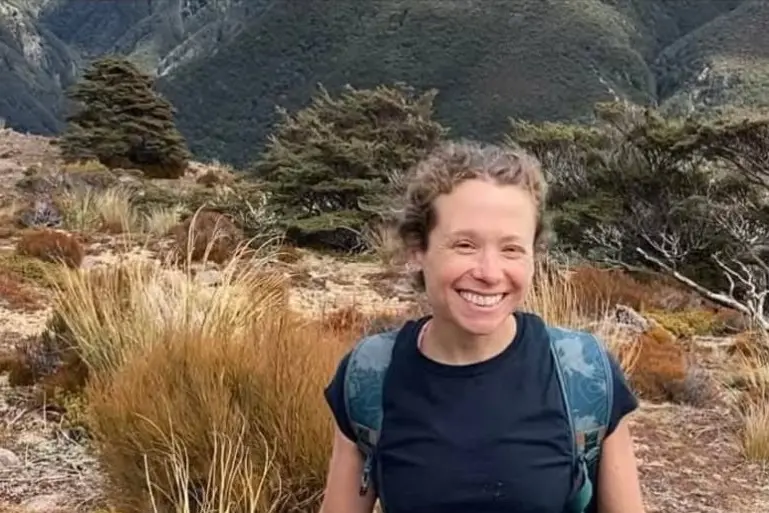
PHOTO
A Christchurch woman died of hypothermia while hiking in Arthur's Pass National Park after she became lost and could not find the marked track, a coroner has found.
Rebecca Woolley, 37, was an experienced tramper who set out out in fine weather on a day walk on Mount Aicken Track from the Devil's Punchbowl Track car park with a friend on 30 October 2021.
Her friend turned back early and Woolley continued alone but was reported missing that night. A search team found her body the next day, about 700m off the track.
In findings released on Wednesday, coroner Alexandra Cunninghame urged trampers to carry appropriate navigation tools before heading into unmarked terrain.
Cunninghame found Woolley died of hypothermia resulting from prolonged exposure to cold and wet weather, with a contributing spinal fracture likely caused by a tumbling fall or multiple falls.
In a statement provided to RNZ, Woolley's father Brett Woolley thanked the coroner for her inquiry and said he hoped the findings would prevent a similar tragedy happening to another family.
"Rebecca (Bex) was an incredible person who lived life to its fullest. She is very much missed by all that knew her," he said.
The coroner described Woolley as an "adventurous, curious, loving person" by her friends and family. She enjoyed outdoor activities and was experienced with day walks and multi-day tramps.
Woolley and her friend had planned to walk up the Cons Track, but when they could not find the start decided to walk Mount Aicken Track instead. Neither had been on the track before.
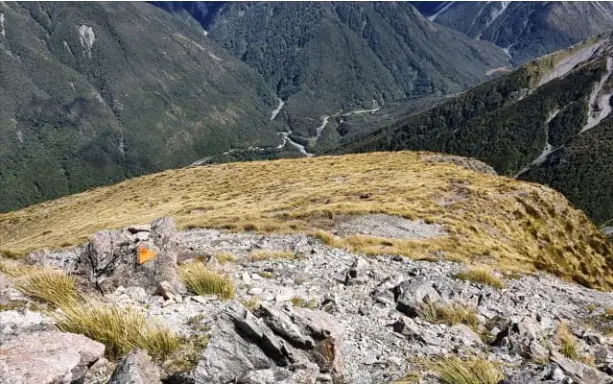
Mount Aicken Track branches off the Devil's Punchbowl Track near Arthur's Pass Village. The Department of Conservation (DOC) classifies it as an advanced tramping track, climbing about 540 vertical metres through steep, rugged terrain to the bush line.
DOC said the track ended at bush line and terrain beyond there was challenging and mostly unmarked. There were three strategically placed markers at key decision points.
Neither Woolley nor her friend had a map, compass, GPS device or a personal locator beacon.
At about 3pm the pair reached the bush line and shortly after started up the unmarked route into alpine terrain.
At this point, Woolley's friend decided to turn back and wait at the bush line because of a sore leg, while Woolley planned to continue for 30 minutes.
At about 3.40pm, Woolley sent a text message saying she had taken a wrong turn, but could see the road and would make her way back to the car park.
When Woolley had not returned by 7.35pm, her friend called the police. By that time the weather had deteriorated with rain and a significant drop in temperature.
"Police walked the Devils Punchbowl area calling out for Rebecca, to no avail. It was agreed that a full search and rescue operation would start the next day, once it was light," the coroner said.
Woolley's body was found at 1pm the following day in difficult terrain about 700m to the south of the track near Graham Stream.
Cunninghame said two scenarios explaining Woolley's death were possible.
"Either she fell, injuring her spine and was unable to move herself to a place of shelter before succumbing to hypothermia, or she had become hypothermic before falling," she said.
NZ Mountain Safety Council (MSC) chief executive Mike Daisley said the coroner's findings highlighted the importance of being fully prepared for all outdoor trips, including taking navigation tools, even for day walks.
Coroner Cunninghame said people who became lost should stop and seek help early while communication options remained available.
She also recommended DOC review the timing of its annual marker inspection on Mount Aicken Track, with a view to scheduling inspections for October when conditions allowed staff to complete them safely.
Since Woolley's death, DOC had updated its track webpage, highlighting the risks of venturing above the bush line, she said.
DOC visitor safety and standards manager Andy Roberts said markers on Mount Aicken were in place and in good condition at the time.
He said DOC staff were planning to check markers in early October if snow conditions allowed as per the coroner's recommendation.
"Following a tragedy in the same area in 2006, we installed more markers where it seemed trampers were taking a wrong turn and updated the information on our website highlighting the risks with this route and the difficult, steep terrain," he said.
Roberts said people becoming lost on unmarked routes was an increasing problem.
"What we have seen over recent years is people going off tracks or routes and not necessarily having the equipment or the skills to deal with the conditions," he said.
"It's a tragedy when people lose their lives in the mountains and we do as much as we can to prevent this, providing safety information on our website and at our visitors centres. Our tracks and structures are maintained for people to use, but on unmarked difficult routes even while doing a day walk, you can get into challenging alpine terrain pretty quickly and you need to be very careful, take precautions by having the right gear, maps and communication devices.
"If in doubt, ask experts and seek advice on whether the trip is right for you and your experience and always check the weather forecast."
At the time of her death, Woolley was living in Christchurch and studying for a nursing degree. She had moved to the city from Marlborough where she had volunteered with St John and Civil Defence.
"I know from the evidence before me that Rebecca's death has left a great hole in the lives of those who loved her," the coroner said.
