
PHOTO
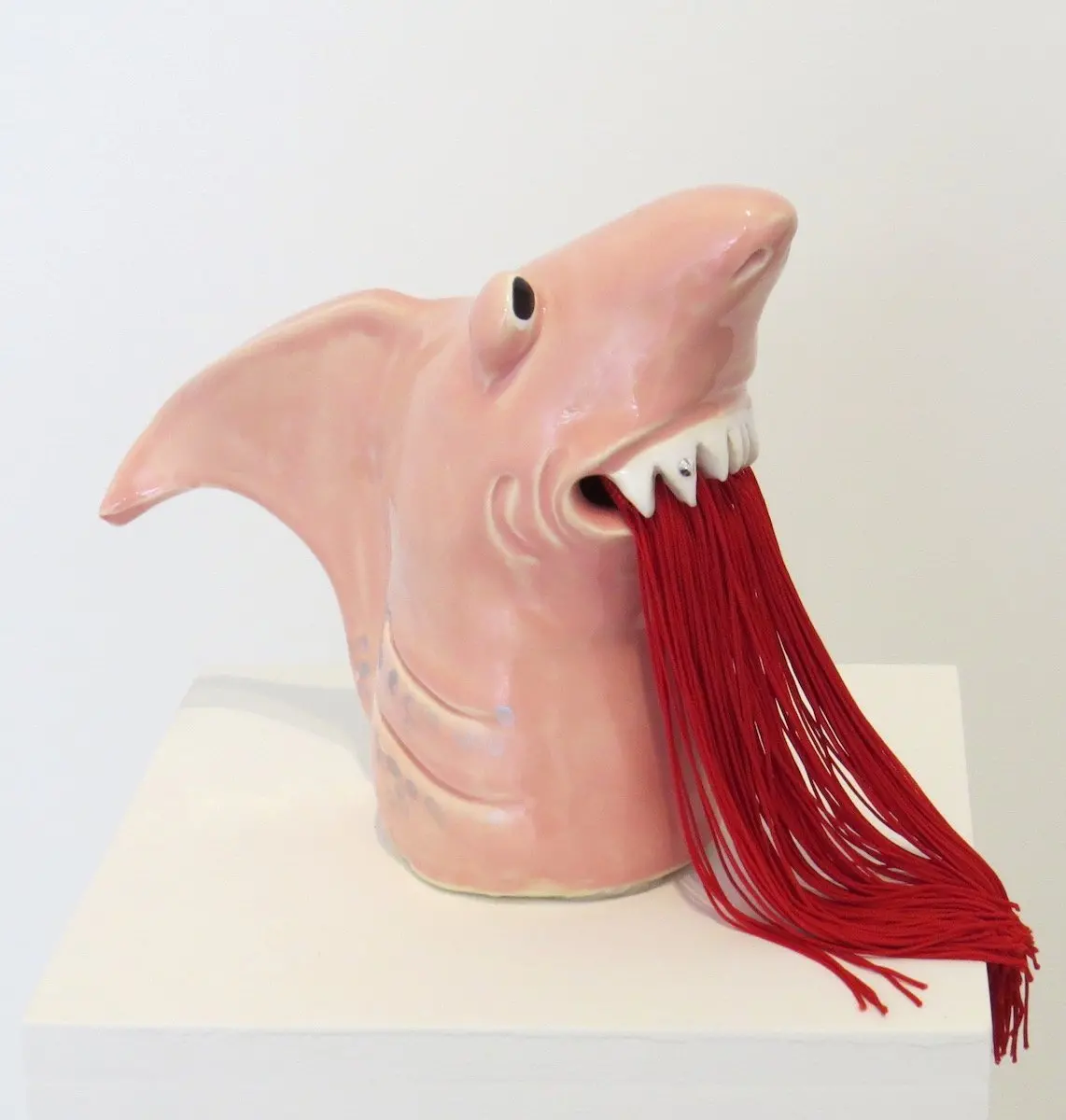
"Without You I’m Something", Denise Porter-Howland
(Hutch)
The quotidian routines and rituals of an artist’s life are laid bare in a semi-interactive display at Hutch.
Denise Porter-Howland has created miniature ceramic signs and sigils from her daily life, some realistic and others surreal interpretations or in-jokes. Enjoyment and entertainment are found in the everyday: stubbed-out cigarettes, sleepy eyes, fashion boots, half-eaten fast food, and discarded underpants are all on display in sculptural form in this exhibition.
A collection of works feature body parts, arranged into completed figures in the form of traditional surrealist "exquisite corpses" or the child’s traditional Misfits board game. Heads, torsos, legs, and arms are arranged in mismatched figures on one wall. The original intent was for visitors to the gallery to rearrange these pieces as they saw fit, but this has now been achieved in surrogate form only by use of photographic cut-outs on an adjacent plinth.
Among the most impressive items on display are two ceramic works featuring bright red fabric. Both are friendly but interpretable in a gruesome way. A red scarf forms either the torso for a ceramic dog’s head or gushing blood from a decapitation. The latter interpretation is drawn into sharp relief by a delightfully gleeful, Aardmanesque shark, red fabric flowing like blood from its razor-sharp teeth.
(Milford Gallery)
Milford Gallery’s exhibition "Strands" brings together art from three top Māori artists, each of whom is represented by works which reference the connections and conflicts between history and Māori spirituality.
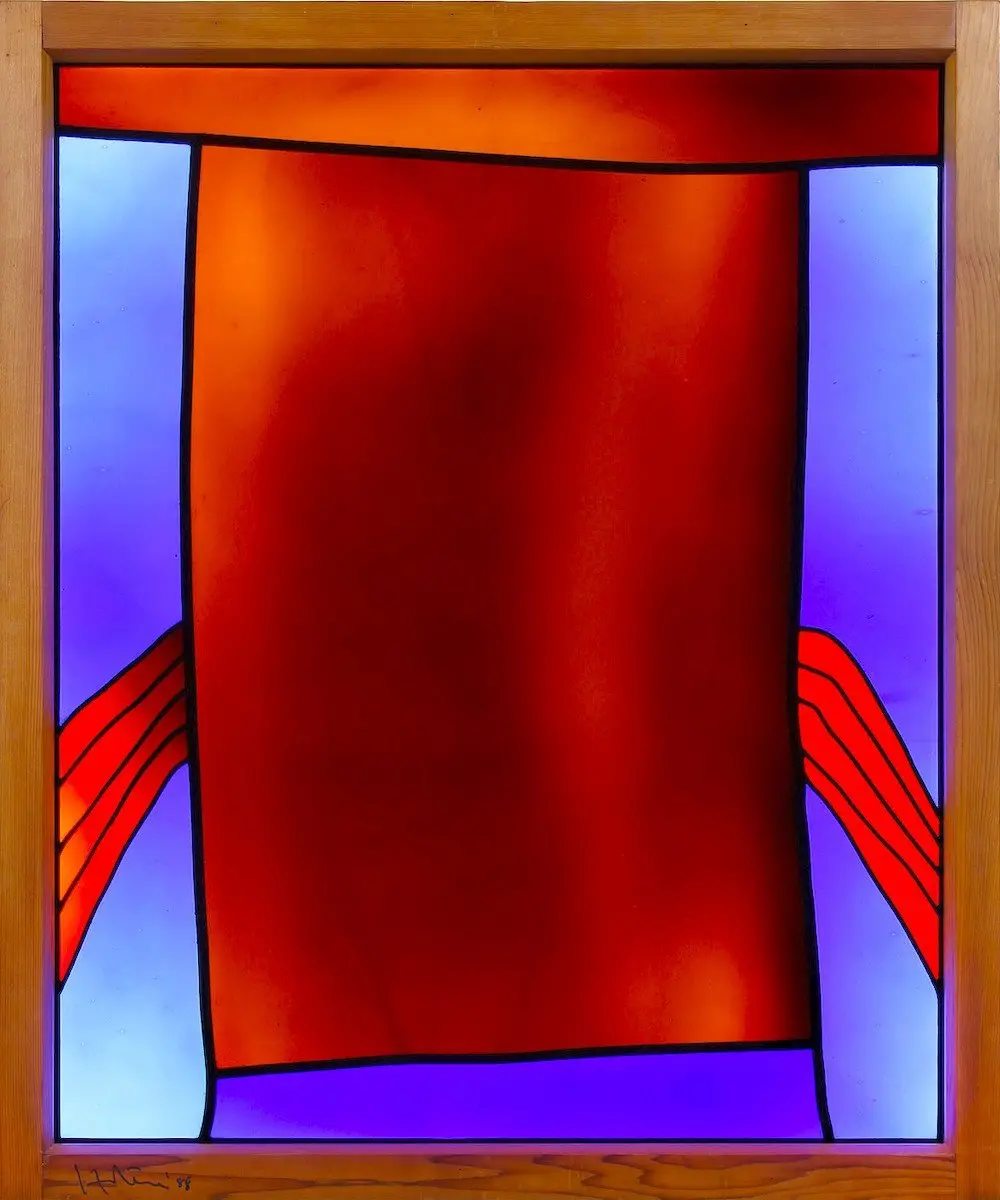
Whether by chance or by deliberate choice by Milford, the artists displayed cover three generations of New Zealand art. The spiritual tipuna of the three is without doubt the late Ralph Hotere. In the works on display by this master, we see elegies for lost land and lost people, brought to a summation in the elegant beauty of the abstract stained glass Winter Solstice and its antithesis, the leached colour and spiritual symbolism of Round Midnight.
Lisa Reihana’s precisely arranged photographic works look back on the era of first contact between Māori and colonist, and explore the points of connection between history and myth. We are presented with a deliberate, wilful artificiality which throws our hand-me-down knowledge of history and faded traditional belief into question.
The troika of artists is completed by Heidi Brickell, whose three mixed media works chart a course of farewell, concern, and return to salvation. The deep blues and greens of these canvases flirt with abstraction, yet use a symbolism clearly adapted from traditional Māori carving styles. The works are awash with their own symbolisms and symmetries, and make impressive viewing.
(Gallery De Novo)
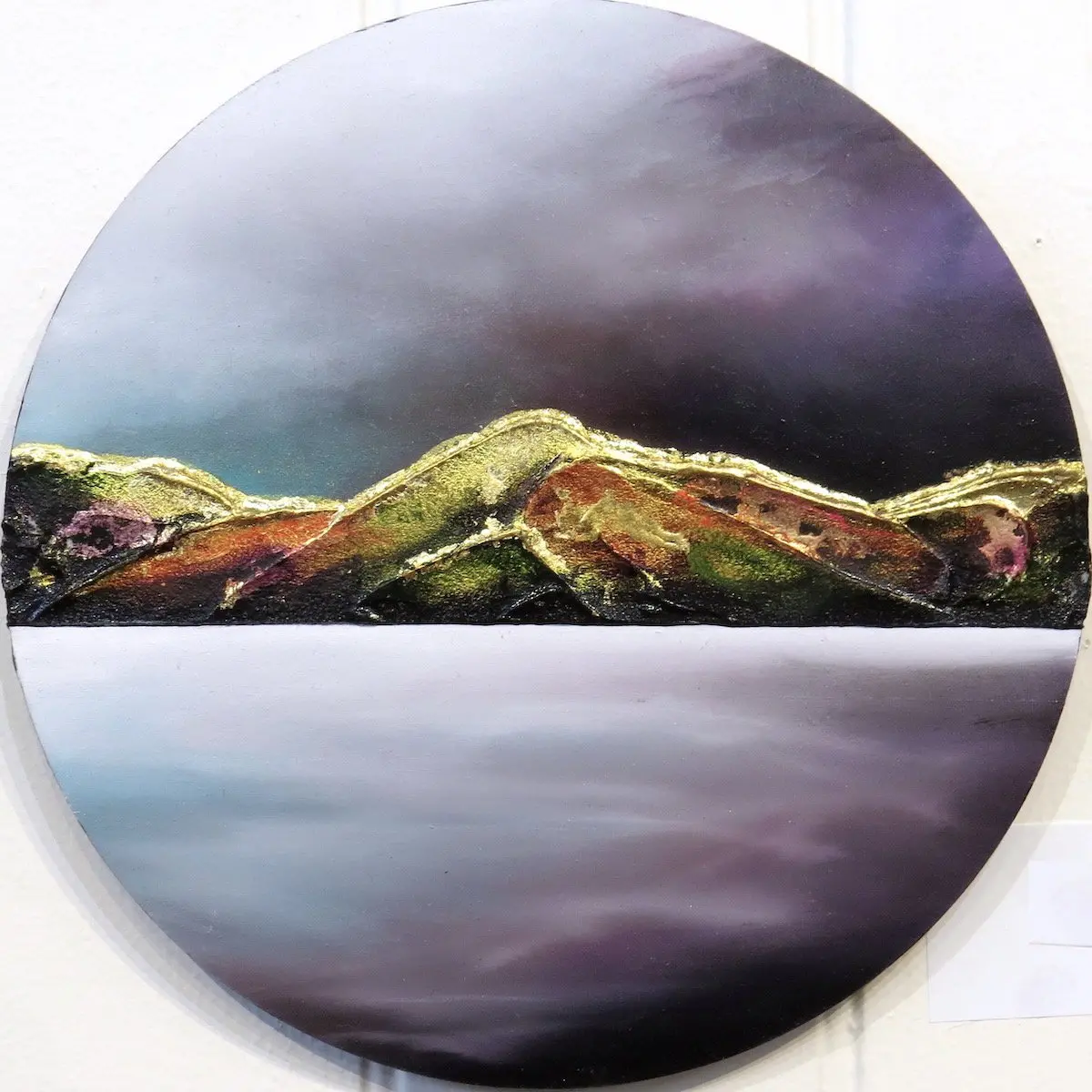
De Novo’s "Around Christmas" has become something of a local art tradition. The gallery’s walls are filled to overflowing with circles of art of all styles, media, and subject.
The exhibition’s format is simple. Local artists are invited to provide works which conform to an exact specification: a circle with a diameter of 200mm. The vast majority of the works on display follow this rule, most of them also on a standardised 9mm board backing. A few have strayed from the exact format but have retained it in spirit.
This year, an astonishing 300 or more works adorn the gallery, mostly cheek by jowl on the gallery’s main wall. Landscapes, abstracts, nudes, Christmas scenes, and many other subjects jostle for room and the viewer’s attention. Juliet Best’s glowing landscapes, Flynn Barnes’ sailing ships, Stephanie Crisp’s angular townscapes, Jan Ingram’s precise depictions of stained glass, and Pia Davie’s map collages sit alongside each other and alongside works ranging in style from Phillip Edwards’ gentle photorealism to Michelle McIver’s cubism, Greg Strait’s bright pop art, and Rae West’s amorphous plastic abstraction.
There is too much in this exhibition to review in a handful of paragraphs; I would suggest that the best way to experience this exhibition is to go and see it for yourself!