
PHOTO
(Fe29 Gallery)
"On the Peninsula" is an impressive exhibition by Chris Adams and Henk Van der Vis.
Chris Adams’ beautiful mezzotints show images of Otago Peninsula, and serve as an excellent valedictory for the artist, who sadly died late last year. In Macandrew Bay and Quarantine Point, Snowfall, the land is captured in a soft impressionistic manner, the tones and deep skies providing a significant emotional kick. The delightful Harbour Cone, Coronation Hall, provides a fine image of the perennial artist’s subject, somehow reminiscent of Robin White’s art. Elsewhere, in Karetai and Sandymount (Blue), emotion takes the fore. Though the places are clearly discernible, it is the atmosphere and feeling that is the real subject of the works.
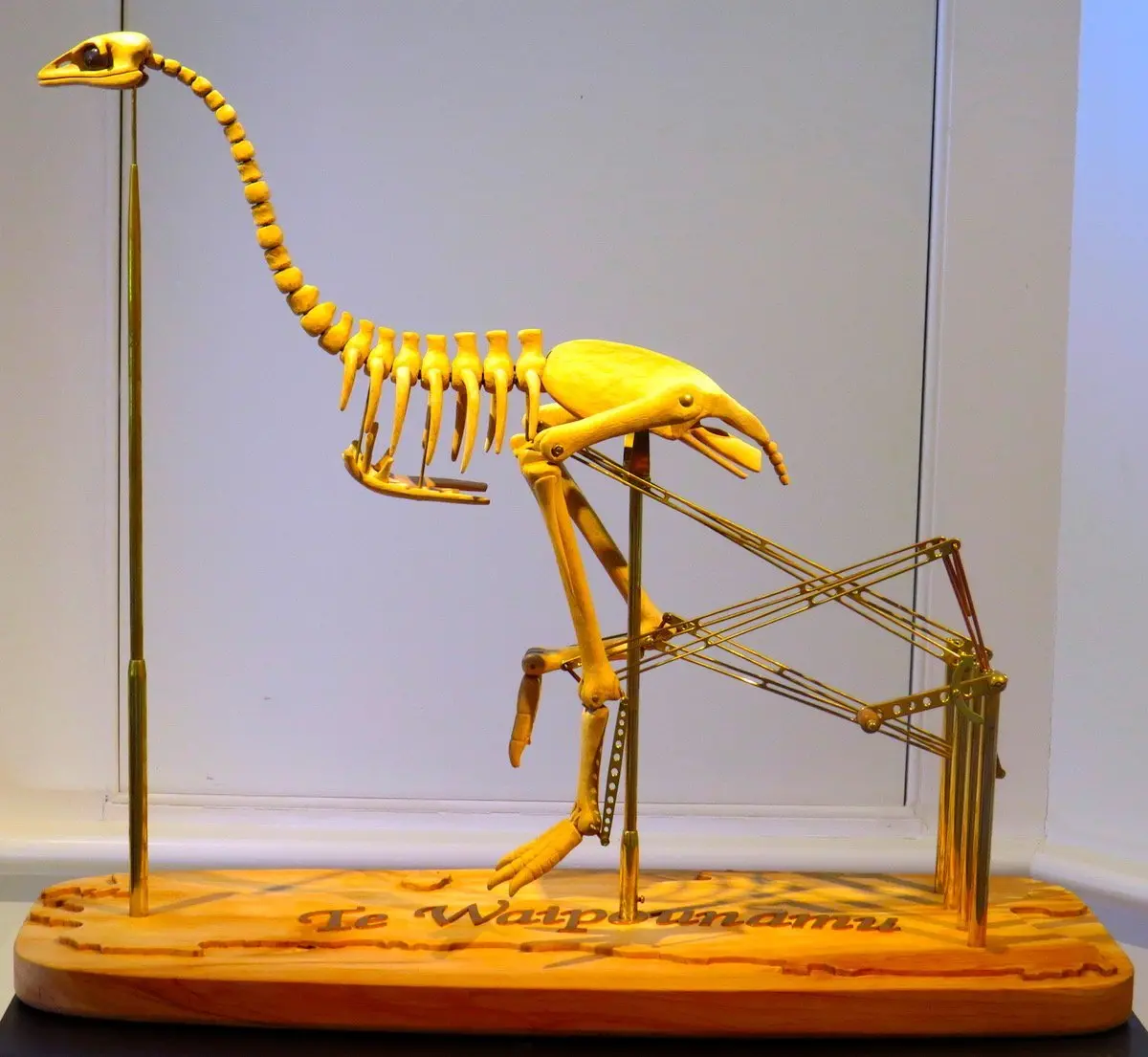
Under these prints sits a remarkable series of kinetic sculptures by Henk Van der Vis. Rimu and kauri creatures are articulated and controlled by brass cams and rods, allowing them to move as they would in real life. The pieces show exceptional skill in both sculpting and engineering, exemplified by a running moa skeleton. Van der Vis’ works culminate in Dame Nature — its twin rings of macrocarpa at least as much inspired by Dame Edna Everage’s fashion sense — and Motorvator, which combines several of the artist’s interests with its set of bongo drums powered noisily by an overhead cam engine.
(Hutch)
Memory is a fickle mistress.
Our recollections pour down from a distant past like Chinese whispers, subtly changing and modifying as the years progress. The more accurate representations of our life’s journey, in the form of physical records, can give us pause to reflect on the process of memory, the changes in our lives and on the people that we once were.
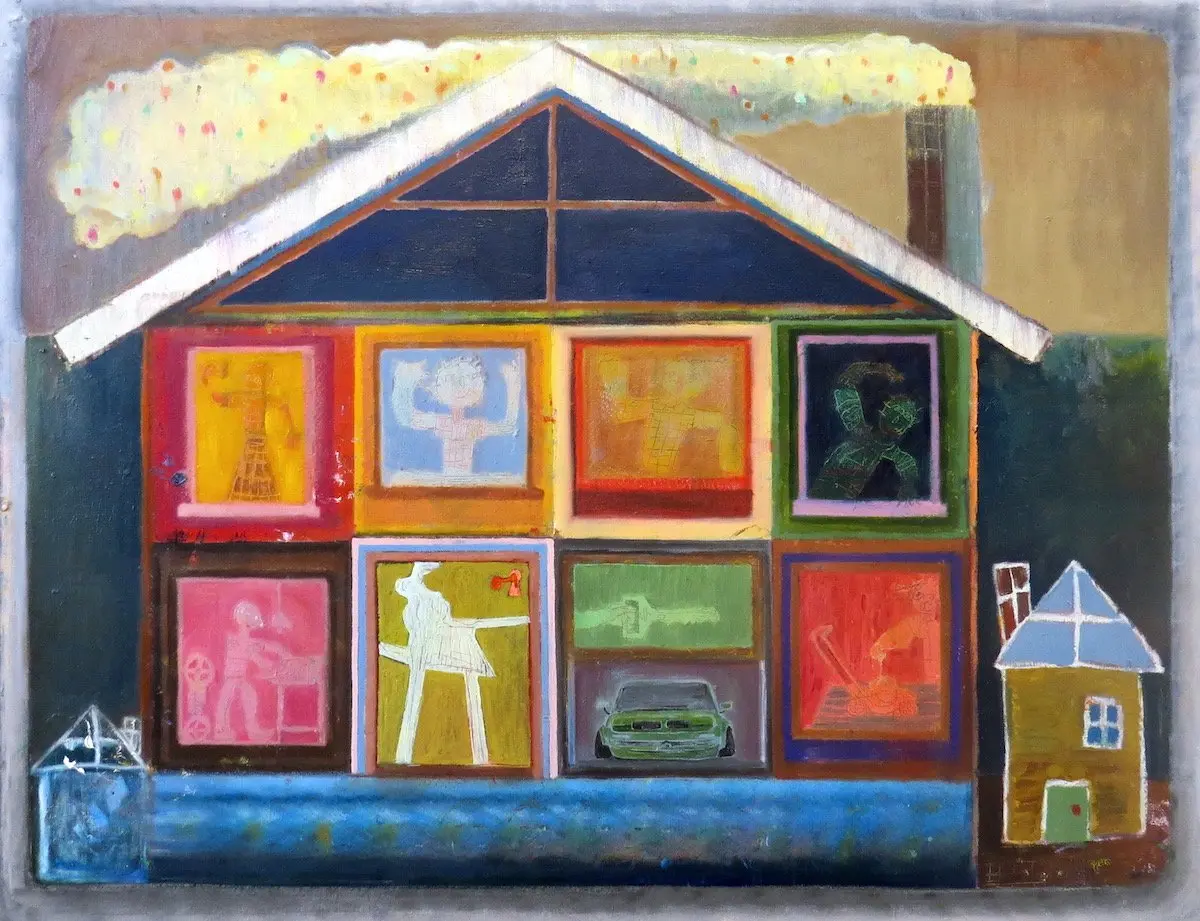
The discovery of an old school diary prompted just such thoughts for Hugo Van Dorsser. The childhood drawings and occasionally twisted narratives (partly a result of the artist’s dyslexia) led to a return in this exhibition to a series of primary school depictions of cars and houses.
The artist’s difficulties with the written word has led to the skill of "speaking visually", in which the scenes are more stories than simple pictures. Houses are depicted as haunted storyboards, cars are seen simultaneously from all sides as flattened constructs and the motif of the boot as a sign of bravado links with the teenage dream of the fastest, most "flash" car and clothes.
The exhibition becomes a process of communication for the artist, using the primitive images of childhood and newly acquired skills (such as the biscuit-like clay tablet "postcards"). The result is simultaneously as modern as today and as old as the oldest cave art.
(Pieces)
Childhood memories are also fuel for the art of Linda T. Cook, who currently has work on display at Pieces in Port Chalmers, though in her case as a beginning of artistic experimentation rather than as garbled memories to return to.
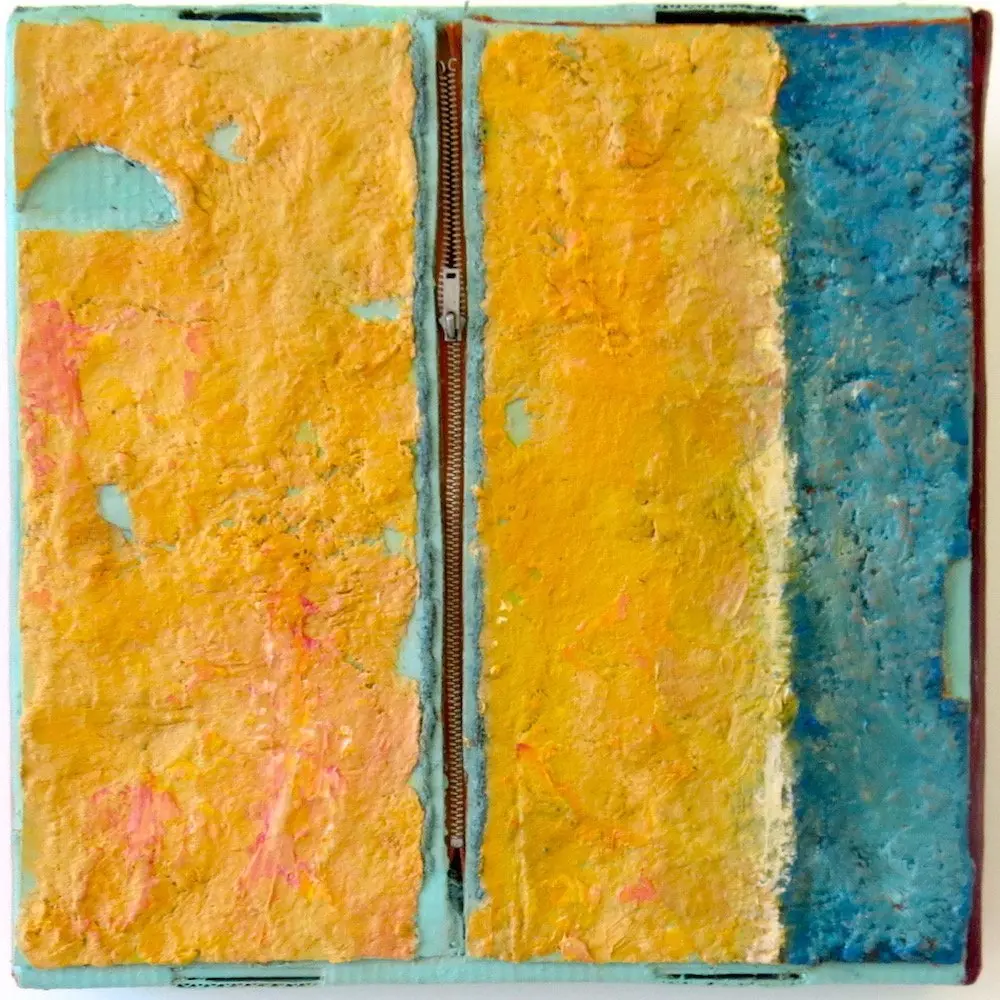
Cook remembers with delight the sheer fun of creating as she played, producing scenes from discarded materials and found objects. This delight has never left the artist, who continues to use "rescued and reanimated" items in her mixed-media works. Cook understands and feels the vitality and history of her materials, working to infuse them with new life as she combines them in her creations.
The resulting works are clearly abstract, but speak of the time and place of their creation, and of the former lives of the material. Bag handles, zips and cardboard offcuts vie for attention, each decorated in vibrant hues, reimagined as features of uncertain topography. The pieces are often inspired by a sense of place, the artist being consciously aware of the eventual habitat and surroundings in which her new living works will sit.
Alongside these collages, Cook displays several "internal metaphors", monotype abstract prints in which subject matter is implied without being formally declared. Geometries and stylised forms are presented in a way which could as easily be maps or anatomical features.
By James Dignan