
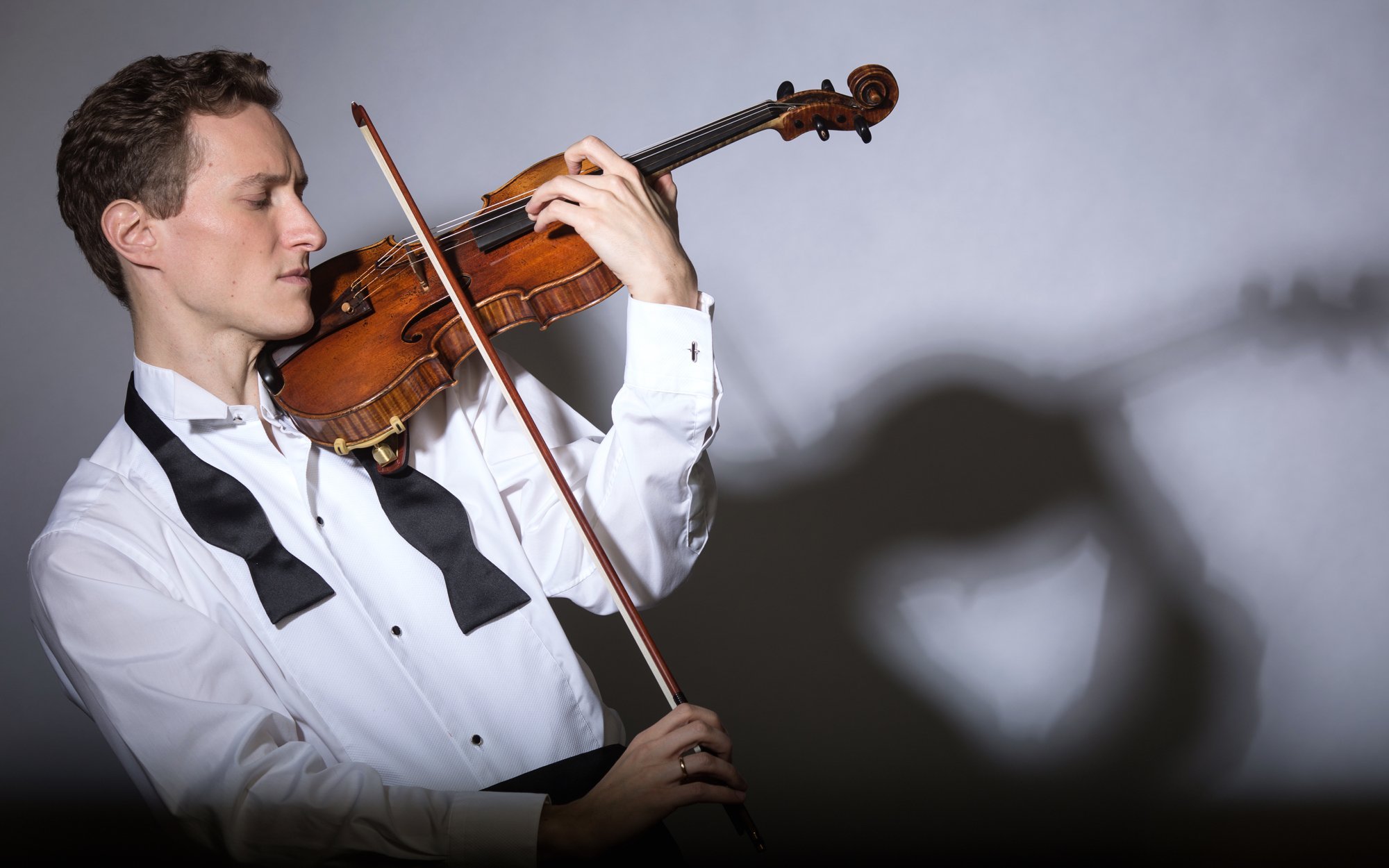
When it came time to put his application in for the Michael Hill International Violin Competition Josef Spacek was a bit busy.
The 22-year-old Curtis Institute of Music student rushed to meet the deadlines last minute, but admitted he did not send in his best tape or application.
So when he heard he only made the shortlist, he was not too surprised, but was disappointed as he had hoped to follow in classmate Bella Hristova’s footsteps who won first prize in 2007.
Life continued as normal in Philadelphia, where he was studying with Jamie Laredo, until he got a phone call, informing him a spot had opened up in the competition.
“I was so happy this happened but I only had a few weeks to prepare because I wasn’t expecting to go. And then I came and then I won.’’
Spacek, who grew up mostly in Prague in the Czech Republic, took out the $40,000 prize in 2009 with Prokofieff’s Concerto No 2 in G minor Opus 63.
The late Sir Michael Hill (1938-2025), a passionate violinist who created the competition in 2001, described Spacek’s performance that night as “immaculate from the very first note he played. He said he was nervous in the trio, but he wasn’t in the final’’.
Seventeen years later Spacek is returning to New Zealand to judge the competition’s 25th anniversary as part of an international panel.
Looking back, he can now appreciate the huge impact the competition had on his life and career.
The media in the Czech Republic picked up on his win giving him good exposure there.
Just as importantly the financial prize went towards his studies and living costs at the Juilliard School in New York where he was studying with Itzhak Perlman.
“That was really nice, so I didn’t have any debts after graduating.’’
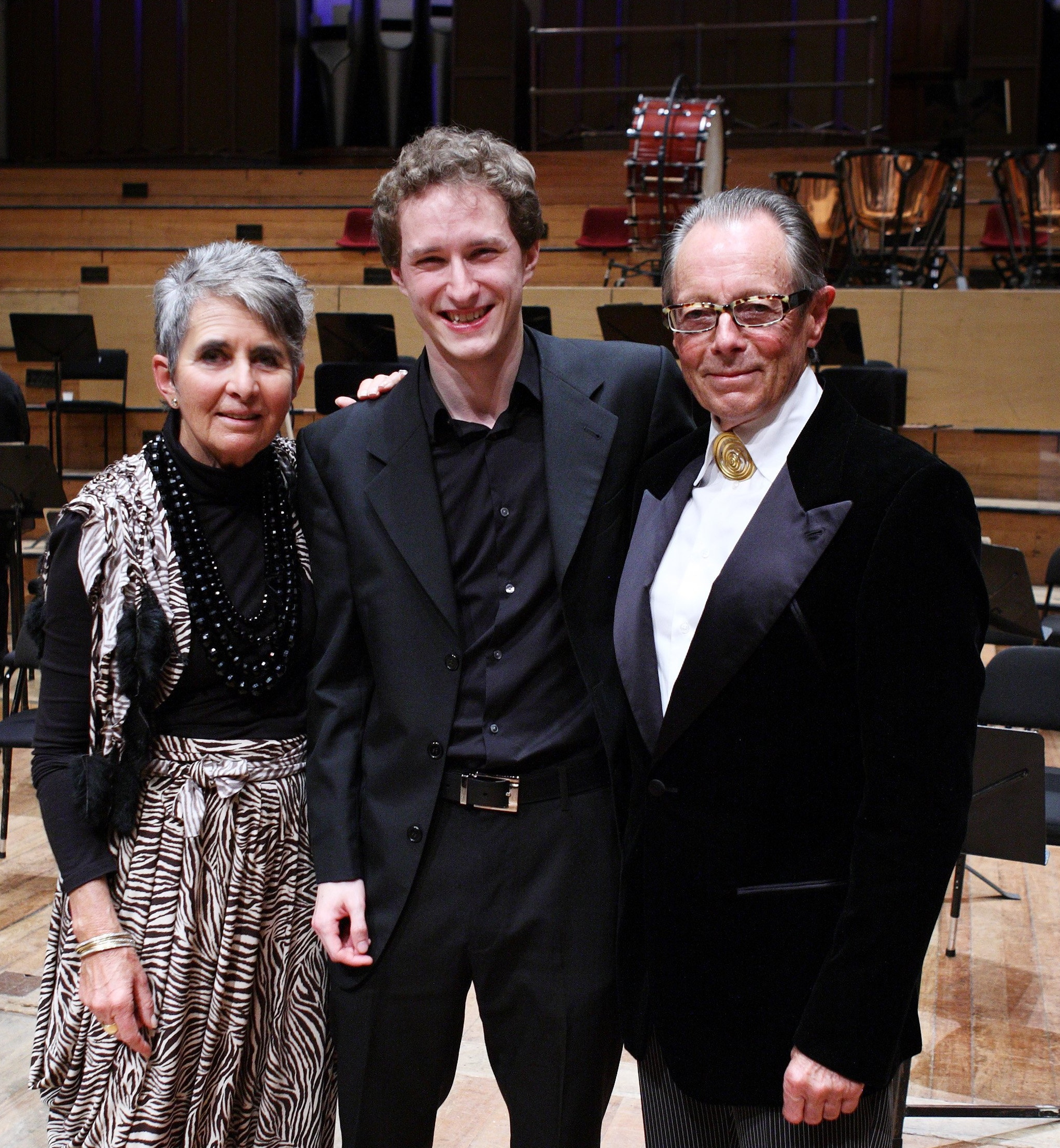
“That is something that’s super important. You want to have as much stage experience as possible and if you do your first tour like that, you go town to town and play day by day, then you learn so much by doing that. So, I would say it had a really big, really, really big impact on my development as a musician.’’
The experience was so positive he returned to tour three or four more times.
“For me, what struck me was just the beauty of the country and the warmth of its people. It was really just quite an experience. So I think overall, I just had some of the nicest memories I’ve ever had that were created in New Zealand.”
It has been 14 years since he last visited New Zealand and he is looking forward to returning.
“I’m so happy to go back. Just because I think the country is so beautiful and I want to see it again. And this time it’s so nice to not be in this basically stressful environment for me anymore because I’m not competing. So I don’t have to worry about things.’’
These days life is busy for the father of three, who is based in Prague.
Travelling across continents is normal for the violinist who prior to coming to New Zealand had travelled to the United States for a tour with his trio before heading home for a week.
While these days he concentrates on his solo career, he started out as concertmaster for the Czech Philharmonia — the youngest ever to attain that role at about 24 years old.
“I spent many years before that playing in orchestras with students and also with some professional orchestras too. So even though I was young and just out of school, I felt like I already gathered quite a bit of experience from before. So it felt like a natural sort of continuation.’’
In joining the orchestra he also became a colleague of his father, a cellist.
“We used to joke that I’m my dad’s boss now as a concertmaster.’’
Having a professional musician as a father meant he had been surrounded by music since he was born.
“I think when I was 3 years old, I discovered that my dad had an old violin in his closet. And when I discovered the instrument, I basically opened the case and I started to fool around on it. And I think it was that moment when my mum was like, he’s going to be a violinist.’’
She was right. Spacek never had any doubt that he would do anything else in his life but play the violin.
“I was always surrounded by string instruments in my family, so I never really even thought about it, like, why. But, you know, when you’re surrounded by music and by musical instruments, it just comes so naturally.”
To him the violin is a “miracle’’, a masterpiece of craftsmanship that has not been bettered in hundreds of years.
“The way its made, the wood is so beautiful and of course the sound is something that catches the air and heart.’’

Despite not having the financial security during the pandemic that being in an orchestra would have provided, he does not regret the move.
“I always had it in my mind that I would eventually step away from my role and focus only on solo because, I came to the orchestra with a drive to try everything. And I wanted to gain a lot of experience by playing in an orchestra.’’
Spacek, who also won the Carl Nielsen International Violin Competition in Denmark and the Young Concert Artists International Auditions in New York, has gone on to perform in some of the top concert halls in Europe, Asia and America.
“Every concert that we play should feel like it’s a highlight because we’re doing this for the love of music and for sharing with the audience. And whether you play in an orchestra or whether you do chamber music or you play a solo concert, basically all of these should be our highlights. And we love doing that. We love our, you can’t even call it a job because it’s not really a job. It’s almost like we’re doing our hobby.”
His favourites are the Suntory Hall in Tokyo, Japan, the hall of the Berlin Philharmonic and Carnegie Hall in the United States.
“You get that goosebumps feeling when you walk out on that stage. I would put maybe two more, the Vienna Musikverein and Amsterdam. I think those halls are out of this world.’’
Of course his home venue Prague’s Rudolfinum needs a mention.
“That’s absolutely a fantastic hall with some of the greatest acoustics you can also have. And so many great artists have gone through the doors there and the walls have heard and witnessed so many of some of the world’s most admired musicians.’’
Spacek also performs with his own chamber music trio, Trio Zimbalist, and recently toured the United States performing the Beethoven Triple Concerto.
“I love chamber music. Chamber music has always been a great part of my musical life. Chamber music is, like, the high form amongst musicians.’’
He finds chamber music not as technically demanding but “probably’’ the most enjoyable.
“So chamber music is probably the most complex when it comes to having your ears open and listening to your colleagues next to you and really reacting to everything that goes around you because you’re just adding your own little voice to something that’s really grand. And you’re really breathing together in the group.’’
He also runs his own music festival in Prague, Troja, with a focus on chamber music, but also features large ensembles, performing in unexpected spaces such as at a zoo, botanical garden, an old wastewater plant and brewery.
“It’s based around these really cool landmarks in a neighbourhood in Prague.’’
When he is not performing or rehearsing Spacek is most likely to be found spending time with his family or on a road bike.
“I love cycling. Sports is something that kind of keeps you, I guess, sane and somewhat in shape. Because it’s hard to travel the world without getting much movement physically.’’
In the winter he swaps the bike for the skis, enjoying an opportunity to ski in New Zealand one year he visited.
TO SEE:
Michael Hill International Violin Competition 2026:
Josef Spacek performs at gala dinner, Queenstown May 30
Rounds 1 and 2, Queenstown Memorial Hall, May 29-June 1
Round 3 Auckland Town Hall June 3-4
Grand Final, Auckland Town Hall, June 6


