
PHOTO
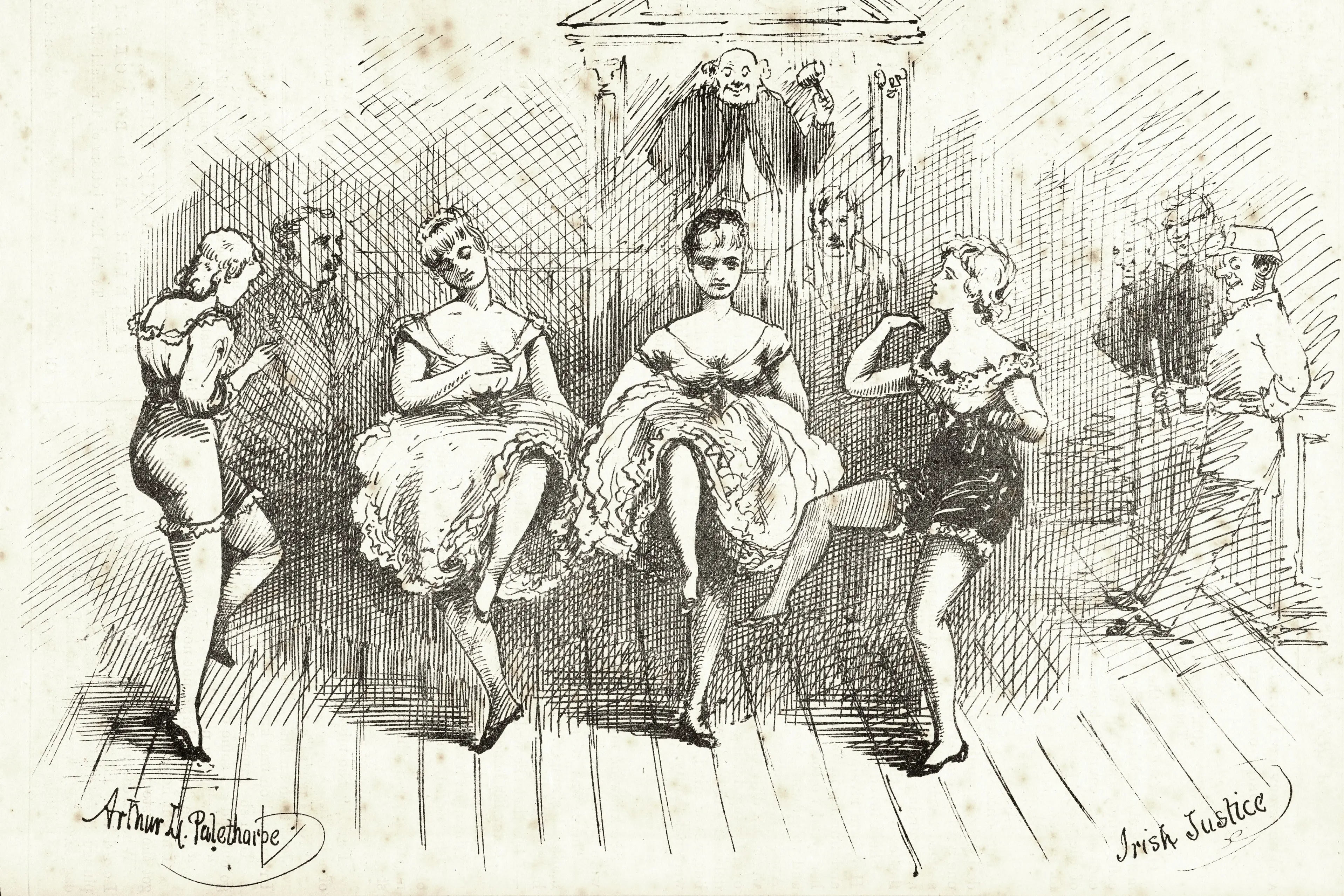
In 1879, the genteel theatre-goers of New Zealand were scandalised by performances of the Victoria Loftus Troupe of British Blondes and American Specialty Artistes. At the Hocken Collections, we have recently described and digitised a collection of 11 posters advertising the troupe’s Dunedin performances. These posters promised singing, dancing, acrobatics, original sketches and “extraordinary novelties”. What they don’t reveal is the wave of moral outrage that accompanied the Loftus Troupe’s performances.
Arriving from San Francisco after a (self-proclaimed) successful United States run, the Victoria Loftus Troupe played to packed theatres across New Zealand. While initially met with positive reviews, opinions soured as the troupe moved further south. In Wellington, the Evening Post refused to publish their advertisements, describing the performances as being “of the grossest description”. The Loftus Troupe embraced this notoriety, distributing handbills promising that their final Wellington performance would be particularly “spicy” and women would not be admitted. This proved to be very effective marketing, with the performance drawing an audience of 1700 men.
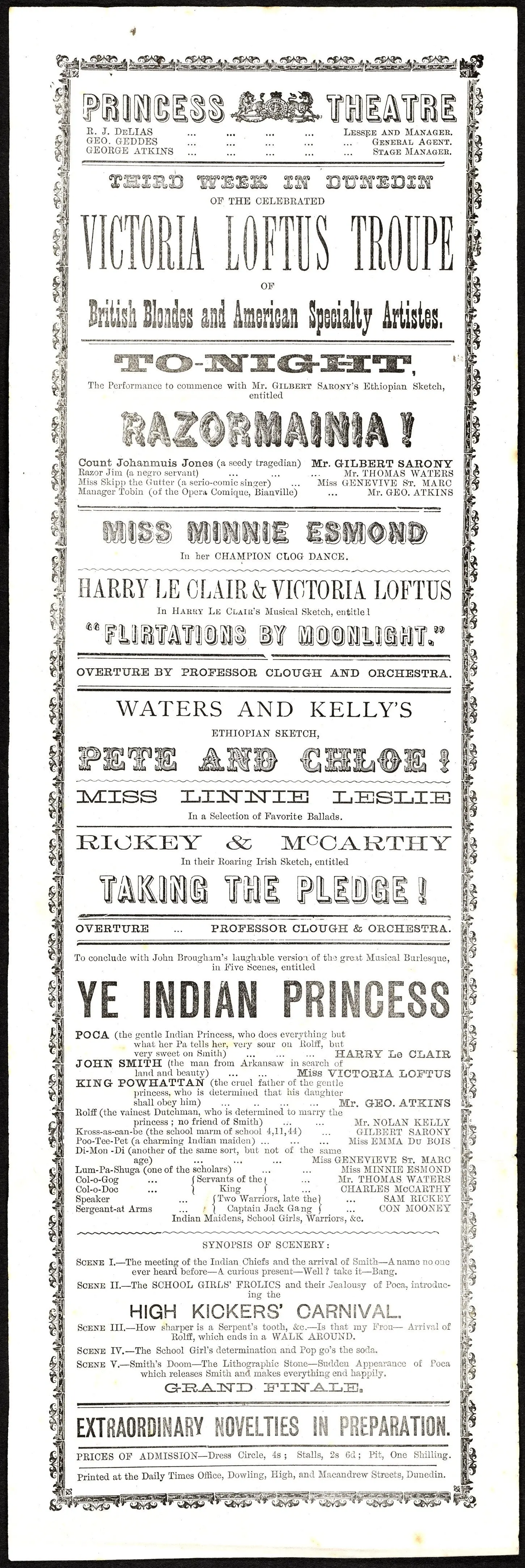
However, it was in Dunedin that the backlash against the Victoria Loftus Troupe really came to a head. A vocal opposition had already been drummed up by Dunedin politician, Thomas Dick.
Dick (described by historian A.H. McClintock as “estimable but dull”) had taken the issue all the way to parliament, calling on the government to put a stop to the troupe’s indecent performances — but to no avail.
As had been seen in other cities, negative press only raised the profile of the troupe, who opened in Dunedin to a packed Princess Theatre. Initial reviews for these performances were even generally positive, if in a begrudging sort of way. Reviewers praised the skill of the performers while lamenting the low-brow nature of their shows.
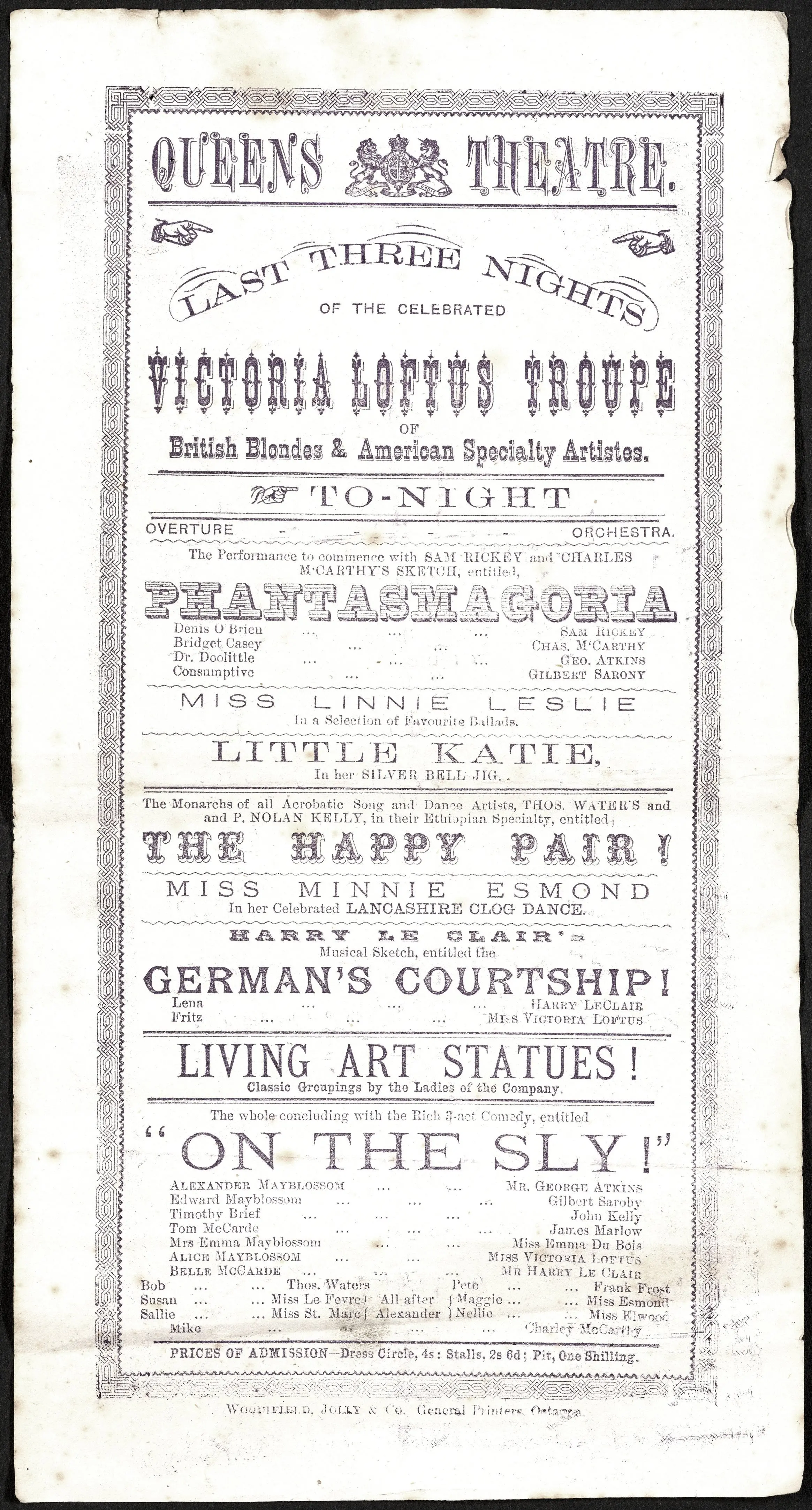
Any goodwill these initial performances had earned the troupe was lost after their performance of a dance called the “High Kickers’ Carnival”. While newspaper reports don’t reveal what exactly was objectionable about the performance, one might assume it was the combined effect of high kicks and scant costuming (a Melbourne Punch writer joked that the Loftus women wore a single yard of silk between them). Whatever the case, five female members of the troupe, Linnie Leslie, Emma Dubois, Genevieve St. Marc, Minnie Esmond and Nellie Inman, were summoned to the Dunedin City Police Court and charged with having acted in an “indecent manner” during the performance, contrary to the Licensed Theatres Ordinance 1862.
Even in court the Loftus women drew large crowds, with people scrambling for seats to watch the proceedings. These spectators were likely disappointed when, in a somewhat anti-climactic twist, the case was dismissed as the ordinance under which the charges had been brought had been superseded by a later Act.
Their detractors were able to claim a small victory when the Victoria Loftus Troupe was forced to depart New Zealand early after an Invercargill theatre refused to let them perform — their notoriety had finally caught up with them.
The digitised Victoria Loftus Troupe posters can be viewed online via Hocken Digital Collections: https://hocken.recollect.co.nz/.
To visit
Hocken Collections is open Tuesday-Saturday, 10am-5pm. Public tours are available on Thursdays at 11am. Inquiries: (03) 479-8868 or www.otago.ac.nz/library/hocken.
Baylee Smith is a collections assistant at Hocken Collections.