
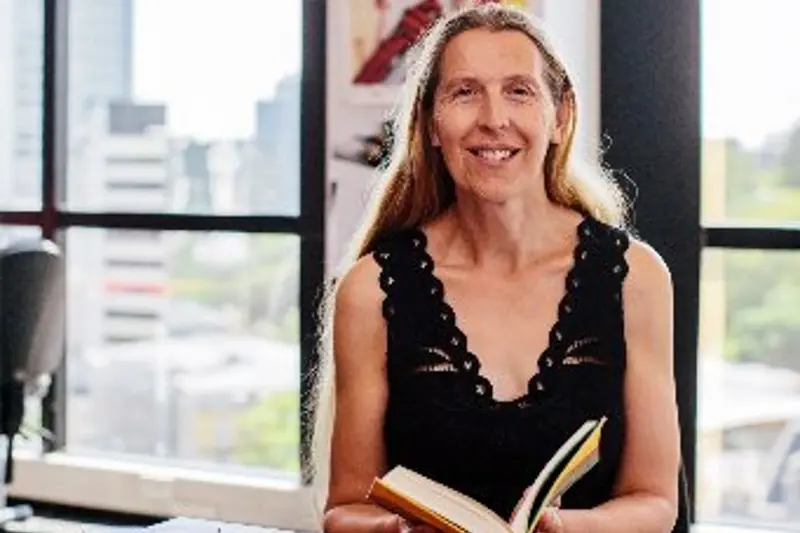

PHOTO
What We Remember, What We Forget
By Siobhan Harvey
Otago University Press
Reviewed by Elspeth McLean
Poet and academic Siobhan Harvey’s memoir may be a slim volume but that does not lessen its impact.
I read it quickly the first time because I wanted to find out what happened but have found myself dipping into it again and again later to savour the elegant writing and to reflect further on her thinking.
She explores what it is to remember and to forget, including how even something we may have been too young to fully recall can affect us.
How is it possible for memory to both wound and sustain, and how can even painful memories help us to create the life we want?
Much of her story about her early life in the Midlands is heart-wrenching, beginning with the account of her mother blaming her as an 18-month-old for taking an overdose of her antidepressants after the mother left her alone in a room with the pill bottle she was able to access.
There is physical and verbal violence at home, an eating disorder, the trauma of coming out and being told by her father at 17 that no-one will ever love her.
Harvey reminds us of the awfulness of 1980s politics around homosexuality — British Prime Minister Margaret Thatcher’s controversial speech which claimed pupils in need of moral instruction were deceived into believing being queer was acceptable.
That was followed by a law which prohibited local councils from intentionally promoting homosexuality, publishing material related to that, or fund groups doing this.
Schools could not portray homosexuality as part of a normal family relationship and books deemed unacceptable were removed from the curriculum.
There is zigging and zagging in the telling of Harvey’s life story as we follow her shift from Britain to settle in New Zealand.
There is falling in love, partnership, motherhood, community upheaval, confronting bullying in both her own working life and the school experiences of her autistic son.
Harvey muses on whether she has been so focused on the progress LGBTQIA+ people have made in recent decades, she has overlooked how others have been working secretly against it.
She comes to see the ongoing struggle as not just a fight between the progressive and conservative, but also a conflict over memory: “its evidence and erasure, how, often, it supports us and how, sometimes, it lets us down.”
The book’s epilogue ends hopefully with Harvey’s son’s resolve not to let past abuse be his ongoing scourge, helping her to recognise that she has moved beyond seeing forgetting as failure.
“Forgetting is an indispensable human facility, as necessary to us as remembering.”
Whatever the reason for forgetting, Harvey says it allows us to make space in our lives and our minds “for new memories: fresh experiences and interactions; fresh provocations and joys”.
Elspeth McLean is an ODT columnist.