


PHOTO
Ringside: A Political Memoir
By Mike Munro
Upstart Press
Like A Revolution: The Untold Story of Bob Jones & The New Zealand Party
By Paul Moon
White Cloud Books
Reviewed by Mike Houlahan
As you may have noticed, the next general election is not far away and hence ‘tis the time for political books to be issued while people are paying attention.
These two books are very different — Mike Munro’s book is a memoir of vicinity to power while Paul Moon’s is a critical history of the short-lived phenomenon which was The New Zealand Party — but they both have the same starting point: the 1984 election and Bob Jones’ meteorite-like blazing over the political landscape.

Munro had just started in the Press Gallery working for the NZ Herald, and would eventually join The Dominion (now The Post), before becoming chief press secretary for Helen Clark and, briefly, Jacinda Ardern’s chief of staff.
In that time deep inside the beltway Munro has gathered a wealth of stories and he is a deft writer who tells them well.
He prefaces, and post scripts, his recollections with details of his confrontation with cancer; it is a pity that his illness was likely the catalyst for this book, but anyone interested in recent political history will be glad he took the time.

While many politicians flit in and out of Ringside, Helen Clark is undoubtedly the star of the book and Munro offers a rich and nuanced portrait of a much misunderstood Prime Minister.
He is particularly insightful when setting out his side of the “Corn’gate” story and explaining Clark’s very human reaction to the incident.
This is a well-written, often funny, and insightful examination of Munro’s experience of how the New Zealand political process works.
It is surprising that no-one has written a full history of the New Zealand Party until now, and Paul Moon’s timing could not be better as another upstart minor party tries to work its way in to Parliament.
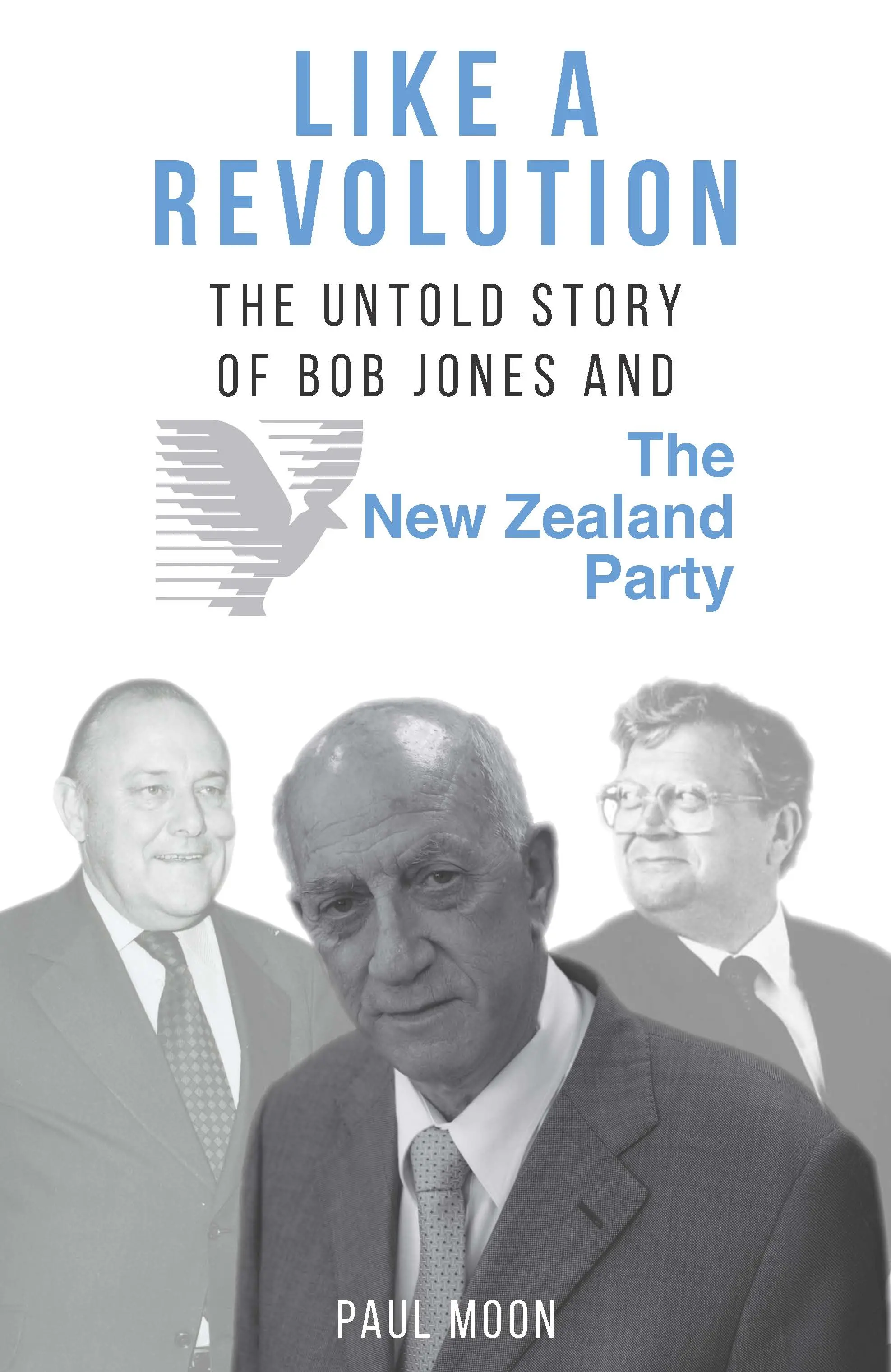
The author was blessed that he had party founder Sir Robert Jones’ blessing, access to his papers, and the benefit of access to Sir Bob before his death to explain anything unclear from the paper trail.
Thanks to that, this is a well-informed deep dive into the ins and outs of a party which often seemed to be a one-man cargo cult.
It sets out just how hard Jones fought to to dispel that perception, and how unsuccessful he was, despite fielding candidates in every electorate.
(Fun facts: veteran Dunedin councillor Lee Vandervis was one of those candidates; so was Auckland Mayor Wayne Brown.)

The 1984 campaign pitted David Lange against Rob Muldoon, but it just as equally pitted Jones against his former friend Muldoon, whose governing style and economic policies he firmly felt were leading the country to disaster.
Despite committing many politically naive mistakes, some of which likely cost it the chance of electing an MP under the old first past the post system, Jones did indeed succeed in toppling Muldoon.
Then, as fast at it had arrived at the centre of politics, the New Zealand Party was gone again.
Moon explains this short-lived phenomenon well, while also underlining his fundamental premise; it is not easy to get in to Parliament and not even a large amount of money is any guarantee that you will succeed.
Mike Houlahan is the ODT political editor