
PHOTO
Nilay Baycar and her mother Ayse, both from Turkey, show how to make karniyarik (stuffed aubergines).
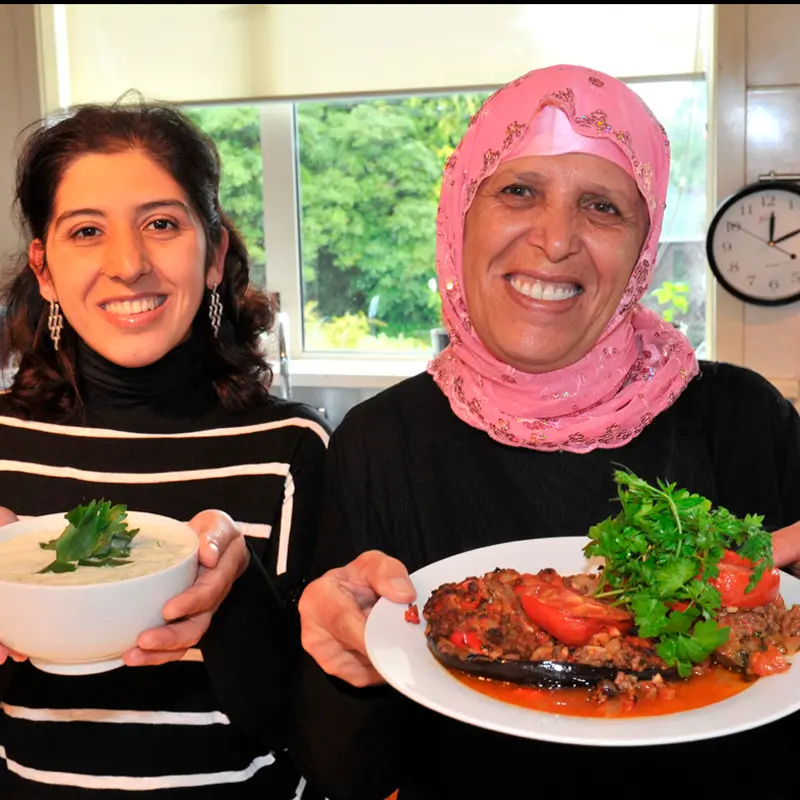
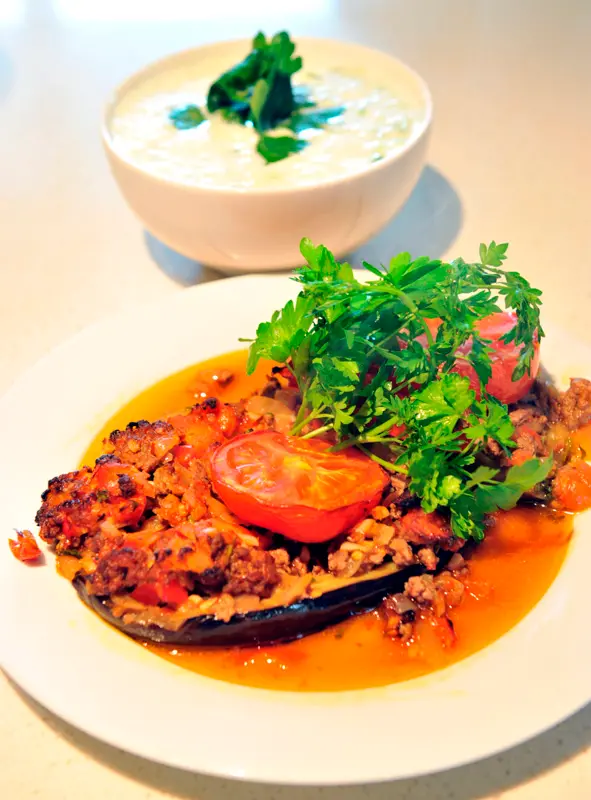
Karniyarik (aubergines stuffed with meat, onions, garlic and tomato) is a popular Turkish dish that has its origins in western Turkey.
Literally it means ''riven belly'' as the filling is inserted in a split cut in the aubergine.
Ayse learnt this dish from her mother. It can be both a family meal and a special-occasion dish.
A vegetarian variation is the famous imam bayildi, aubergines stuffed with onions, garlic and tomato, which is served cold.
Heat the oil in a large frying pan and when hot lay the aubergine halves, cut side down, in the pan. Cook on medium heat, turning from time to time until the aubergines are lightly browned, soft and cooked through.
While they are cooking, chop the onions and garlic finely. Remove the seeds from one of the red peppers and chop finely. Ayse includes the white membrane as she says it gives a nice flavour. When the eggplant is cooked, place the halves neatly in a baking dish, cut side up, opening the slit to make space for the filling.
In the same pan, without adding any more oil, cook the mince, breaking it up and stirring until it is brown. Push the mince to the outside of the pan and put the chopped onion, garlic and pepper in the centre. Add salt, pepper and chilli to taste, cover and cook on low heat for a few minutes.
Peel two of the tomatoes and chop finely. Chop the parsley, stalks and all.
Cut the remaining pepper into strips and the remaining tomatoes into thick slices. These will be used to decorate the top of the dish.
When the onions are cooked, turn up the heat, stir in the finely chopped, peeled tomatoes and add the tomato paste. Taste to check the seasoning and add more salt and pepper as required. Turn off the heat and stir in the chopped parsley.
Spoon the filling on to the aubergines. If you have more aubergine halves than will fit into the baking dish, layer them on top and fill them, too. Spread any leftover filling over the dish. Rinse the pan with a little water and pour over the dish. Add a little salt to half a glass of water and also pour over the dish.
Lay the sliced tomatoes and pepper over the meat filling to decorate, cover the dish with aluminium foil and put in an oven preheated to 200degC. Lower the heat to 150degC and cook for about half an hour.
When the tomatoes and pepper on top are cooked and the dish is bubbling, serve hot with cacik, a side dish of yoghurt, garlic and cucumber.
Cacik
Crush the garlic to a paste with a little salt in a mortar, and add to the yoghurt. Rinse the mortar with some water, add to the yoghurt and whisk to combine.
Grate the cucumber and add to the yoghurt, along with half a glass of water to thin the mix. Stir well and decorate with dill or celery leaves.
Tips
• Lamb is traditionally used but minced beef is fine.
• Ayse doesn't waste anything, so she rinses the bowls she has used with water and adds it to the dish.
• In some Middle Eastern countries where similar yoghurt, garlic and cucumber sauces are served, mint is often used instead of dill.
• Thanks to Afife Harris and Centre City New World.