
PHOTO
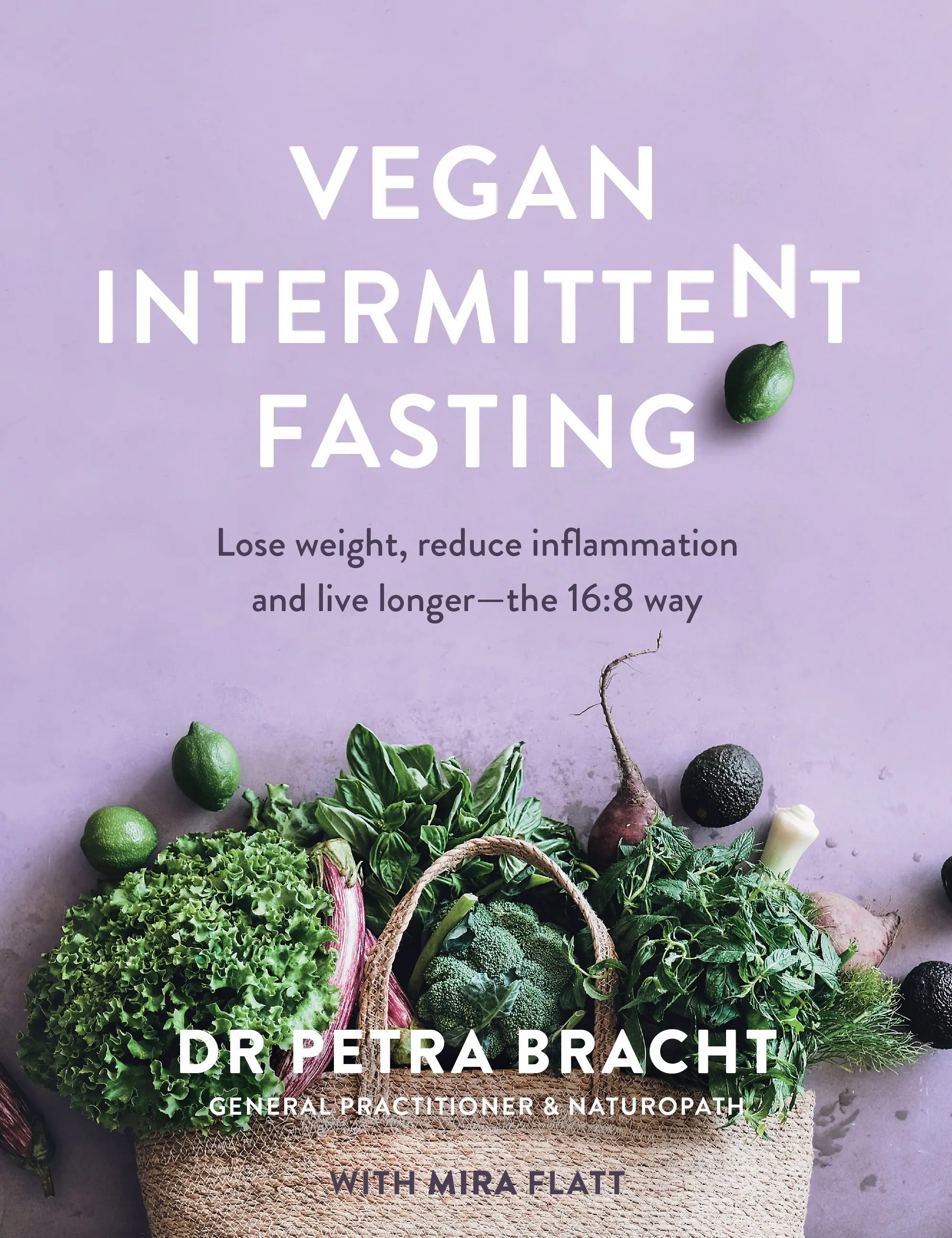
A strong believer in nutrition playing a key role in prevention and healing of diseases, Dr Petra Bracht has teamed up with Mira Flatt to produce Vegan Intermittent Fasting.
Intermittent fasting has many fans including Petra Bracht, a general practitioner and natural health therapist.
She bases her enthusiasm on her experience - she has practised intermittent fasting for more than 40 years.
"It’s proved good for me."
Bracht admits she started quietly as at that time failing to eat a hearty breakfast was considered a no-no, as was eating meals only twice a day.
"I must admit the quality of my diet wasn’t optimal. Like most people at the time, I, too, consumed mainly the foods I was used to eating at home, including meat."
But in the early 1990s, while working as a primary care physician, she became dissatisfied with conventional medicine.
Inspired by the book Fit for Life by Harvey and Marilyn Diamond, her outlook changed.
"Suddenly, it all became clear - nutrition plays a key role in prevention and healing of diseases."
Fit for Life called for people to only eat between noon and 8pm to give the body time to utilise and process food. It also called for significantly reducing the intake of meat and dairy products, instead basing diets on plant-based foods.
"I can still remember how excited I was."
She and her husband changed their diet to 95% whole plant-based foods, finding that worked for them.
Bracht also started incorporating nutritional medicine into her practice.
However, she says long-term fasting does not work for everyone, but it can be worth giving it a try.
The 16:8 rule means you can eat two to three meals a day within an 8-hour period.
"Do some experimenting with your mealtimes, with the length of the fasting period, with the number of meals per day."
The accompanying recipes are extracts from the book.
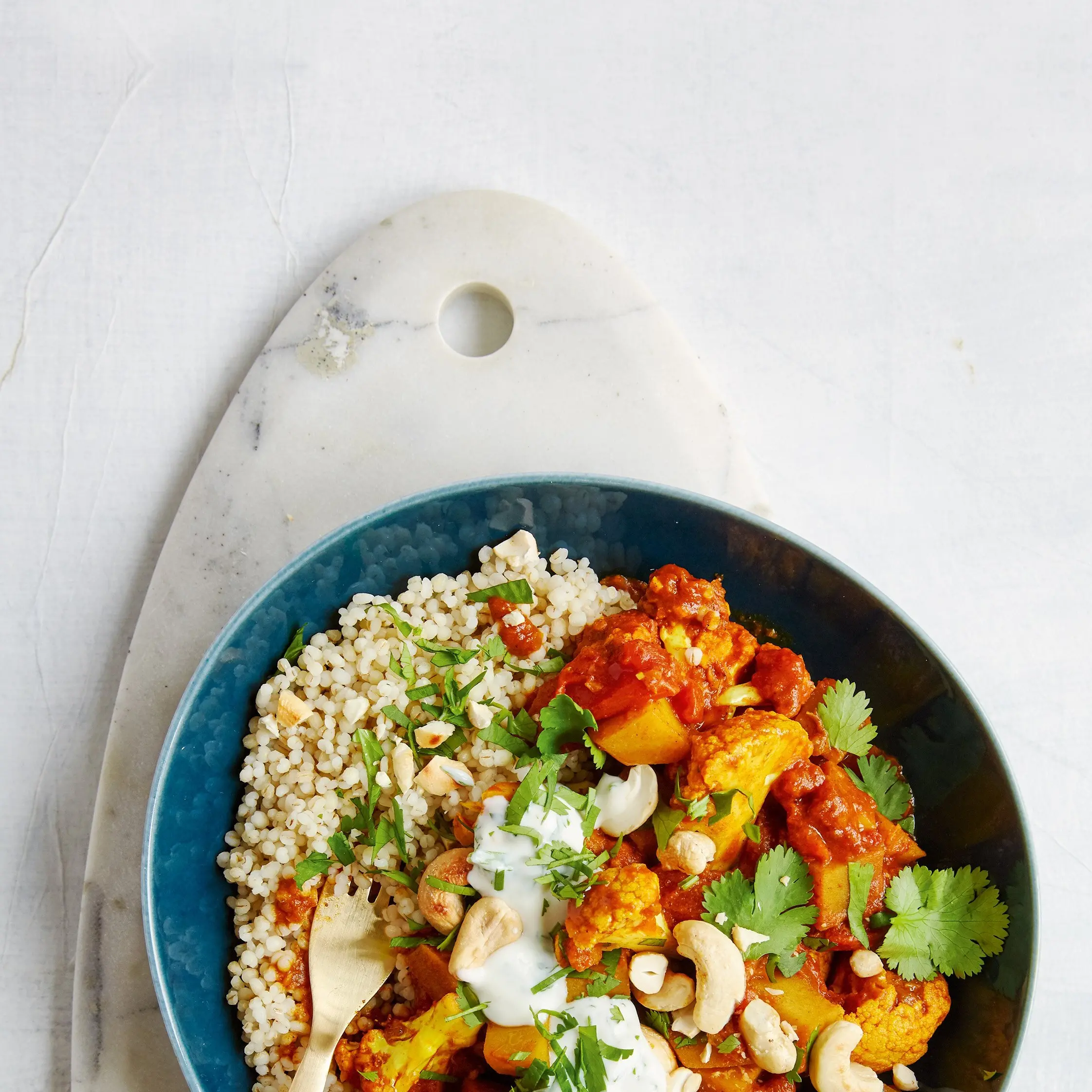
Cauliflower curry and pearl barley
Serves 2
Prep time 50 minutes
Per serving: 595 calories, 20g protein, 26g fat, 67g carbohydrates
80g pearl barley
1 handful cashews½ head cauliflower
2 medium potatoes1 red onion
1 garlic clove2.5cm piece ginger
2 Tbsp coconut oil1 tsp garam masala
1 tsp ground turmeric1 tsp ground coriander
200g chopped tomatoes1 Tbsp tomato paste
Sea saltFreshly ground black pepper
3 Tbsp soy yoghurtJuice of 1 lemon
½ bunch corianderchilli flakes, optional
Method
Cook the barley according to the packet instructions.
Meanwhile, toast the cashews in a dry frying pan over medium heat for about 3 minutes, until golden.
Cut the cauliflower into small florets. Peel and dice the potatoes. Peel and finely chop the onion, garlic and ginger.
Heat the oil in a large saucepan over high heat and add the onion, garlic and ginger. Cook for 3 minutes, or until softened, then add the garam masala, turmeric and ground coriander.
Add the potatoes and cauliflower and cook for another 5 minutes, stirring often.
Add the tomatoes to the pan along with the tomato paste and 100ml water. Season with salt and pepper, then cover and simmer over low heat for 15 minutes.
Combine the yoghurt and lemon juice in a small bowl. Finely chop and add the coriander (reserving a few leaves for garnish). Stir in the chilli flakes, if using.
Arrange the cauliflower curry and the barley in two bowls, top with the yoghurt mixture and cashews, garnish with the reserved coriander leaves and serve.
Health tipBarley was one of the first grains humans ever deliberately cultivated. Yet, today it is largely overlooked -wrongly, if you ask us, since it not only has more fibre and is more easily digested than wheat, but also has far fewer negative effects on blood-sugar level.
It lowers cholesterol, detoxifies the body, protects blood vessels and intestinal bacteria, and strengthens the nervous system. Barley is also rich in vitamins, minerals and antioxidants.
And it is a good source of protein to boot!
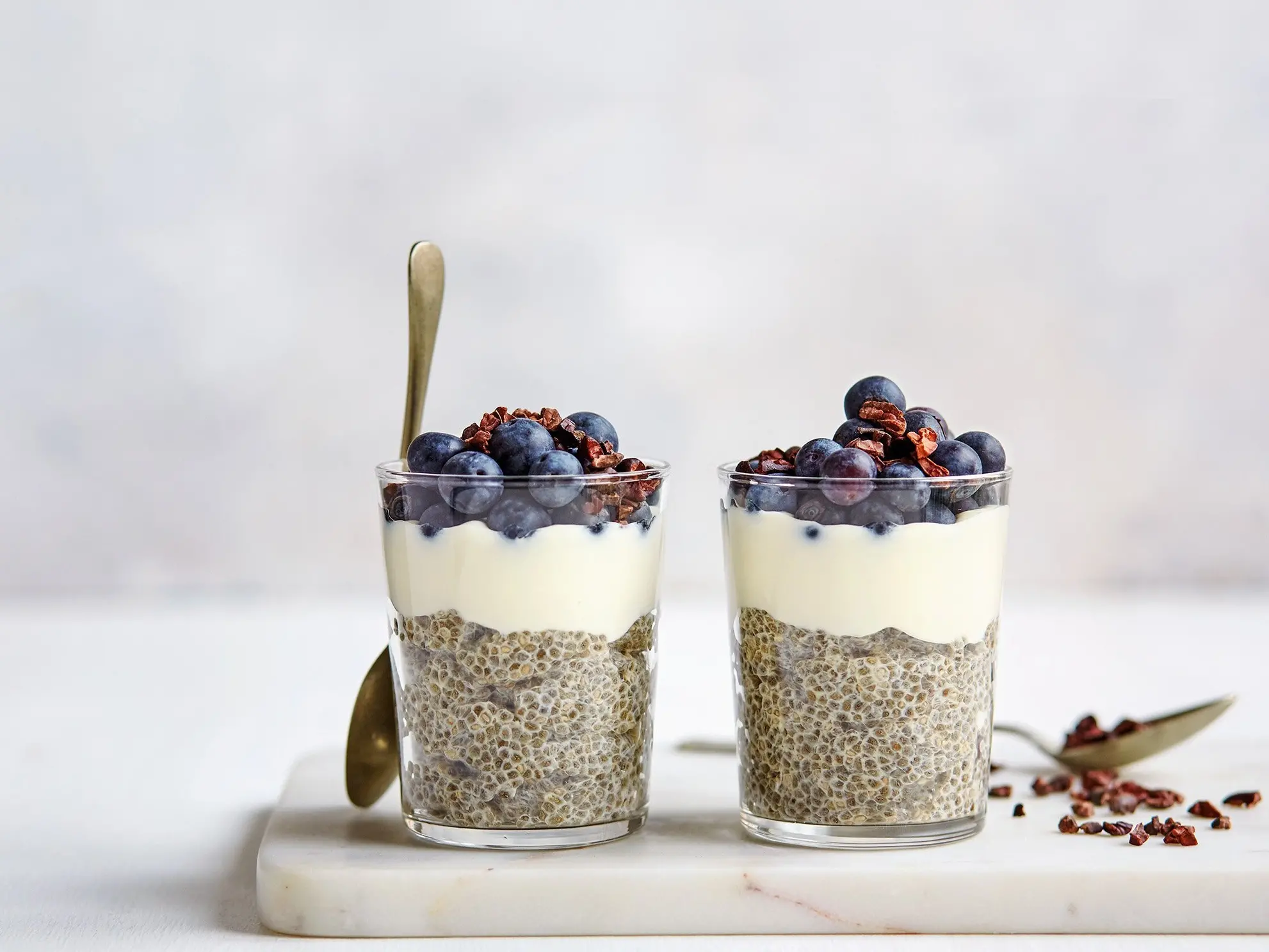
Berry-coconut chia pudding
Serves 1
Prep time 5 minutes
Soaking time 1 hour
Per serving: 410 calories, 10 g protein, 26 g fat, 34 g carbohydrates
2 Tbsp chia seeds
2 Tbsp coconut milk
100g coconut yoghurt
1 tsp coconut nectar or maple syrup
½ tsp ground cinnamon
1 small handful fresh berries
1 Tbsp cacao nibs
Method
1. In a medium bowl, combine the chia seeds with the coconut milk and 170ml (⅔ cup) water. Let the mixture soak for at least 1 hour.
2. Add half of the yoghurt and the coconut nectar and cinnamon and stir thoroughly.
3. Garnish with the rest of the yoghurt and the berries and cacao nibs.
Health Tip
Chia seeds contain five times as much calcium as cows milk, as well as many omega-3 fatty acids. The antioxidants protect our cells from free radicals, making chia seeds a true superfood.
Prep time 15 minutes
Per serving (1 tablespoon): 3 calories, 0g protein, 0g fat, 0.5g carbohydrates
100g chopped leek
100g chopped carrots
100g chopped parsnips
100g chopped celeriac
60g parsley
90g sea salt
Method
Place all of the vegetables in a blender along with the parsley and salt and blend at high speed until it becomes a smooth paste.
Transfer to a clean jar and store in the refrigerator. It will keep for weeks or even months - if you can keep yourself from gobbling it up!
Note: This paste can serve as a basis for soups, stews, curries and much more. Just heat 1 litre (4 cups) water and add 2 to 3 tablespoons paste.
Health TipThis homemade seasoning paste is so much healthier than the store-bought varieties, which often contain added sugar, yeast, fillers and additives our body doesn’t need.
The vegetables in this recipe contain everything you need for a tasty, aromatic vegetable broth.
Feel free to use whatever your refrigerator or the farmers’ market has to offer.
Stay away from vegetables containing a lot of water, such as tomatoes and cucumbers, since their moisture will shorten the shelf-life of the paste.
If you like, add in herbs for more flavour: parsley, chives, dill, celery greens, carrot greens, oregano, mint and lemon balm. Experiment and see what you like best.
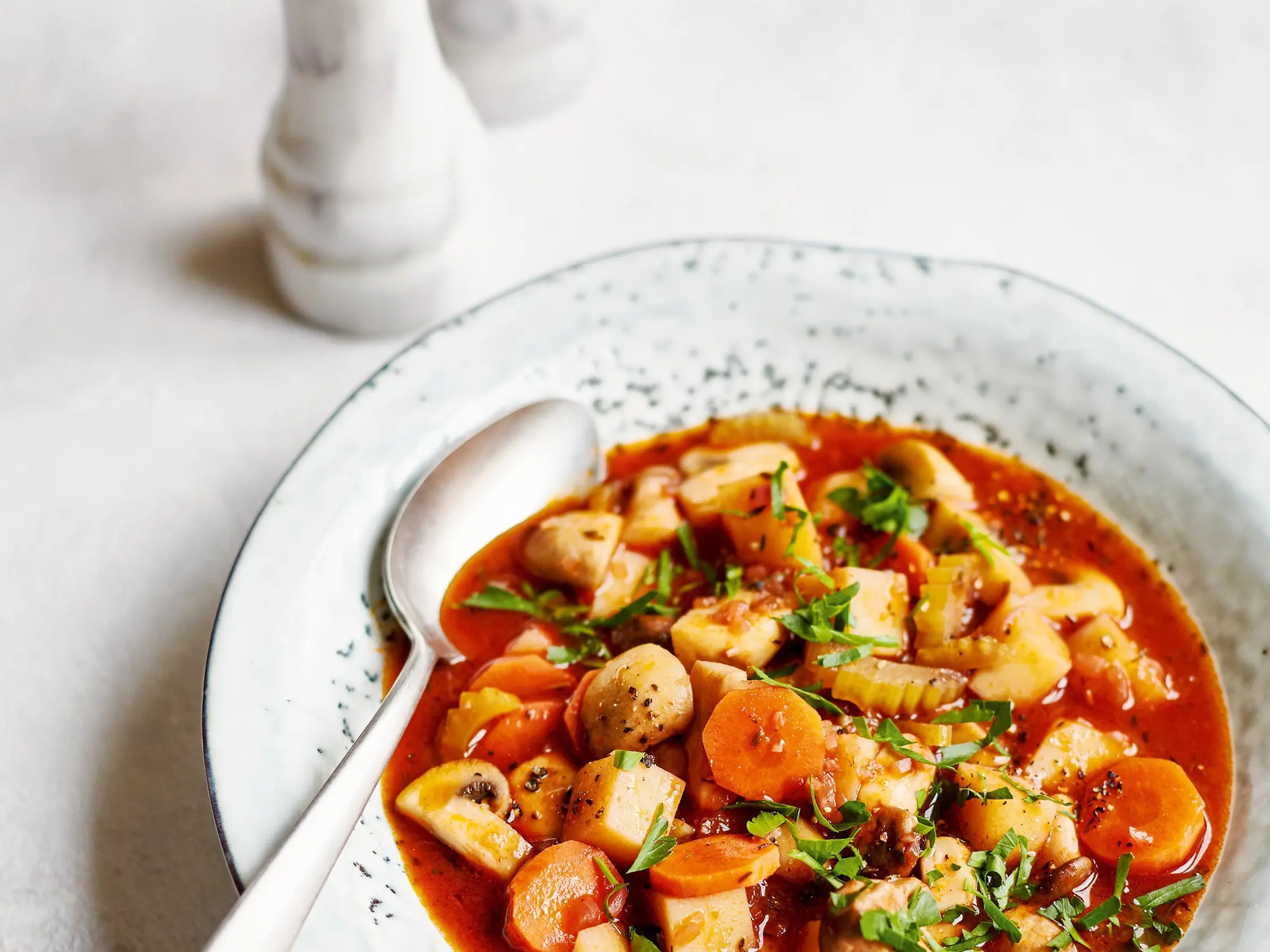
Serves 2
Prep time 45 minutes
Per serving: 465 calories, 13 g protein, 21 g fat, 45 g carbohydrates
200g button mushrooms
200g king oyster mushrooms
2 carrots
1 celery stalk
1 red onion
2 garlic cloves
60ml (1/3 cup) canola oil
2 Tbsp tomato paste
4 medium potatoes
100ml red wine
1 tsp Vegetable broth paste (see recipe below)
1 tsp dried thyme
1 bay leaf
1 Tbsp maple syrup
Sea salt
Freshly ground black pepper
1/2 bunch parsley
Method
Quarter the button mushrooms and halve the oyster mushrooms. Slice the carrots and celery. Peel and finely dice the onion and garlic.
Heat half of the oil in a large saucepan over medium heat and saute the garlic and mushrooms for 5 minutes. Remove from the heat and set aside.
Heat the remaining oil in a frying pan over medium heat and saute the onions, carrots and celery for 3 minutes, until soft. Add the tomato paste and cook for 3 more minutes, stirring constantly.
Peel and dice the potatoes, then add to the mushrooms in the pan. Add the vegetables from the frying pan and cook over medium heat, stirring to combine.
Deglaze with the wine and 200ml water.
Add the broth paste, thyme, bay leaf and maple syrup and season with salt and pepper. Cover and simmer over low heat for 20 minutes. Stir occasionally.
Julienne the parsley. Divide the stew between two bowls, remove the bay leaf, sprinkle with parsley and serve.