
PHOTO
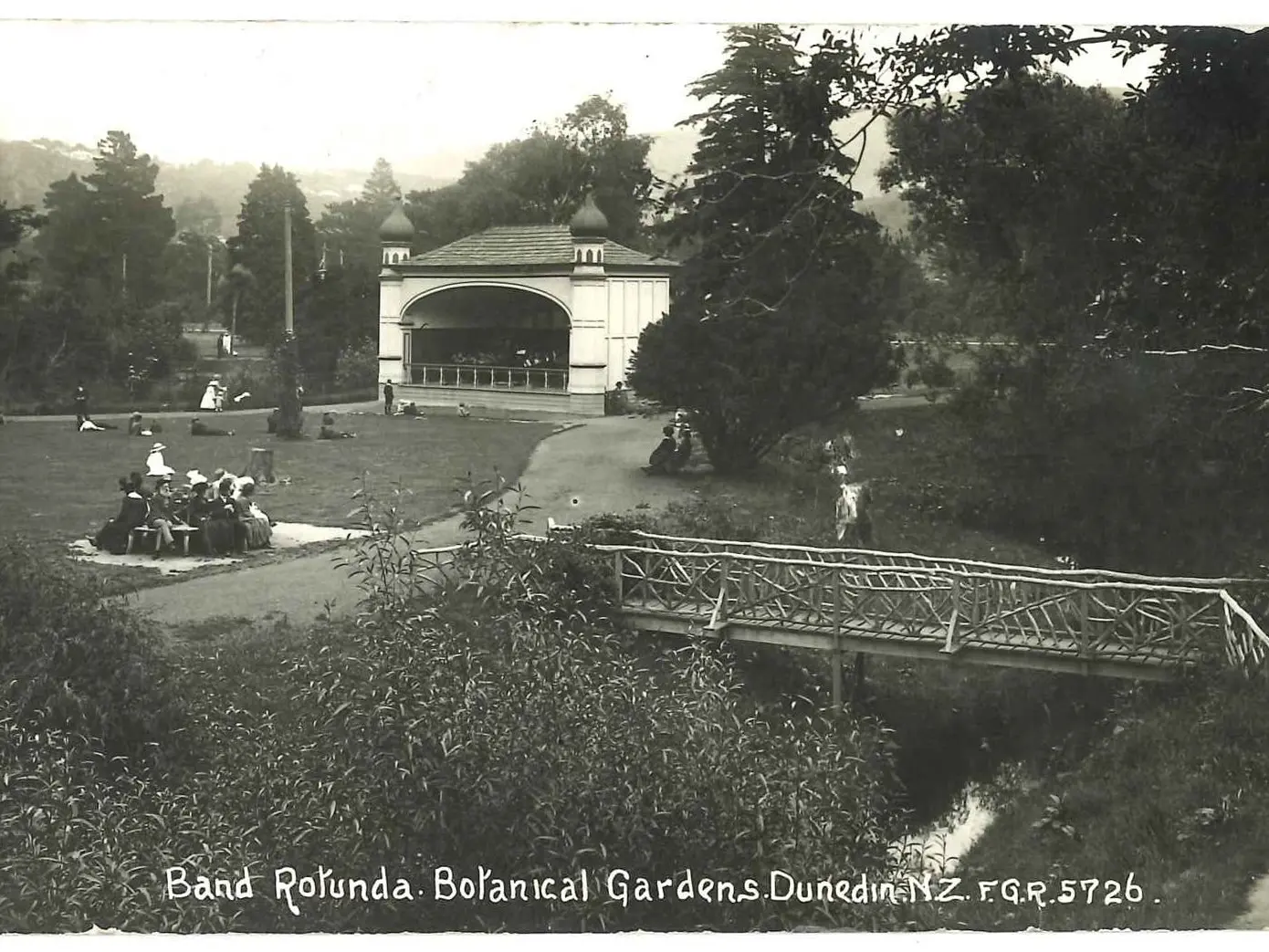
The Botanic Garden is bisected by the Lindsay Creek, dividing the garden into two distinct areas; the more formal, level Lower Garden and the steeper Upper Garden. This gives the Botanic Garden the luxury of a wide range of landscape areas to display the plant and bird collections. The creek itself offers a lot to the garden, both in landscape possibilities and wildlife habitat.

Connecting the Upper and Lower Garden for visitors has always been a challenge. To cross the creek, there have been a range of bridges both practical and ornamental.
Lindsay Creek has undergone several changes: straightened in the 1920s to accommodate the tram and road changes and excavated out and retained with stone walls a couple of times from the 1930s to the 1960s to help manage flooding. Even now in heavy rain, water can lap the bottom of the bridges.
The first bridges were rustic structures made of timber, often very ornamental in their Arts and Crafts style. Rough-sawn timber crisscrossed for strength made attractive patterns. These were only able to take foot traffic though and limited the amount of access for maintenance vehicles — originally horse and cart and later small tractors.
Most of these were replaced in the 1920s and 1930s with more robust structures better able to withstand the rush of water from the creek in flood. Some were a combination of concrete abutments and timber bridges and others all concrete and steel. Useful, but not nearly as attractive as the earlier ones.
There are now three bridges connecting the Lower Garden to the Upper Garden. The central one replaced in 1998 was designed to be more in keeping with the garden and can carry the Botanic Garden maintenance vehicles. The bridge, with its heritage style railings, was made possible by a $24,000 grant from the Edward Theomin Trust, and is greatly appreciated by staff and visitors. — Alice Lloyd-Fitt