
PHOTO
The prime minister insists New Zealand will meet its climate change targets, despite a report saying they are very much at risk of being missed.
The Climate Change Commission's third annual monitoring report tracked New Zealand's progress in reducing emissions, as well as how it was tracking to meet its emissions goals.
The report showed time was running out to correct course, with the next 12 to 24 months critical to get things back on track.
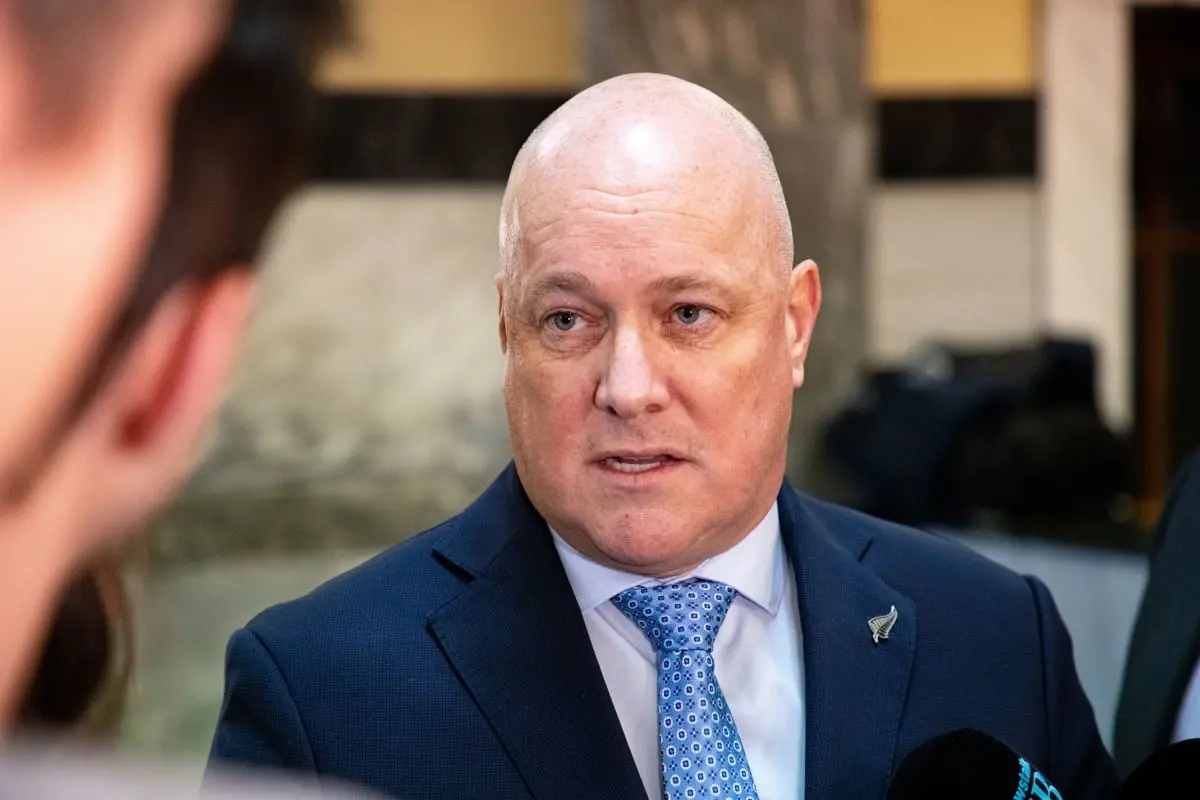
But on Tuesday, prime minister Christopher Luxon said things were on track.
"Our view is based on the fact we're on track to deliver emissions budgets one and two. There's more work to do for emissions budget three and beyond, and our indications are we're on track for net zero. We may even do it a few years earlier."
The emissions budgets are the maximum quantity of emissions permitted over a five-year period. It has a sinking lid approach, with each budget setting a lower maximum.
Despite the prime minister's confidence, the commission said the current budget was at significant risk, and the subsequent one could not be met with current plans and policies.
Labour leader Chris Hipkins said things had been on track, but the government had unwound that.
"We were making good progress until about 2024 as a country. The current government have wound back all of the things that were contributing to that progress. We've got to tackle our emissions, and it's actually good for New Zealanders. It's not only environmental benefits to it. There's cost of living benefits to it as well."
The commission's report noted the 2024 stalling was largely due to a dry year that meant coal was used to generate electricity.
The government has sought to address dry year risk, with its plans for a liquefied natural gas import terminal. Even then, the commission believed that would increase emissions, as it signalled delay to the transition from fossil fuels.
The commission said the Emissions Trading Scheme (ETS) was "not efficiently driving emissions reductions now, due to low market confidence, price volatility, and uncertainty about the long-term future of the scheme."
Green Party co-leader Chlöe Swarbrick accused the government of being responsible for the falling confidence in the ETS.
"The government's absolutely screwed it," she said.
"The government has actively undermined confidence in the Emissions Trading Scheme, which also happens to be the only major tool that they have left for reducing emissions."
There are some things the government is doing that the commission has identified could reduce emissions, such as the Gas Transition Loan Scheme and time-of-use charges.
But the scales are tipped in the other direction, with policies like removing agriculture from the ETS, and committing to the LNG terminal.
The commission believed the ETS would need to be amended by 2030 in order for it to be effective.
But Hipkins did not seem keen on putting agriculture back into the scheme, instead preferring more investment in agri-tech.
"You're not going to bring down methane emissions just by saying, 'we must bring down methane emissions.' You actually have to support the technology, the science that allows you to do that."
The commission did identify some initiatives to get things back on track, like increased uptake of EVs and solar.
National, Labour, and the Greens are all proposing household solar at the election, highlighting the intersection between energy and cost of living policy.
Te Pāti Māori does not have a specific energy policy yet, but supports more regenerative and sustainable approaches.
Co-leader Rawiri Waititi said renewables would lift more people out of poverty.
"We've got a huge cost of living crisis at the moment when it comes to power, when it comes to fuel, when it comes to all of those types of things. And there's no strong move towards electrification of this country. Aotearoa should be the first electric country in the world."
New Zealand First wants to break up the gentailers, and identify and create a single dataset across oil, gas, geothermal, and carbon dioxide storages sites.
Deputy leader Shane Jones said there was "a lot of speculation" around climate change reporting thresholds, and expected climate change response and reforms would play a key part of the election campaign.
"No target should stand if it results in the impoverishment of New Zealand. No target should stand if it represents the hollowing out or the degradation of our industrial resilience. We've got to think about jobs and economic viability."
Earlier this week, the government announced a bail-out of up to $60 million to keep Golden Bay Cement's plant at Whangarei going.
Its owner, Fletcher Building, noted a "carbon cost disadvantage" Golden Bay Cement faced compared to imported cement.
ACT leader David Seymour said that was the bigger issue.
"We are now coming up against the reality, a lot of our competitors and friends around the world are not putting these costs onto business. Are we seriously saying we want New Zealand business to go out of business so that New Zealand consumers can pay to keep other people in jobs overseas?
"That's the reality that's hitting the road. I don't care what the Climate Change Commission is saying. They've been out of it for a long time."
Swarbrick suggested a fix through a climate border adjustment mechanism, such as the one the European Union applies.
She said the Greens had proposed such a mechanism in 2024, and also pointed to the party's energy policy released on Monday.
"To be perfectly honest with you, with this report on the table today, the other parties that are not willing to take New Zealanders and our future seriously just need to get out of the goddamn way."
