
PHOTO
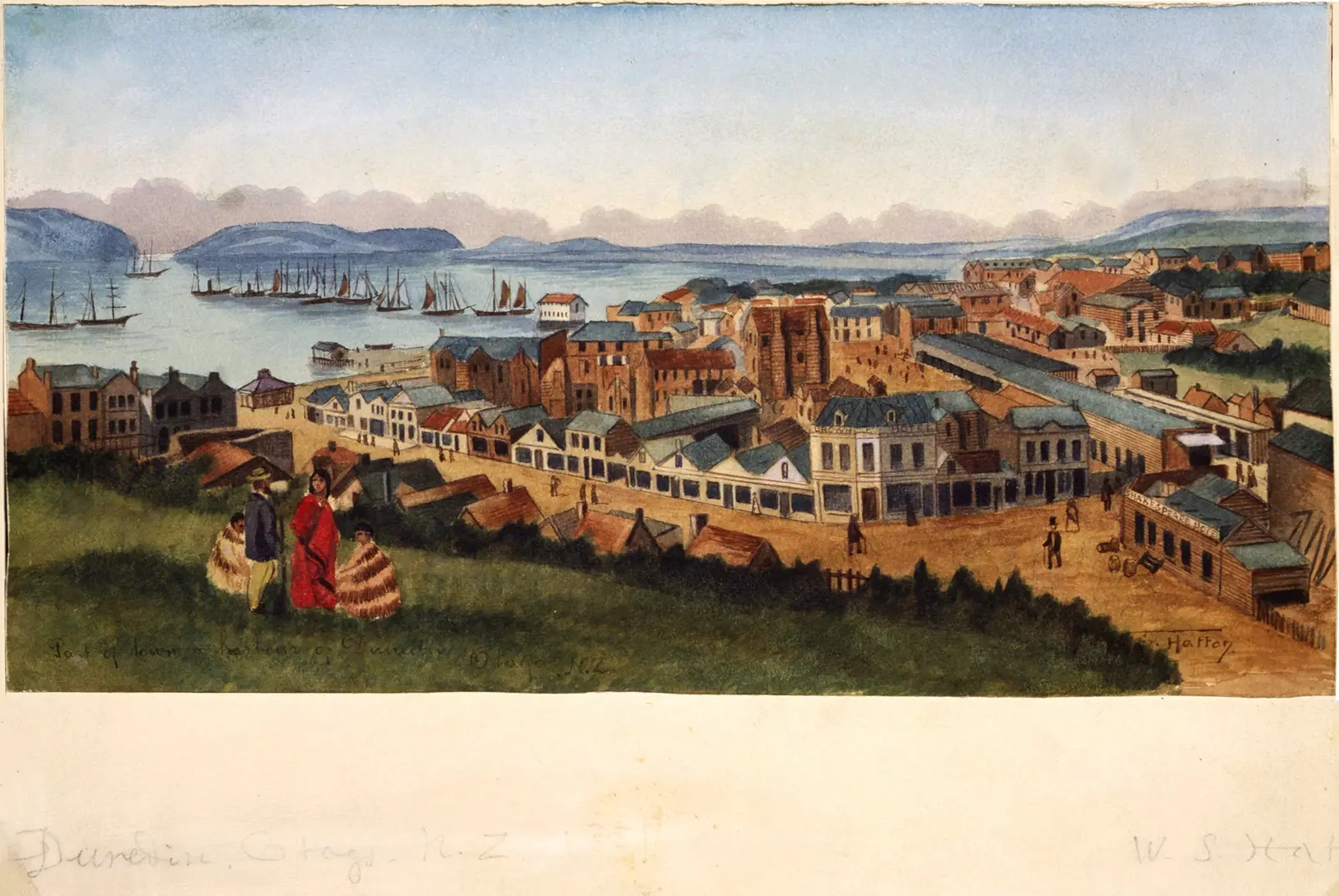
When "redcoat" soldiers were brought to Otago to bring order to a gold rush in full flow, the temptation to desert proved too much for some, writes Charlotte Macdonald in this extract from her new book Garrison World.
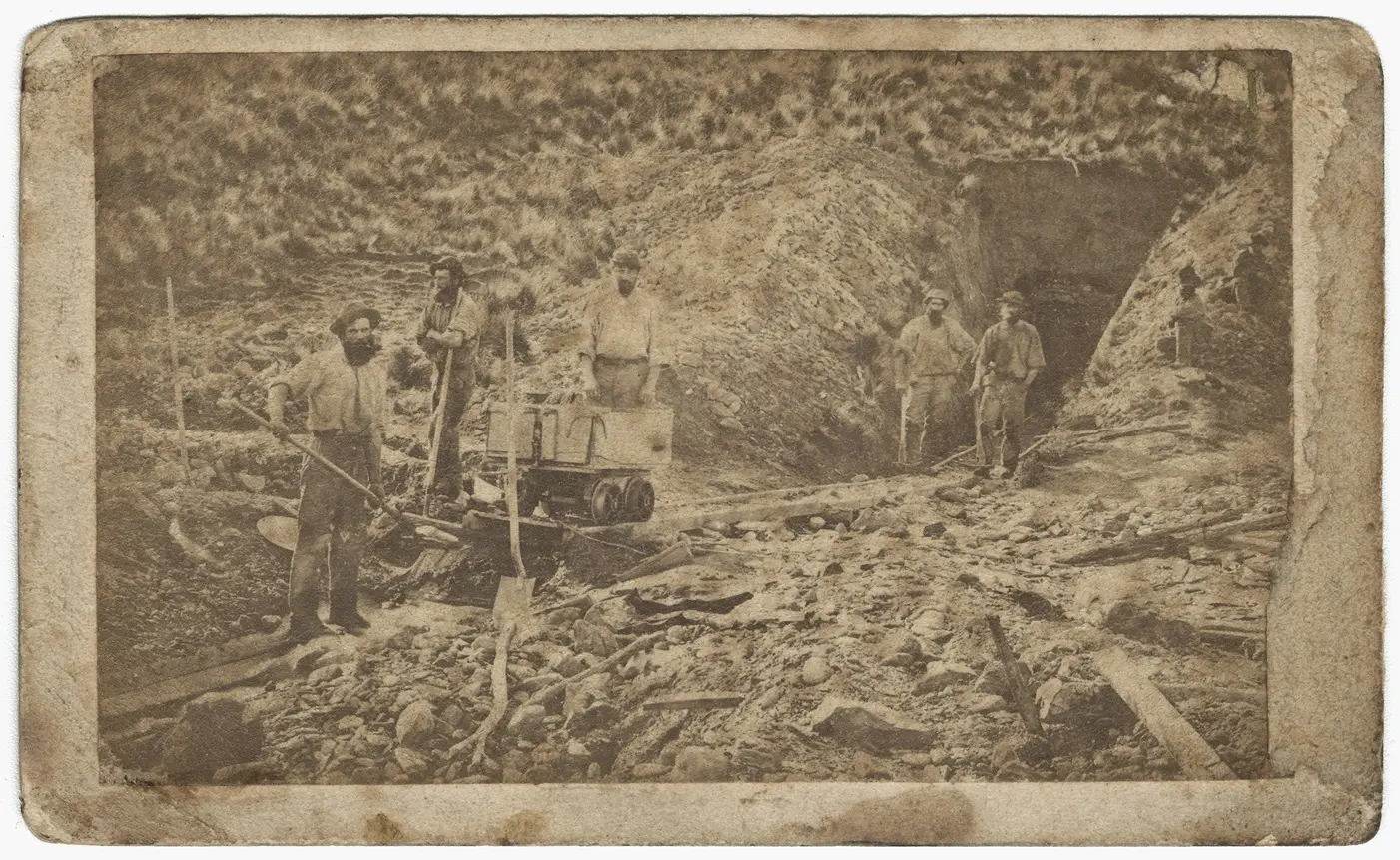
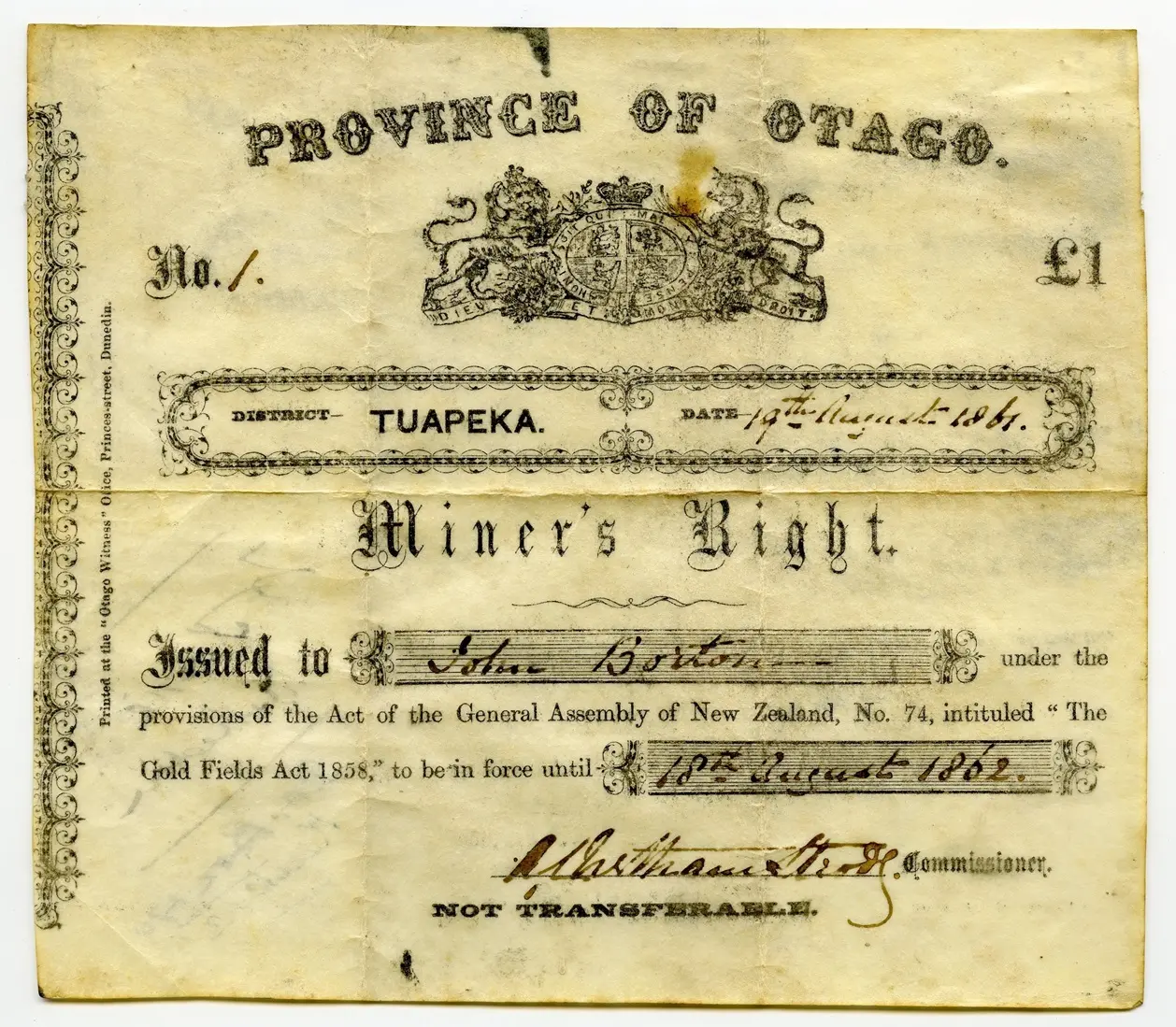
In May 1861, startling news burst from Otago: alluvial gold had been discovered. Early reports were galvanising. From Victoria, Australia, where the rich goldfields of the previous decade had now petered out, came hundreds, then thousands, of men. From Dunedin they made their way to the fields that spread from Gabriel’s Gully, the site of the initial discovery, to other rich sites across Central Otago.
The explosion in the province’s population and the character of the influx (mostly men with a singular determination) cut through the fabric of what had been the godly modest-sized Free Scots settlement led by Thomas Cargill and Thomas Burns. The new arrivals were different kinds of men, on very different pursuits, from those already in the province. Male opportunism found new scope.
While the discovery of gold was a huge boon to the colonial economy, as well as to fortunate diggers, it also introduced an unease. Goldfields and the crowds they attracted were associated with lawlessness and hedonism; they were places of fortunes made and lost, of moral edges easily blunted, of transgression. The very term "gold fever" signalled something frantic, out of control and even pathological. Goldseeking, in all its excitement and thrilling possibility, brought moral ambiguities: of wealth as unearned fortune, a lottery chance, rather than as a reward for labour or capital invested in business.
Upholding order, both on the goldfields and in existing settlements, became an urgent priority. Otago Superintendent, Major John Larkins Cheese Richardson, was concerned to do everything possible to defend the new settler population from potential lawlessness — gold escorts being held up or violence among rival gold diggers — as well as from broader social, moral and political disruption. Māori were not unaffected by the diggers’ arrival either. Ngāi Tahu continued to occupy settlements around the coast, and to travel inland to gather seasonal food and source pounamu. In some of those sites, there had been, by the 1860s, multi-generational connections between local hapū and newcomers.
The sudden influx of yet another new wave of Europeans to the district was startling for all. Richardson believed action was needed to prevent the volatility and contagion that might spread from the easy money and free-spending fortunes that fed vice and disorder. Looking for a solution close to hand, Richardson, a military officer who had served in Afghanistan and the Punjab, saw the regiments in the North Island as the ideal solution. The recent cessation of hostilities in Taranaki in March 1861 was fortuitous. He succeeded in persuading both General Cameron and Governor Grey to send a contingent of the 70th regiment to Otago.
By spring 1861, ninety-five men and several officers under the command of Major Ryan were acting as a de facto police force in Dunedin. They arrived in November that year, and were resident there until 1863. But they were not the only uniformed force to provide order in the province. Richardson had also persuaded his colleagues in the Provincial Council, and in the general New Zealand Parliament, that the circumstances in Otago were such that they required a specialised goldfields police force. To this end he recruited a number of men from the Victorian goldfields police under the energetic leadership of St John Branigan.
Within a short time, "Branigan’s Troopers" were patrolling the fields, providing an escort and extending a muscular willingness to enforce order. Branigan’s men, as a mounted force and with elaborate uniforms, rather placed the soldiers of the 70th in the shadow. Confined largely to patrolling the town districts of Dunedin, the redcoats had a lower profile and did more mundane work amid the drama of the goldfields bonanza.
Both gold and war were powerful factors in propelling men to the colony. It is hardly surprising that at the same time as gold fever took hold and the men of the 70th regiment were stationed in Dunedin, 1300 young women landed in Otago as assisted migrants. They arrived between 1862 and 1863 on passages paid in part or in total by the provincial government in an effort to counter-balance the heavily masculine inward tide.
For a time, recently landed young female migrants and the men of St John Branigan’s goldfields police occupied adjacent rooms in the immigration barracks — a situation that the leading protagonist of "respectable" female migration found scandalous. Maria Rye, a bold and courageous campaigner who had travelled to Dunedin with a group of young women, initiated a major controversy, writing letters that exposed the ills of the Dunedin scene to readers of The Times in London.
It is difficult to imagine a setting more conducive to desertion than a colony where a rush to new goldfields was in full flow, while several thousand troops were in camp but no active engagement was under way. Provisions to deter men deserting to the goldfields included increased rates of pay (double the rate for the rank and file) and a hefty increase in payment for anyone apprehending a deserter: £25, a significant sum. Even so, the temptations were strong. In the Otago Police Gazette, an innovation of Branigan’s, notifications of army deserters were common. Around 35 men deserted during the course of the 70th’s time in Dunedin. Whether these men and others listed in the Gazette were desperate, reckless or adventurous in risking the very serious charge of desertion can only be surmised.
In the February 2, 1863, issue of the Otago Police Gazette, 18 men were listed as "absences from the detachment of the 70th Regiment". All were noted as dressed in "regimental clothing". Deserters came from regiments posted elsewhere in the colony, too — and thus must have made their way to Otago through their own means. Among the full list of deserters were several from other areas of the country and not part of the initial detachment — clearly, they didn’t want to miss out on a piece of the action. The Gazette could also report some successes in apprehending deserters. Thomas Duckworth, John Hodkinson and Alexander Ferguson were arrested by the Dunstan police, while Drummer William Griffiths was arrested by police in Tokomairiro.
A persistent but unsuccessful deserter was Andrew Archer. In a long list of deserters published in April 1863, he appeared with the following details: aged 22, 5 feet 7 inches, "complexion, fresh; hair, light brown, eyes, blue; date and place of desertion, Jan., 26, 1863, Camp, Shepherd’s Bush; date and place of enlistment, May 14, 1858, Dublin; parish and county in which born, Dunlevin, Wicklow; marked with letter D, and marks of corporal punishment; trade laborer; dress, blue smoke coat and regimentals trousers. Looks younger than what he really is; third desertion."
Both the War Office and the Colonial Office asked questions about the propriety of soldiers being put to work maintaining order on the goldfields. Was this the purpose of keeping troops in the colonies? In a colony such as New Zealand? They deliberated carefully on the conditions on which such arrangements could be agreed.
As Commanding Officer in New Zealand, General Cameron did not object, but the dangers were obvious: the risk of desertion and the possibility the men would be needed elsewhere. He first advised the War Office of the Governor’s request for troops to be sent to Otago in his report of November 1, 1861: "I have been requested by Sir George Grey to send a detachment to that province in aid of the civil power." He advised that he had ordered a company of the 70th regiment made up of 100 men under the command of a field officer, enclosing conditions on which the arrangement was made with the colonial government.
Cameron added the crucial comment: "I see no objection to the measure, except the very great temptation to desert, to which the soldiers will be exposed ... On this account, as well as in consideration of the high prices at Otago, it will be absolutely necessary that a considerable addition should be made to the ordinary rates of pay of the officers and men of the detachment."
Cameron attached a return showing rates of colonial pay received by the 40th regiment "when employed on a similar service" in Victoria, and recommended the same in Otago. This same payment, £25, should also apply for apprehension of deserters, and the "whole expense borne by the Colonial Government". The return showed that rank-and-file soldiers received double pay; the lieutenant-colonel, the most senior officer, received £1 5s per day. Correspondence ensued between Colonial Office and War Office as to where costs for such deployments should lie.
Sending soldiers to the Otago goldfields exposes one of the great contradictions of 19th century military life. If soldiers were among the most mobile of people, they also faced the most severe constraints on that mobility through living under orders, and especially through the harsh penalties dished out to deserters. Large rewards offered to those who reported deserters also served to maintain sharp lines between civilian and soldier, as well as deterring those who might seek to harbour runaways. The provisions against desertion underline British historian Linda Colley’s depiction of soldiers as being among Britain’s "captives".
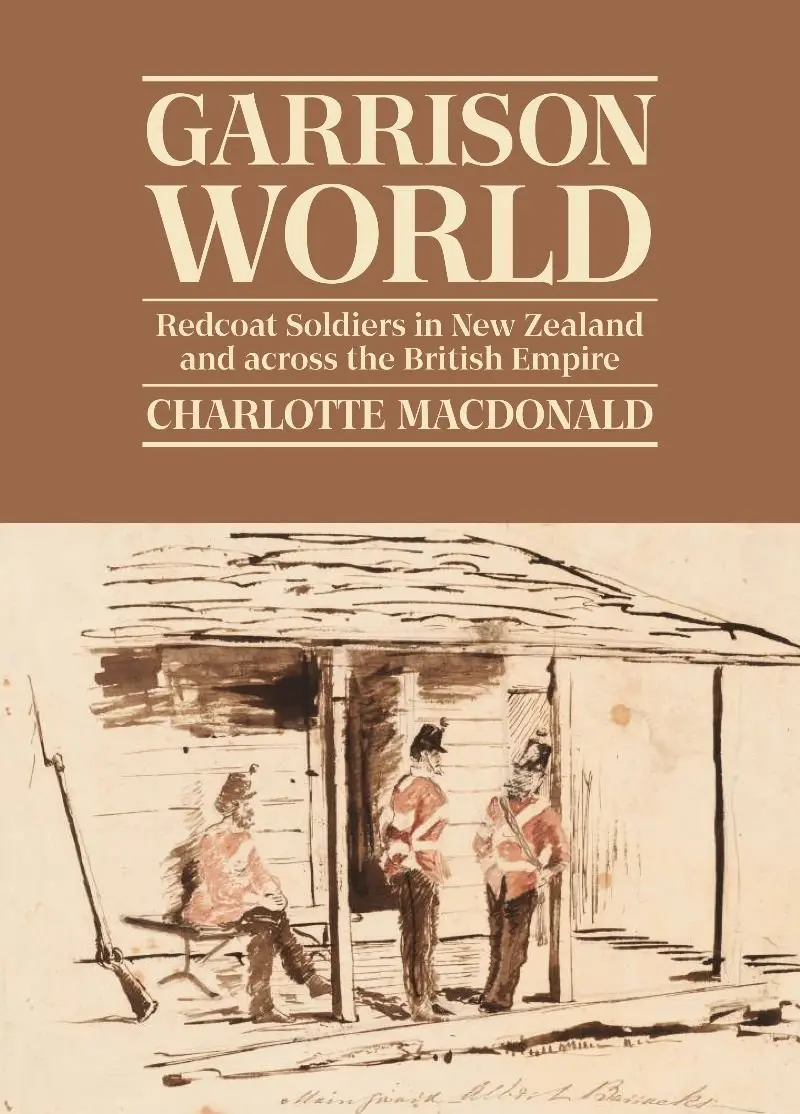
The book
• Garrison World, by Professor Emerita Charlotte Macdonald, is published by Bridget Williams Books and out now.