
PHOTO
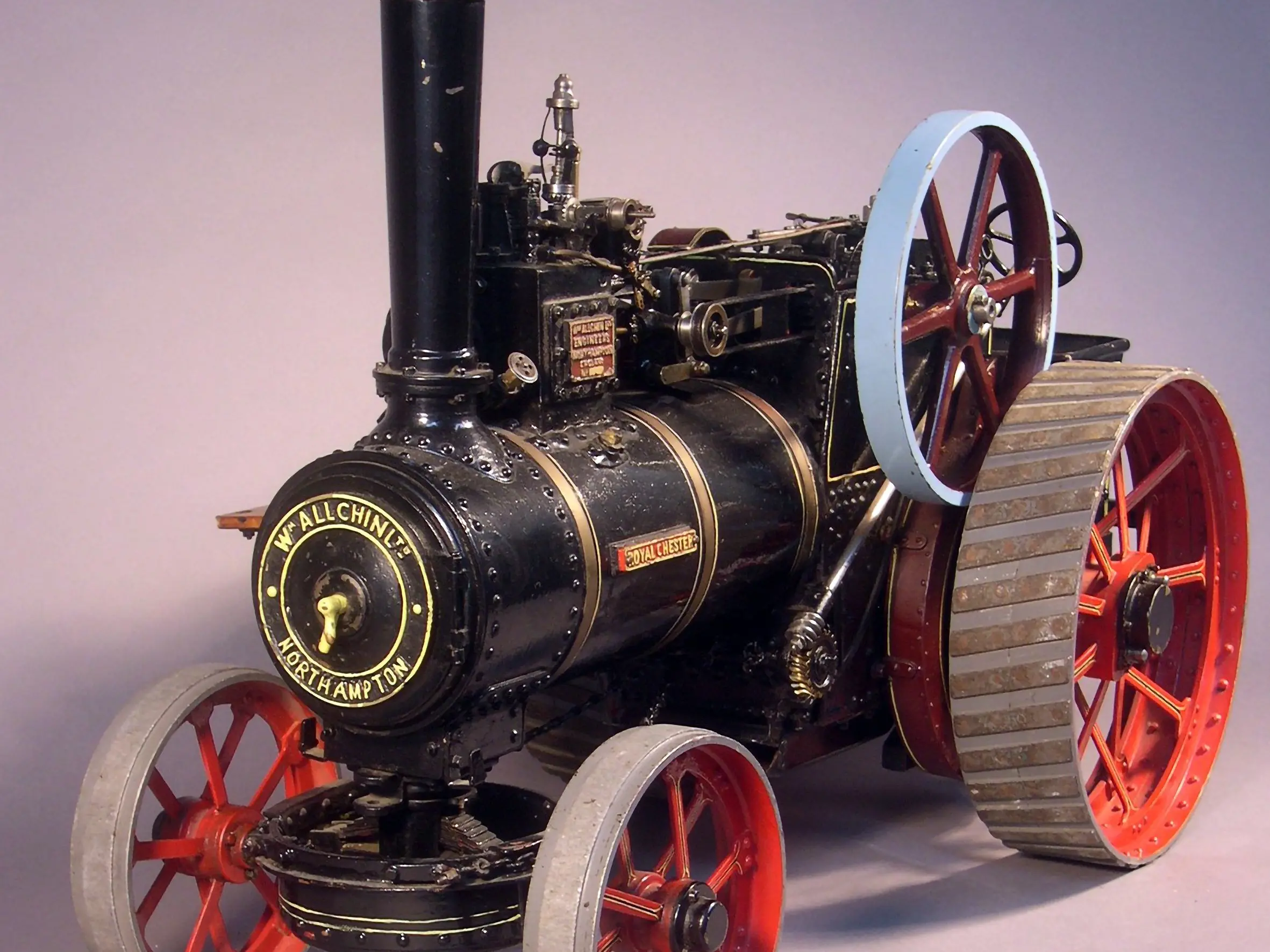
One of my (many) favourite items at Toitū Otago Settlers Museum is ⅛an eighth-scale working model traction engine made by Albert Oldman, of Milton.
The beautifully constructed model, which took Oldman four years to make, is based on William Allchin Ltd traction engine No 3251, which was built in Northampton, England, in 1925.
Oldman’s miniature traction engine has a similar rival on my list of favourites: a much-older, finely crafted, brass model of an early steam carriage.
When given to the museum in 1954, the model steam carriage was recorded as having been brought to Otago by Margaret Watters Ross. Maggie Ross, the second daughter of bookbinder George Ross and his wife Agnes, was born in Kirkcaldy, Scotland in May 1855. She is believed to have migrated to Otago in the early 1880s, shortly before her marriage to Robert Kerr at First Church on March 16, 1883, aged 27.
The model is said to have been made by Scottish watchmaker David Ross, Maggie’s grandfather. It is likely that Ross’ model was inspired by the emergence of steam carriages in Scotland in the 1820s and 1830s.
Engineer and naval architect John Scott Russell was one who experimented with such machines around this time. Six of his carriages, which bear a resemblance to David Ross’ model, were built in 1834 and briefly ran on the road between Glasgow and Paisley.
In the late 1860s a different sort of machine appeared on the streets of Edinburgh: a three-wheeled, rubber-tyred, steam-powered vehicle that had been developed by another Scottish inventor, Robert William Thomson. More than 30 Thomson’s road steamers were subsequently produced and many of them were exported, including to New Zealand.
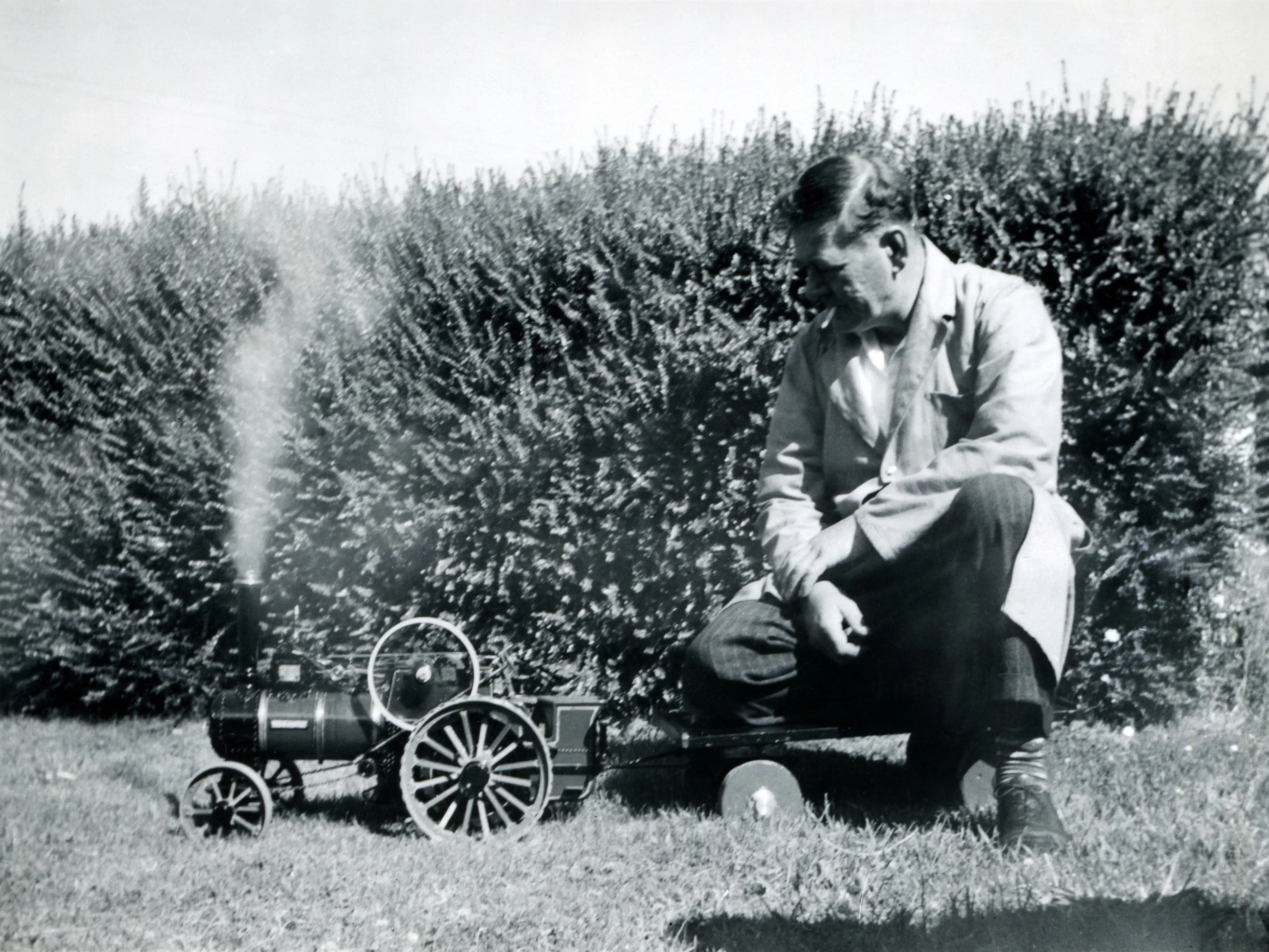
The first to arrive in New Zealand was imported by Otago politician John Lillie Gillies in 1870 with the intention of running it on the main road between Dunedin and Tokomairiro. After assembly and testing, Gillies staged a public demonstration in Dunedin. Some 400 people showed up to watch. Seven wagons that had previously been employed in the lowering of Bell Hill were crammed full of men and boys, hitched to the steamer and successfully driven about. The wagon train was then replaced with one large wagon and its occupants transported up Stuart St, into Great King St, via Moray Pl, and down to the Water of Leith.
Initial success was followed by failure when, a few days after the public trial, the steamer was driven to Forbury Park to roll the ground there. Embarrassingly, the heavy machine became stuck in the mud and had to be dug out, twice. Otago’s first flirtation with the use of road steamers proved short-lived, the machine being sold to interests in Canterbury within a few months.
A local attempt to make a road steamer began at Cutten and Co’s foundry in Dunedin in 1881. The finished machine, which had been designed by engineer Robert Scott, was given a trial along Castle St and up to the Northern Cemetery in April 1882. While it worked well, the steamer did get stuck in a hole on the return journey. Two days later it began travelling north for an exhibition in Christchurch but only got as far as Blueskin Bay, when the driving wheel cracked. Despite the failure of his invention, at the time of his death in 1930 Scott’s machine was described as ‘‘the first motor car in New Zealand or Australia’’.
While the use of road steamers for passenger transport ultimately didn’t catch on, steam-powered traction engines would instead play a vital part in New Zealand’s rural economy in the late 19th and early 20th centuries.
- Peter Read is a curator at Toitū Otago Settlers Museum.