
PHOTO
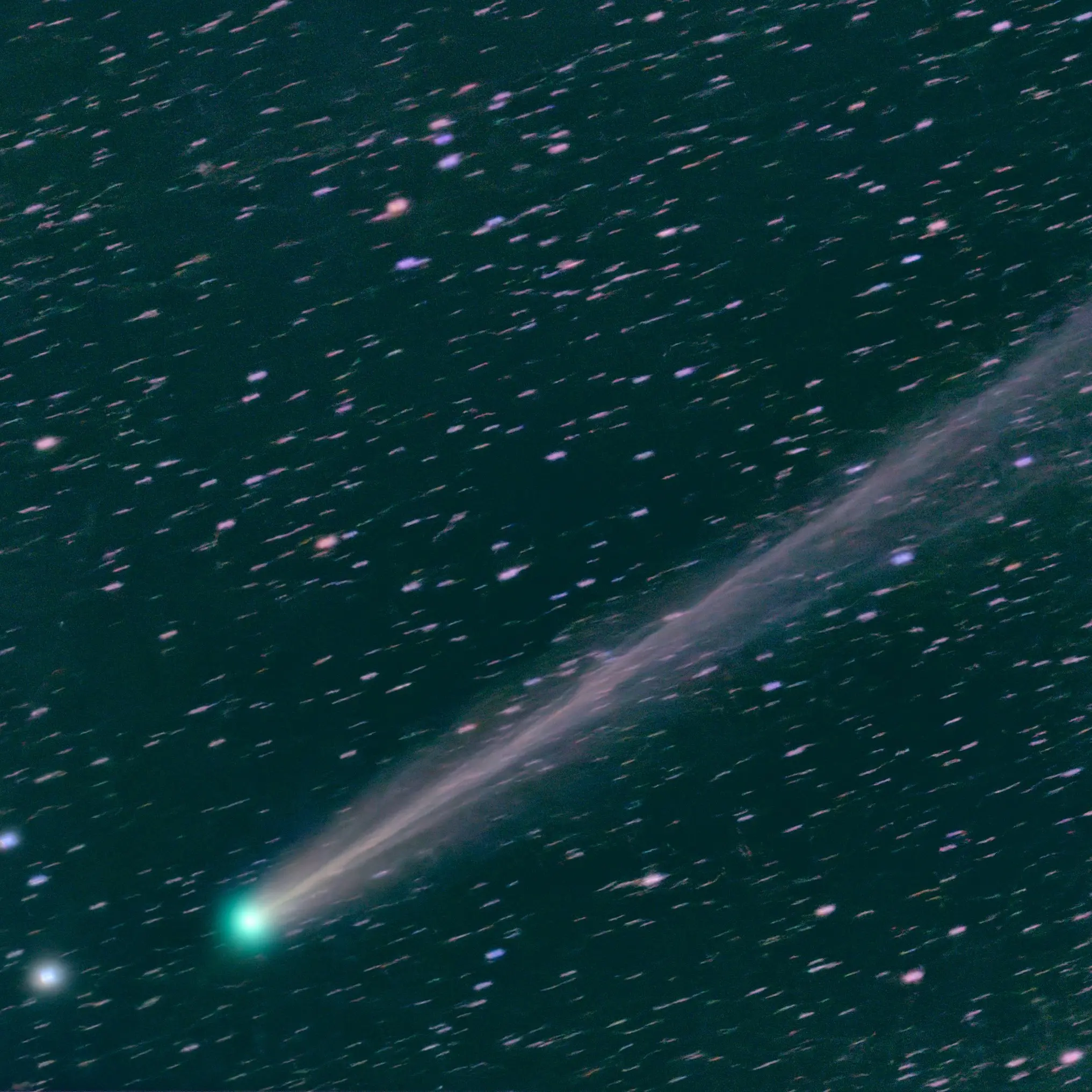
There is a small, untidy visitor in the evening sky this week, one that does not keep to schedules or respect expectations. Comet C/2025 R3 Pan-STARRS has come south, slipping out from the Sun’s glare after a close encounter late in April, and is now climbing into view for those of us with a clear western horizon.

I managed to spot it last week, or at least my camera did. Light from the full Moon washed the sky pale, and the comet itself was invisible to the naked eye, but a short exposure revealed a tail stretching more than two degrees across the frame. This week should be different. That’s because the Moon rises after the comet has set, leaving a darker sky and a better chance of seeing it directly, especially with binoculars.
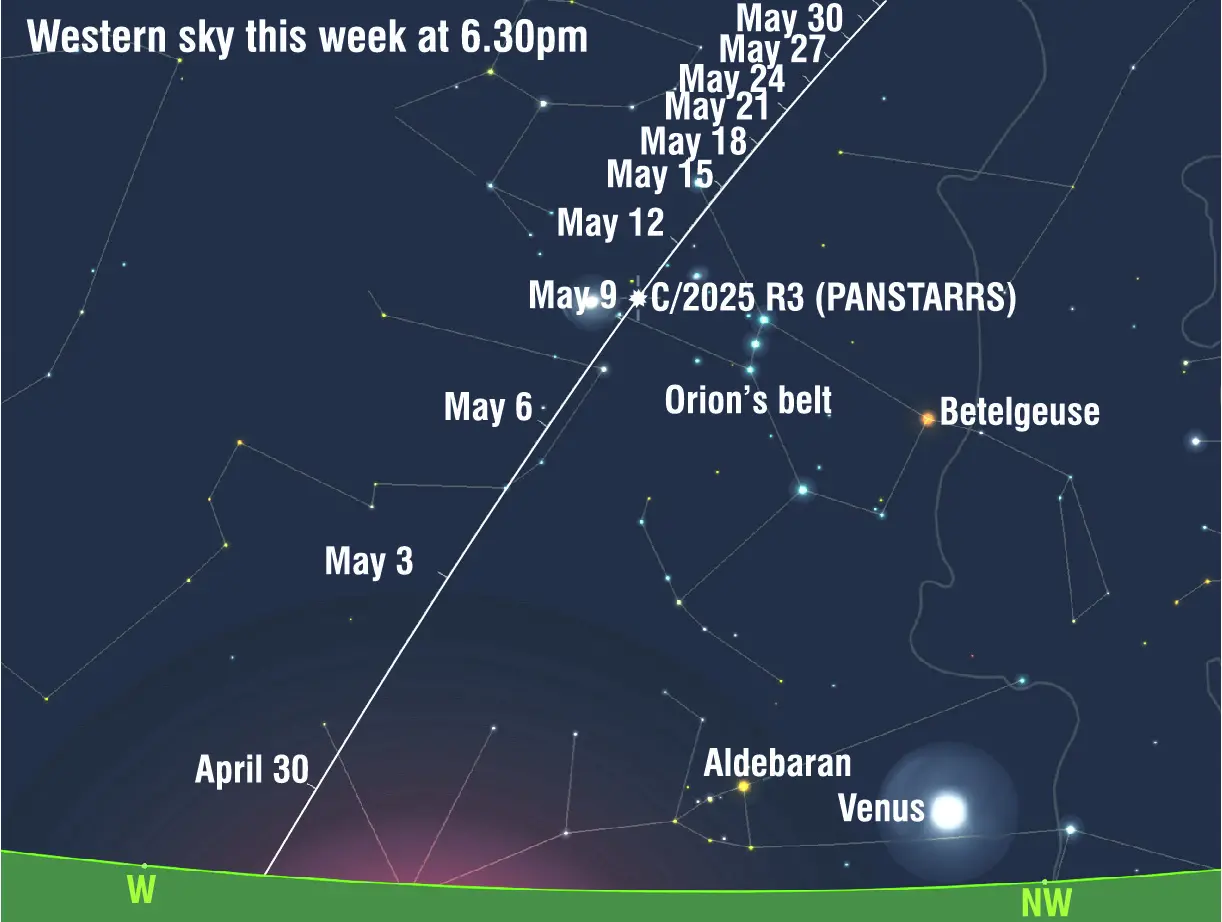
As the comet orbits the sun, its position changes from night to night. You will find it drifting through Orion. The comet will not leap out at you. It will sit there, a faint smudge at first glance, but with a little patience, it resolves into something more. A star-like nucleus, surrounded by a green fuzzy coma and a suggestion of a tail, the quiet evidence of ice and dust shedding themselves into space.
David Levy once said that comets are like cats; they have tails, and they do precisely what they want. This one is no exception. It was a northern object only weeks ago, then brushed close to the Sun, and now appears for us as if nothing much has happened. These things do not belong to our sense of order.
Its orbit is long, likely many thousands of years, which means this brief appearance is a one-off in any human sense. When it returns — if it returns — the sky will belong to other eyes.
We have been rather spoiled in recent years, with a run of bright, photogenic comets. It is easy to forget how rare they once seemed.
This one may not be spectacular, but it is honest. It asks you to step outside, to look carefully, and to meet it halfway.