
PHOTO
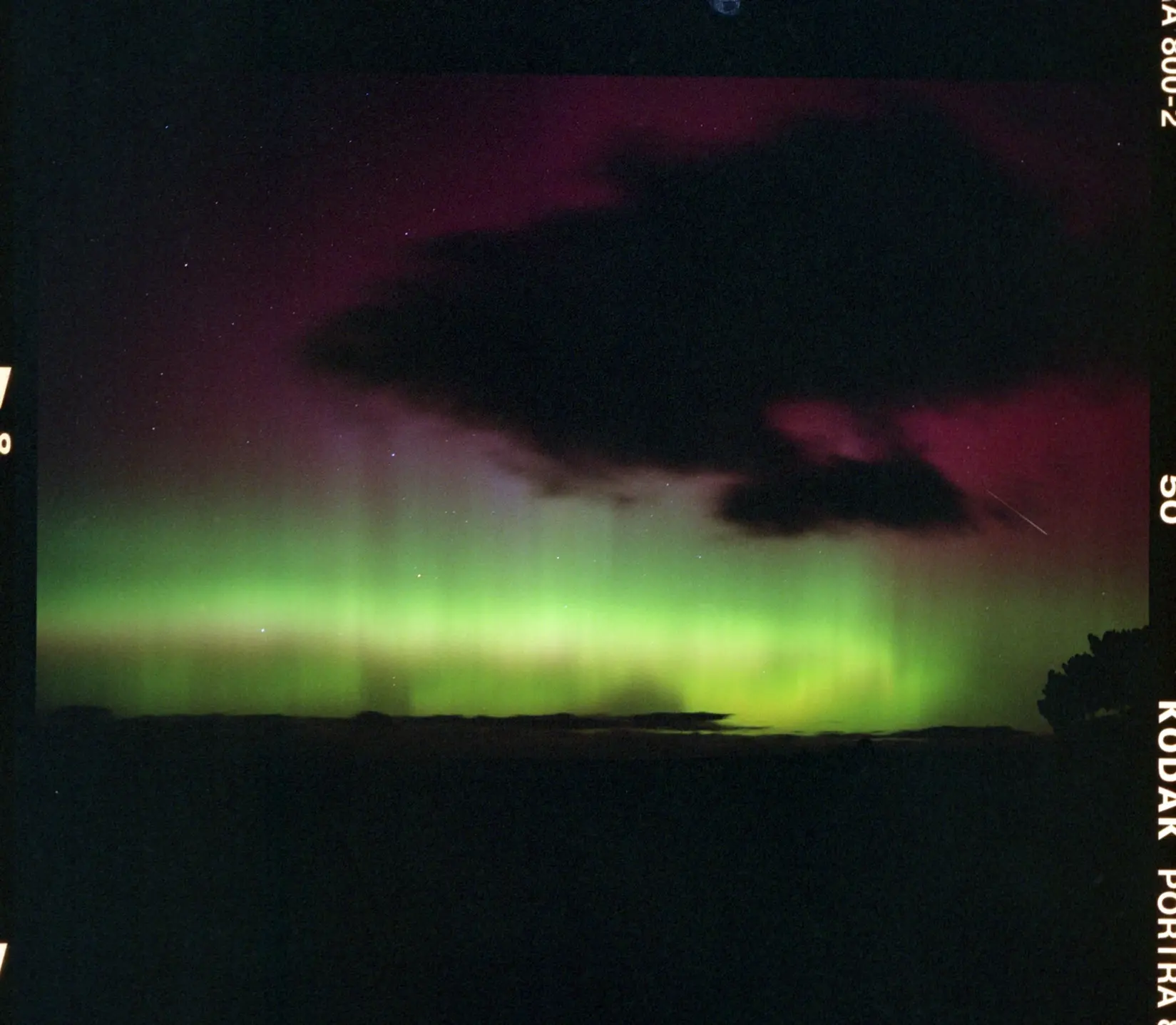
Autumn has arrived in Middlemarch. You feel it in the paddocks: cooler evenings, dry grass underfoot, and the stars appearing earlier each night.
It is also the time of year when the sun sometimes sends us a gift.
Around the equinoxes in March and September, aurorae become slightly more likely. The reason lies in something called the Russell–McPherron effect — a rather grand name for a simple bit of cosmic geometry. At these times of year, the orientation of Earth’s magnetic field allows charged particles from the sun to slip more easily into our atmosphere.

When they do, the southern sky can quietly ignite.
A few nights ago, it did exactly that.
I wandered out into the paddock with two cameras. One was thoroughly modern — a digital camera capable of capturing faint colours and stars in extraordinary detail. The other was something rather older: a Mamiya 645 medium-format film camera a friend had recently handed to me with the suggestion I should try it.
It weighs about as much as a brick and operates with the reassuring mechanical certainty of something built in another era: no menus, no software updates — just film, light and patience.
I loaded a roll of Kodak Portra 800 and set it beside the digital camera.
Some people ask why anyone would bother with film now that digital photography exists. It’s a fair question. Digital cameras are astonishingly capable. Film, by contrast, requires a small leap of faith. You press the shutter and then wait days to see whether you got it right.
That night, a soft green band appeared above the southern horizon. Gradually, crimson rays rose above it as solar particles collided with oxygen and nitrogen high in the atmosphere.
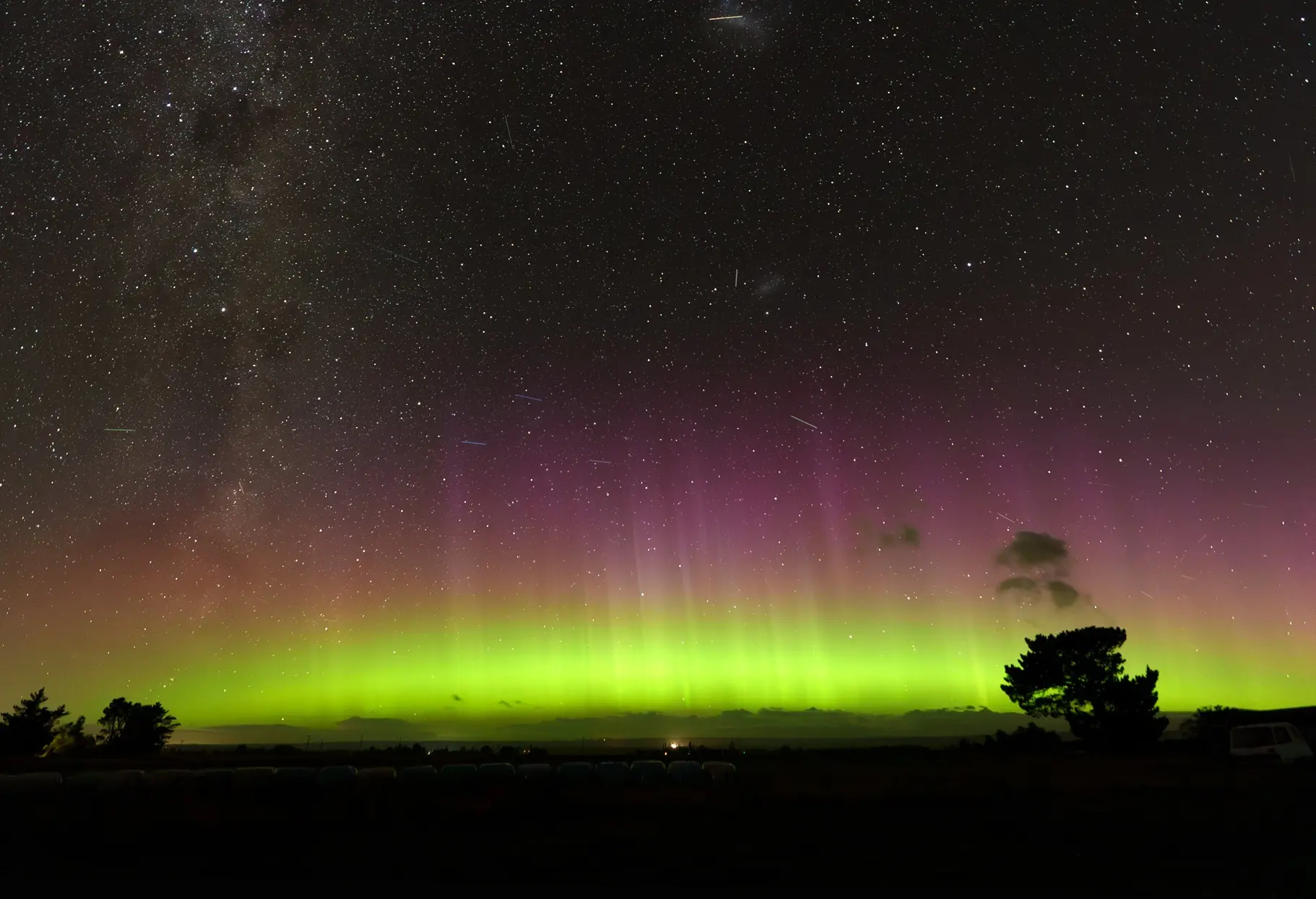
The digital camera captured the scene beautifully — sharp stars, vivid colours, exquisite detail.
The film frame was different. Softer. Slightly blurred. Less precise.
Yet oddly, it looked more like what I remembered seeing.
The next day, I dropped the film at Jonathan’s Photo Warehouse in Dunedin, one of the few places still processing film. A staff member told me that when they started there, they processed 400 rolls of film a day. Back then, George St had as many photo labs as it now seems to have vape shops.
Technology moves on.
The digital photograph is technically better in every measurable way. But the old film image carries something gentler — something closer to memory than measurement.
And sometimes that feels like the truest record of the night sky.