
PHOTO

The Oamaru Harbour, tucked under Cape Wanbrow to the south, is open to wind and heavy swells, making it a difficult place for sailing ships to moor, load and unload cargo.
In its early years, administration of the port by the Dock Trust was marked by financial and political difficulties. The provincial government reconstituted the trust in 1874 as the Oamaru Harbour Board, and appointed Captain William Sewell as harbourmaster (1874–1896).
By 1883, the harbour was a place of constant change and activity. Major projects were under way, including construction of the breakwater and the north mole, along with the building of wharves and ongoing dredging operations.
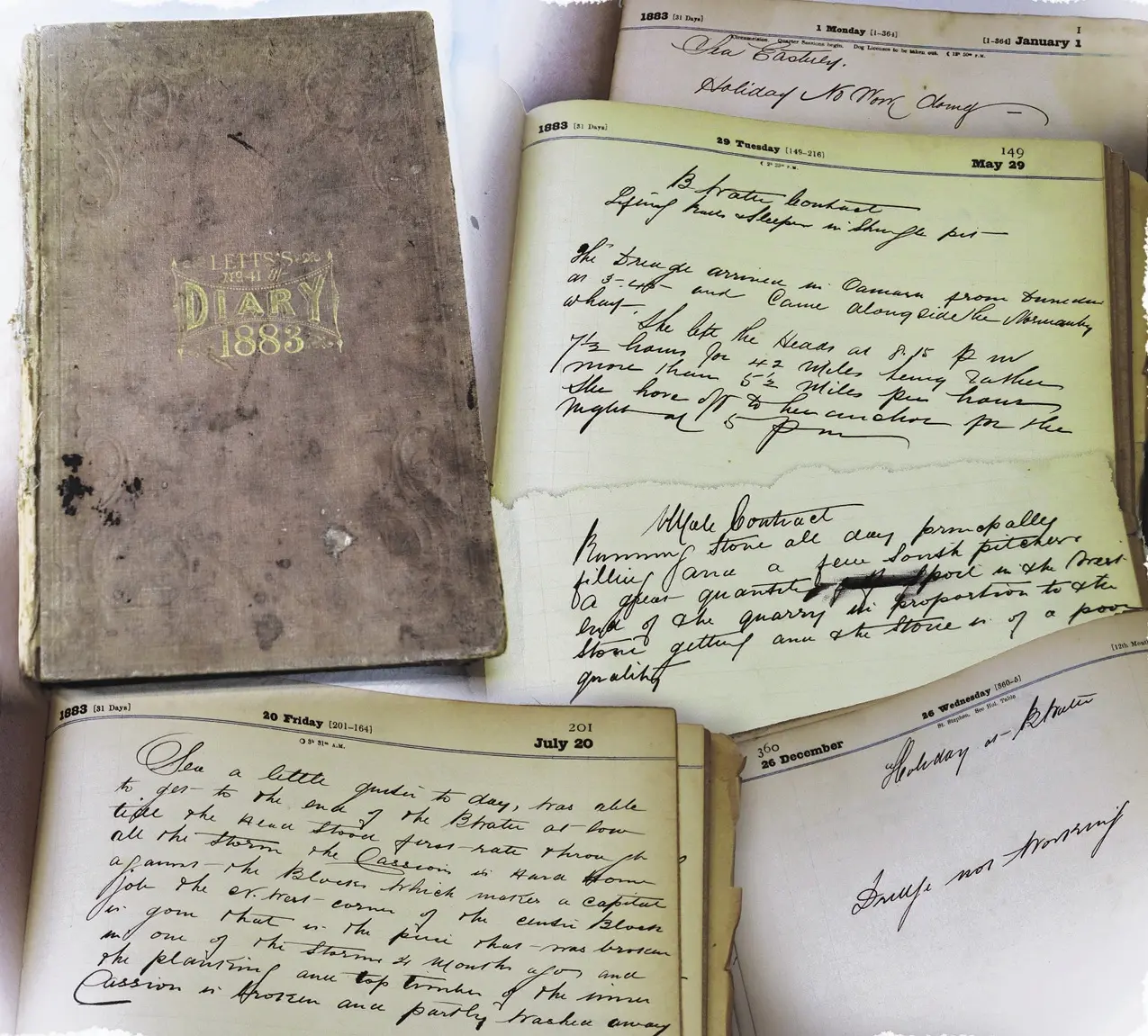
The 1883 office diary of the Oamaru Harbour Board is practical and often straight to the point. Its entries record sea conditions and the day to day work on harbour structures, the dredge and various contracts.
The first entry, dated January 1, reads simply:
"Sea Easterly"
"Holiday No Work Doing"
As the diary unfolds, headings appear for different contracts, accompanied by descriptions of the work carried out.
An entry on May 29 records:
"BWater Contract.
Lifting tracks & Sleepers in Shingle pit;
The dredge arrived in Oamaru from Dunedin at 3.45 — and came alongside the Normanby Wharf.
She left the Heads at 8.15pm 7½ hours for 42 miles being rather more than 5½ miles per hour. She hove off to her anchor for the night at 5pm.
Mole Contract
Running Stone all day principally filling and a few South pitches. A great quantity of [?] Spoil in the Street end of the Quarry in proportion to the Stone getting and the Stone is of a poor Quality."
On May 31, the diary notes: "Official trial and naming of the Dredge".
The naming event, according to the newspaper reports of the time, was a big affair with a large party of visitors present. The dredge was christened the "Progress".
Many entries challenge the reader. Unfamiliar terminology, abbreviations, and difficult handwriting all add to the intrigue of deciphering the daily record.
On July 20, the writer reflects:
"Sea a little quieter today, was able to get to the end of the BWater at low tide the [?] Stood first rate through all the Storm ... ... that is the piece that was broken in one of the Storms 4 months afor and the planking and top timber of the inner Cassion is broken and partly washed away."
The final entry, dated December 26, reads:
"Holiday on Breakwater"
"Dredge not Working"
"Running Stone to the Mole; Spoil as usual".
The last five pages of the diary have been torn out. Why, I asked myself, did these pages get removed? That is a mystery I will never solve and perhaps that, too, is part of the enduring challenge and fascination.
Elly Dunckley is curator of archives at Waitaki Museum & Archive Te Whare Taoka o Waitaki.