

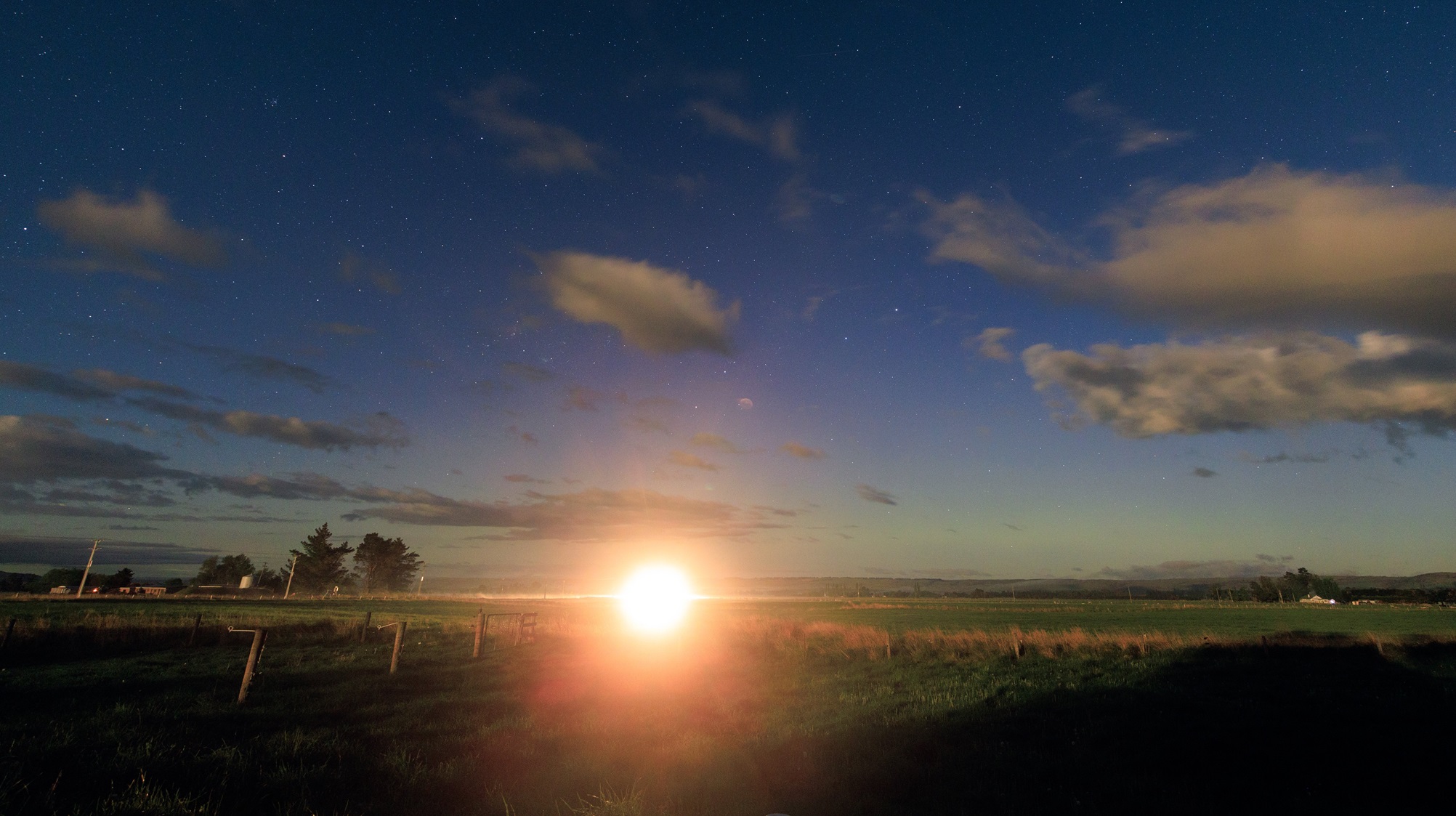
It’s a glorious dark-sky site — the kind of place where you can feel the universe breathing.
On clear nights, the Milky Way inspirationally illuminates the paddocks and even the sheep seem to stop chewing for a moment to look up.

If you stand quietly beside the telescope, you can see the line of State Highway 87 descending into the valley. Then comes a distant glow, like dawn in miniature, growing brighter until suddenly you’re bathed in enough light to perform minor surgery.
The stars vanish, your pupils slam shut and the romance of the cosmos is replaced by the stern white glare of a Toyota Hilux on full beam.
I’ve started to wonder why modern headlights have become so brutally bright.
Once upon a time, car lamps were friendly — a soft yellow halo that politely illuminated the road and maybe a rabbit or two. Now, every ute seems equipped for Antarctic search and rescue.
It turns out that the culprit is technology. Old-fashioned halogens have been replaced by LEDs that last forever, sip electricity and shine with the cold brilliance of a dentist’s lamp.
They’re often mounted higher too, meaning the beam goes straight into the eyes of anyone who happens to be lower down — astronomers, cyclists, or small hatchback drivers.
New Zealand law technically says headlights must not "dazzle, confuse, or distract other road users." Clearly, this message has not reached the makers of aftermarket light bars, nor certain individuals who seem to regard the dip switch as a personal affront.
So here’s my small plea from the starlit back blocks: if you’re driving into Middlemarch after dark, please — dip your lights. The universe doesn’t need extra illumination. Let your beams stay on the road, not in the sky.
Because out there, in that rare valley where darkness still has meaning, one careless flash can turn a cathedral of stars into a supermarket carpark.
And honestly, the Milky Way has been shining perfectly well without your help for about thirteen billion years.


