
PHOTO
On April 11, the Otago Daily Times covered an exhibition of Queen Elizabeth II’s clothes.
Clothing enabled our ancestors to survive when they moved into the colder parts of the world and that happened at least 60,000 years ago. They probably used animal skins to survive. However, we also use what we make to project status and achievement, and clothing — along with precious stones, glittering metals and expensive motor cars — makes social statements.
Only very rarely are we able to know what a prehistoric person wore and there are four principal means of finding out.
One comes from the extreme aridity of the Taklamakan Desert, and a second is the survival, for example, of the Han aristocratic woman Xin Zhui, who was interred in a deep tomb sealed with thick layers of charcoal and clay to exclude air and water. A third comes from the glacier that preserved Bronze Age iceman Otzi and the fourth is from bodies that were cast into peat swamps, particularly in Denmark.

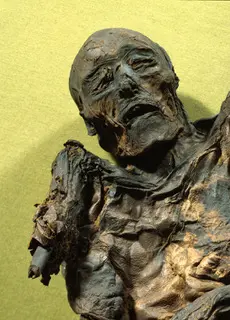
Two thousand years ago, people were ritually executed by members of their community, probably to appease deities. Tollund Man is the best known; he was hanged, but was buried naked save for his cap.
However, the Huldremose Woman was found fully clothed. She, too, had a rope round her neck and a badly broken arm. The peaty environment in which she lay for two millennia turned her clothing uniformly brown, but recent research has recovered the red and blue colours of her garments and fashion commentators have given their unstinted approval to her good taste.
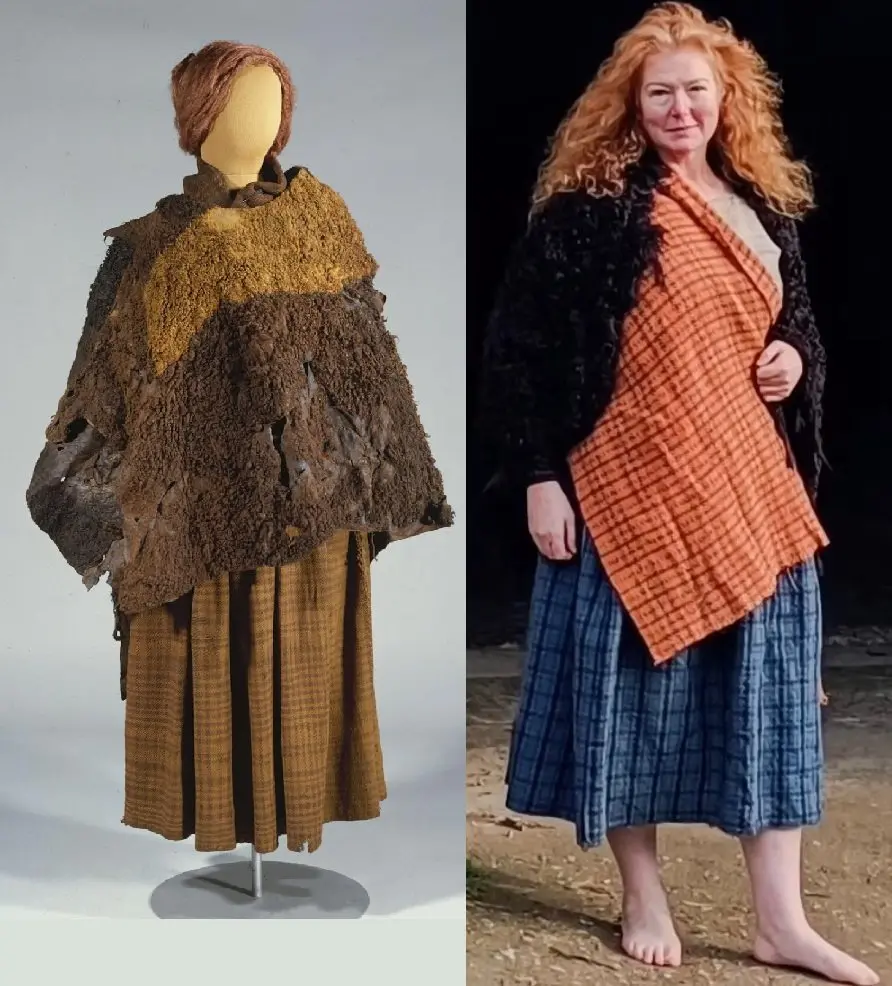
Her finely woven check woollen skirt has been subjected to strontium isotope analyses, revealing the cloth was made from both local sheep’s wool and wool imported from some distance away.
Over her skirt, she wore two capes, each made principally of sheep skin with the wool facing outward, but each had inserts of finely stitched goat and deer skin. The pocket on one of these capes was made of an animal’s bladder and contained her horn comb and a hairband.
Under these, there was a prehistoric version of a full-length, white petticoat made from nettles. Her woollen scarf was kept in place with a pin made from bird bone.
We should never underestimate the good taste of our remote forebears.