
PHOTO

In February this year, I travelled south from Takapuwahia, my Ngāti Toa home marae in Porirua, to be among my Ngāi Tahu relations in Ōtepoti. Here I undertook an internship at Tūhura Otago Museum for my master of museum and heritage practice study at Te Herenga Waka Victoria University of Wellington.
My interest lies in the preservation and care of taonga tawhito — our ancient treasures — and particularly in uncovering and capturing their deep and rich kōrero or pūrākau, our stories and histories attached to taonga.
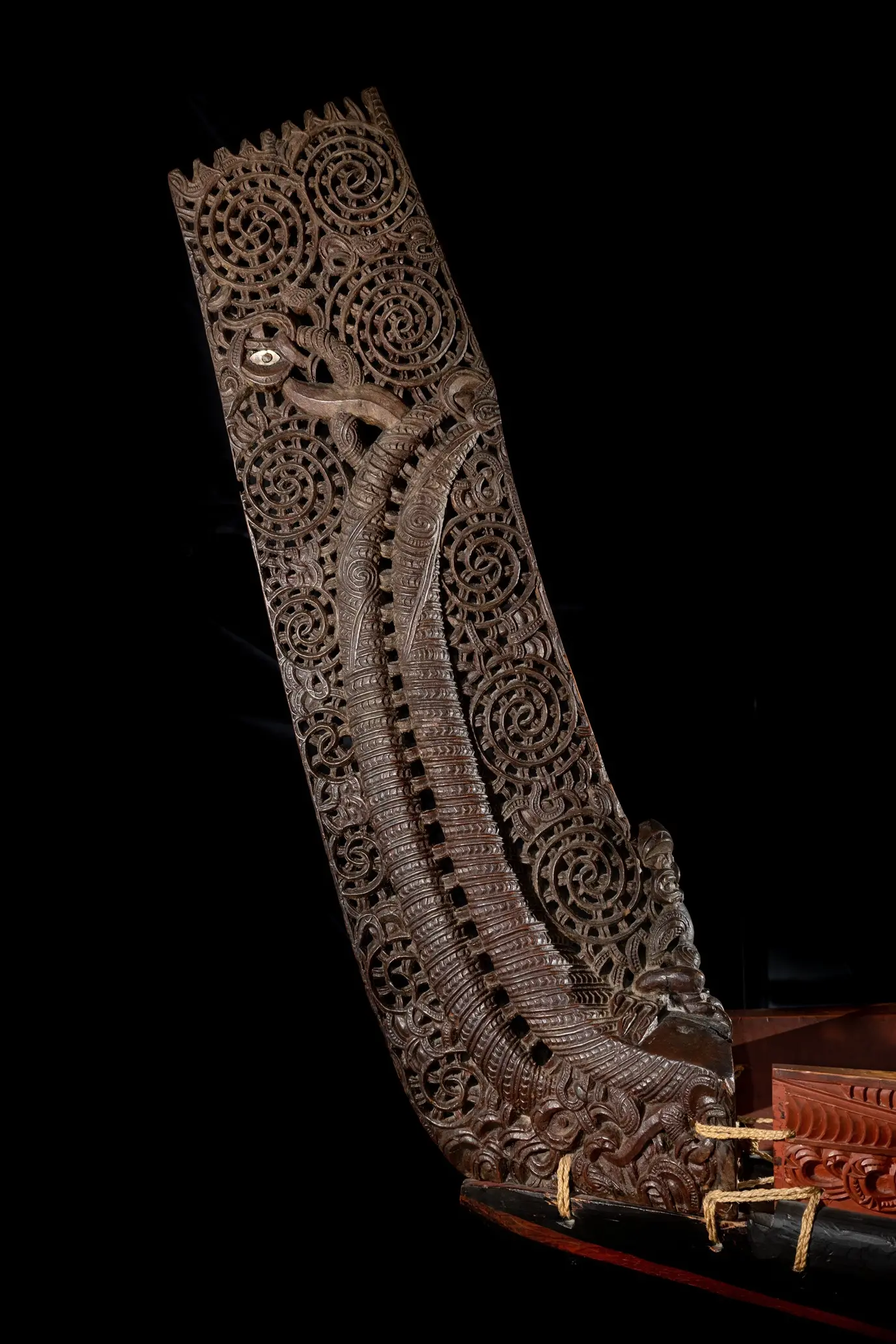
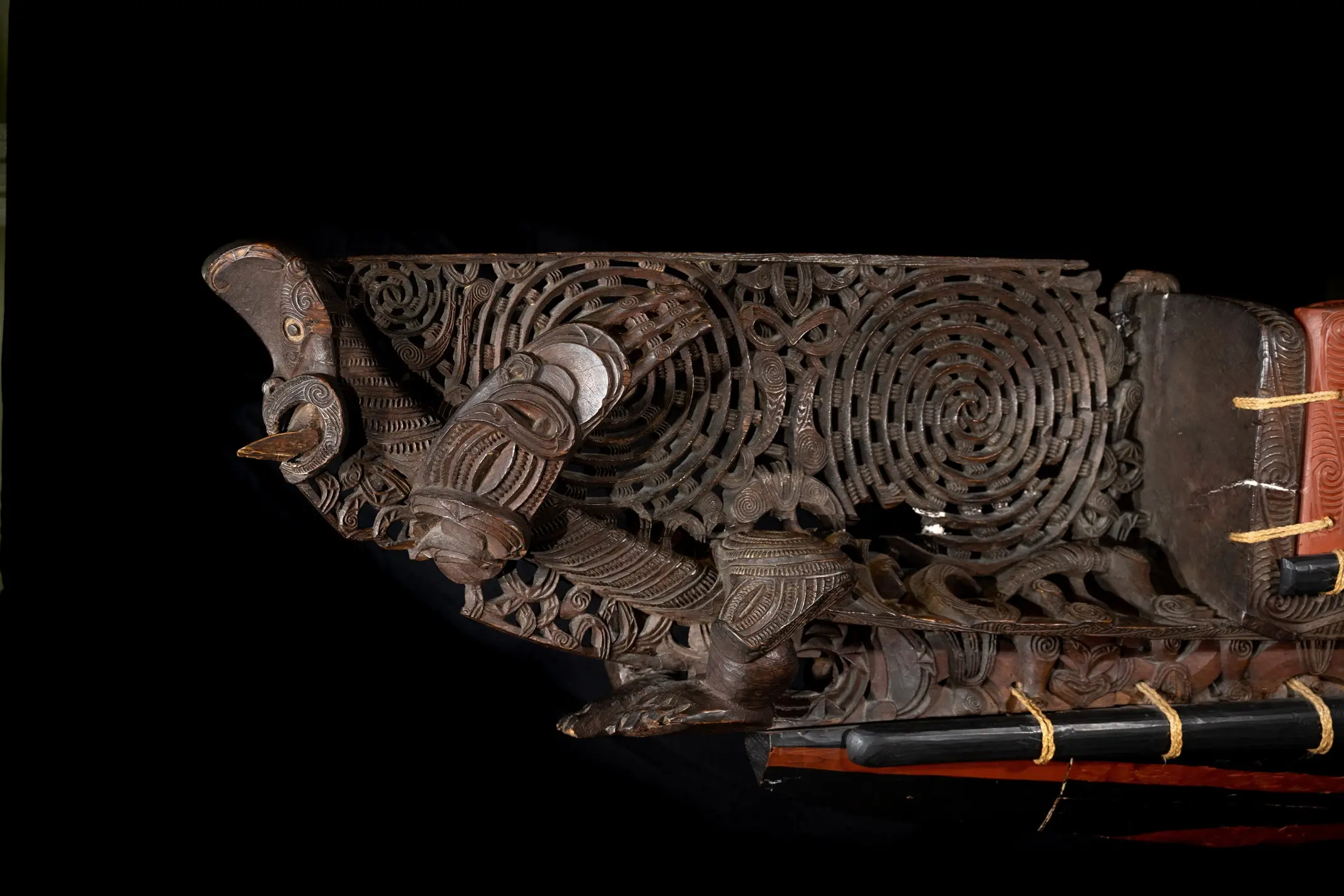
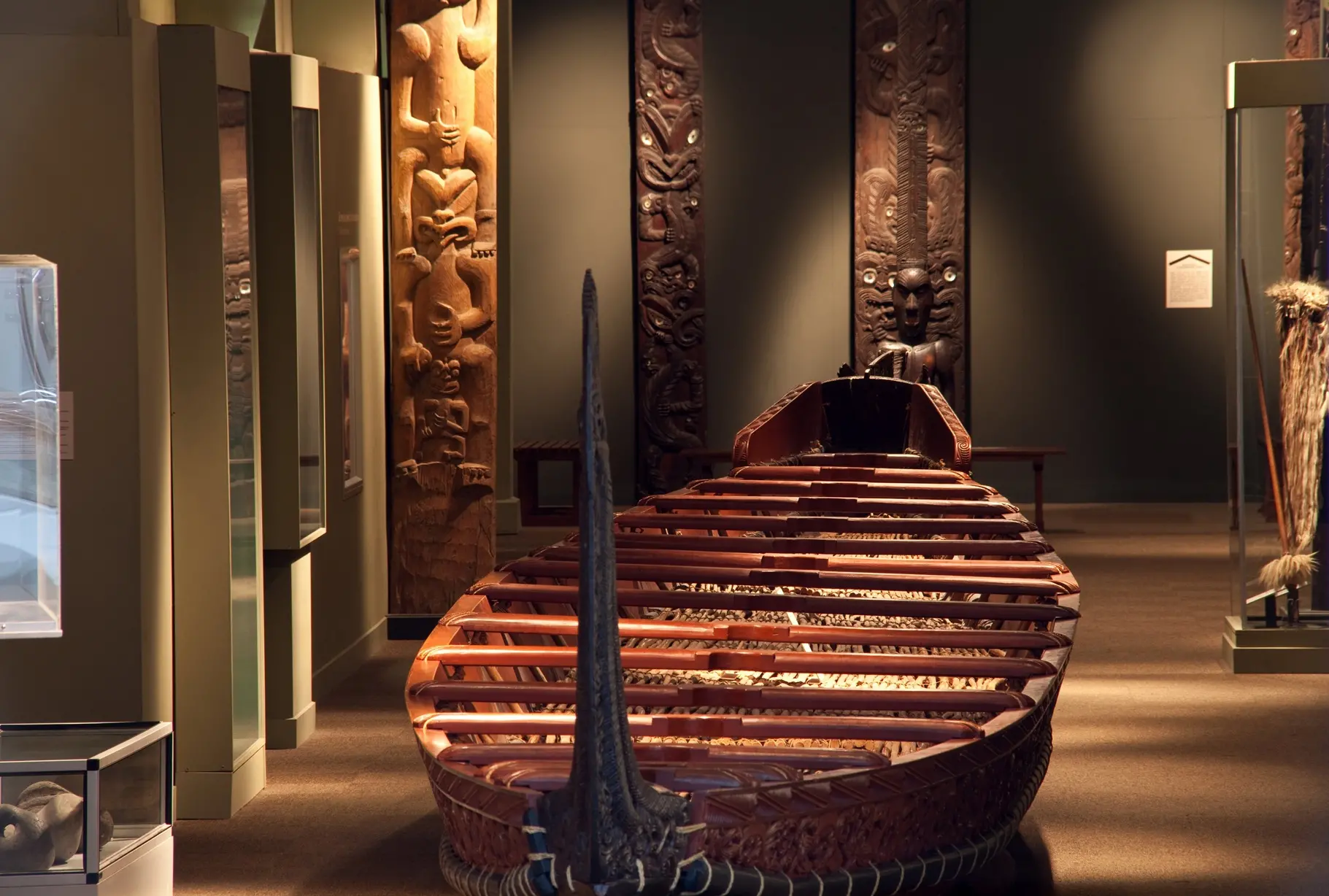
Two taonga of special interest to me in the Tangata Whenua Gallery at Tūhura are the tauihu (prow) and taurapa (sternpost) attached to Te Paranihi, the 17m-long waka taua (war canoe).
Today, this waka is composed of different parts joined together to replicate a complete waka taua for display. Although prized as exhibits for New Zealand museums, complete waka were historically difficult to collect. The only known complete waka taua surviving from the 1800s is Te Toki-a-Tāpiri at Tāmaki Paenga Hira Auckland War Memorial Museum.
Canoes were pivotal in te ao Māori, from the early voyagers crossing Te Moana Nui a Kiwa (the Pacific Ocean) on double-hulled waka hourua, to the ornately adorned and carved waka taua carrying war parties on expeditions and stating the mana of the iwi and rangatira who owned them. Less ornate were waka tētē used for fishing expeditions, and mōkihi, smaller canoe-shaped rafts fashioned from bulrushes and flax stalks, were excellent for crossing lakes and rivers.
Māori relied heavily on waka in their everyday lives. While their main function was practical transportation of people or resources, other traditional uses observed show waka also being involved in cultural displays, spiritual events or ceremonial occasions, and as gifts or mediums in unsettled times between warring tribes. The tauihu and taurapa now on Te Paranihi were once a part of such an event in Ngāti Toa and Ngāi Tahu tribal histories.
In search of new resources and lands, Te Rauparaha arrived from the north with his Ngāti Toa kinsmen and allies, waging campaigns and musket raids on iwi in northern Te Waipounamu. The southern Māori were confronted for the first time by these northern invaders armed with new weapons and technologies.
In 1828, Te Rauparaha commissioned the carving of a fleet of waka that were named Waikatohu, Te Paenuiowhiti, Te Ahikākāriki and Waikahua. Ngāti Toa used these canoes to cross Raukawa Moana (Cook Strait) from the North Island over to Te Waipounamu. Originally fixed to Waikahua, the tauihu and taurapa now displayed on Te Paranihi were part of those Ngāti Toa campaigns.
Along with an ornately carved bailer, these taonga were part of a cultural exchange of gifts between Te Rauparaha (Ngāti Toa) and Te Matenga Taiaroa (Ngāi Tahu) in a hohou i te rongo ceremony — an attempt to make and cement peace after conflict. This exchange happened at Taupo pā in Porirua, the primary home of Te Rauparaha in 1843. In return for these exquisitely carved waka pieces, Taiaroa gifted a mere pounamu called Tuhiwai.
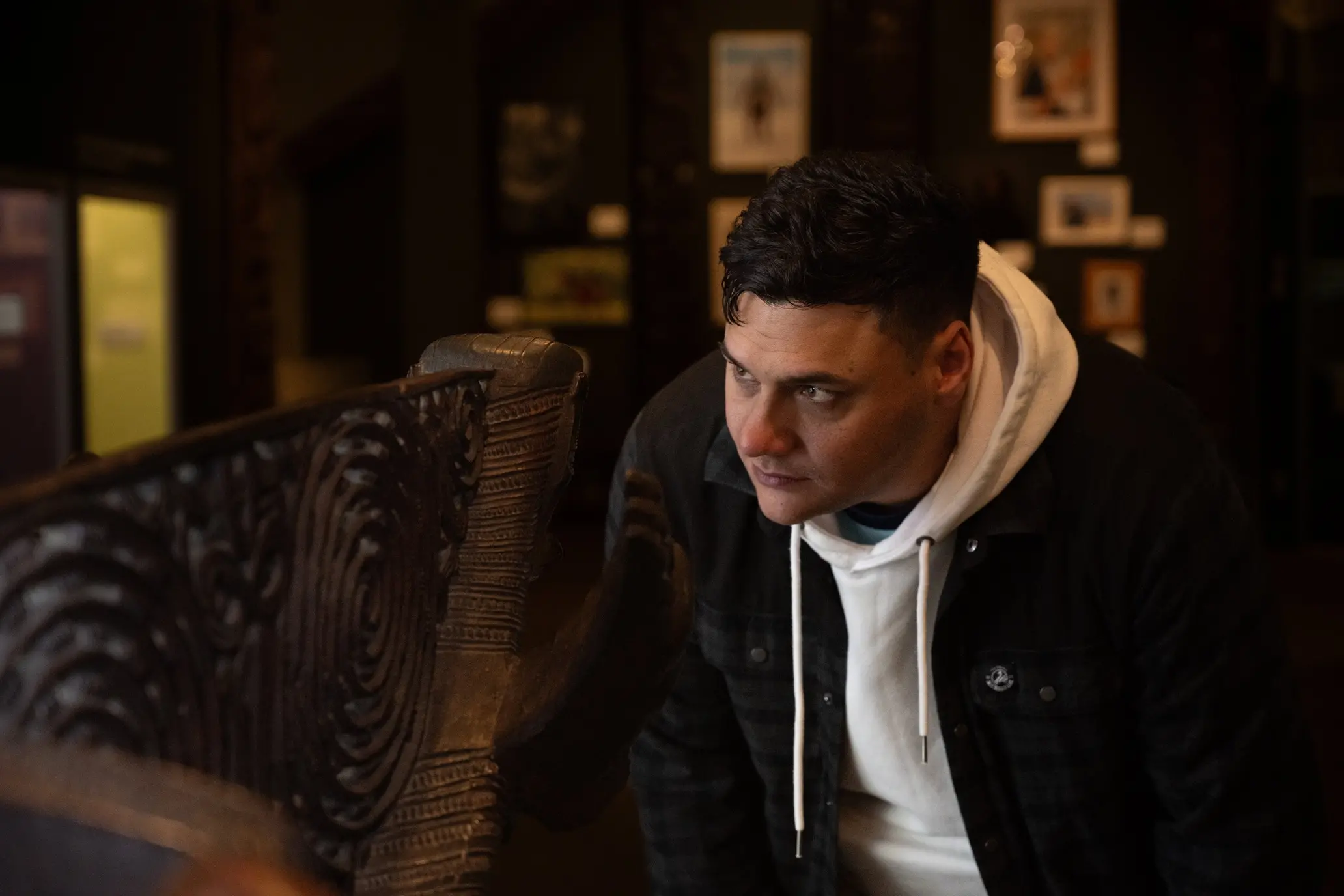
Knowing that these taonga are actual witnesses to those events amazes me. If only they could talk — imagine the rich details of those moments that they could share. Even still, these taonga do talk in a way. They are the incredible workings of our old people and are the physical representation of those events and histories. These taonga symbolise what it took for our ancestors to overcome these difficulties and challenges that they endured, and while reminding us of these past times they also encourage us to, like our tūpuna, look towards making something of our futures.
I was privileged growing up in Takapuwahia to hear from my kaumātua about these histories and stories of my Ngāti Toa and Ngāi Tahu whakapapa. Having tangible taonga present like the incredible mere Tuhiwai made it even more special. It was these experiences that inspired me to pursue this career as a kaitiaki taonga Māori, so that I can help preserve these precious kōrero and taonga, and to help share and carry them on into the next generation.
Encountering Te Paranihi and seeing the tauihu and taurapa for the first time was like putting a piece into a puzzle. When I started my museum studies, I was working at Pātaka Art + Museum in Porirua as the kaitiaki for the Ngāti Toa iwi exhibition Whiti Te Rā, where Tuhiwai was on display. Through the internship at Tūhura Otago Museum, I wrapped up my master’s degree in the presence of the tauihu and taurapa of Waikahua. Bringing together the battles, the peace-making and the histories of my tūpuna, it was a conclusion to this chapter of my life that I didn’t envisage, but somehow, I don’t think the taonga themselves are surprised.
Te Rauparaha Horomona was a museum studies intern with Tūhura Otago Museum February to May 2025.