
PHOTO
Kāpuka-taumāhaka is the iconic peak that looms over Dunedin. The name refers to the Māori practice of using plaited vine snares - taumāhaka - to capture birds that would feast on the berries of the kāpuka trees that grew on its northern flank. The settlers who founded Dunedin, however, gave it another name: Mt Cargill. This honours the great chief of the pioneer Scots, William Cargill, the man who led them across the oceans to build a new and better Scotland here in Otago.

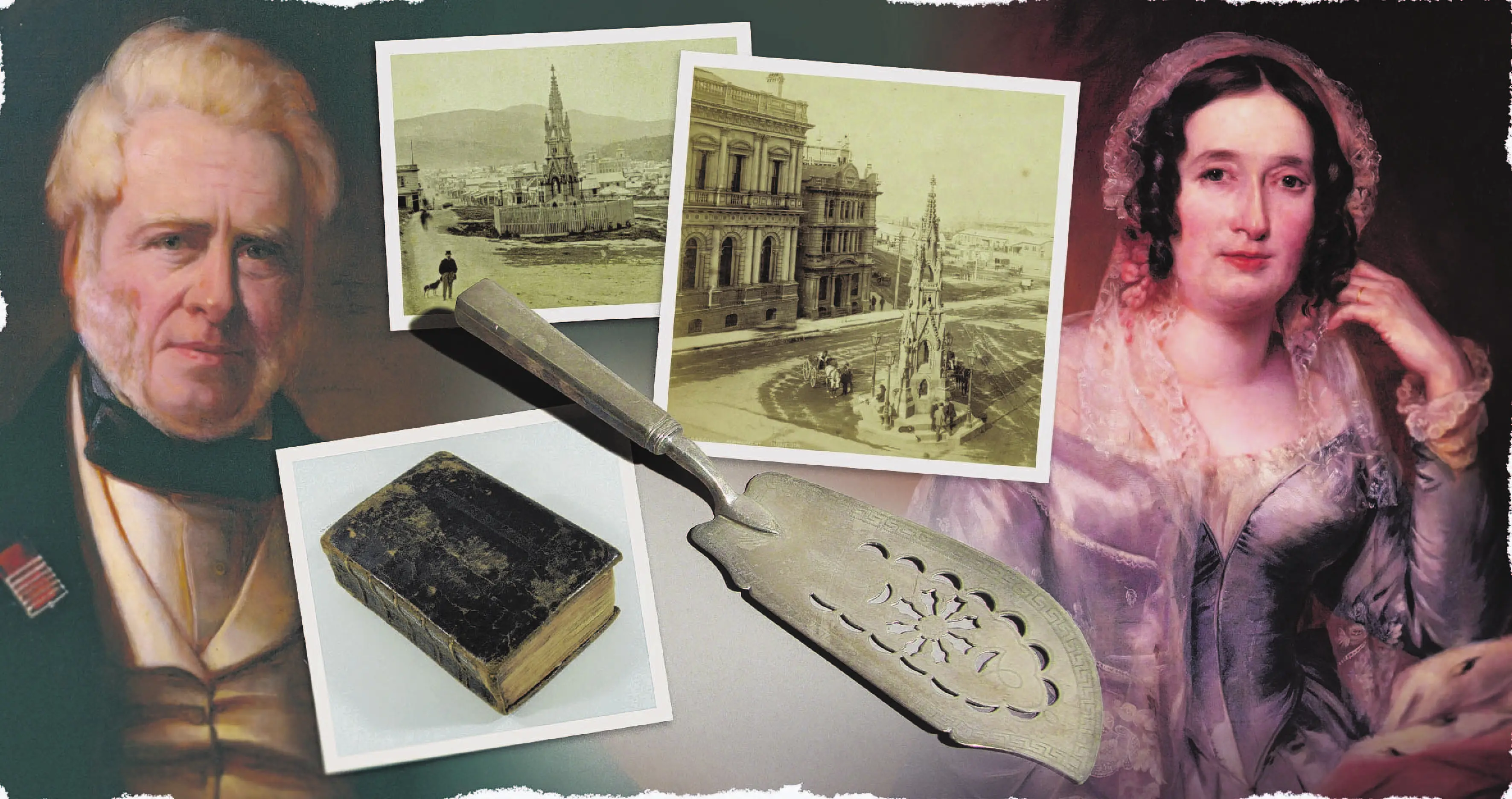
Cargill was born in 1784 in the very heart of Edinburgh. He was baptised in Tolbooth Kirk, just a stone’s throw from the historic spot where one of his forbears - Donald Cargill - had been executed during Scotland’s 17th-century religious wars. William grew up with great pride in his association with that famous Protestant martyr and owned his relation’s Bible, now a Toitū collection treasure.
William’s father was a "writer to the signet", an exclusive group of Scottish solicitors. Unfortunately, he was also an alcoholic who died when William was 15. This left the family in a difficult position financially, but Cargill’s mother was able to see her sons well educated and into professional careers. William went into the army, serving under the Duke of Wellington in the wars with Napoleon on the Iberian Peninsula, as well as in India and Ireland. He was severely wounded in 1810 at the Battle of Bussaco, but recovered and returned to service.
In 1813 he married Mary Ann Yates, the step-daughter of a fellow officer in the 74th (Highland) Regiment, while still serving in Portugal. The silver fish knife on display in the museum’s New Edinburgh gallery was one of their wedding presents. William and Mary Ann were to have 17 children together, 10 of them surviving childhood. Mary Ann would also play a critical support role in the establishment of the Dunedin settlement.
William left the army in 1820 but continued to use his rank title "captain" for the rest of his life and proudly wore the service medals that can be seen in portraits of him in the museum collection. Like many ex-servicemen, Cargill took a while to find his place in society on leaving the army. He worked for many years as a wine merchant in Edinburgh but struggled to make a living sufficient to support his growing family and his aspirations to get ahead. He turned to banking in 1835 and moved to England, becoming a bank manager first in York, then in Norwich and finally in London.
Cargill was a very early supporter of the idea of a Scottish colony in New Zealand. By 1845 he had become the leader of the Otago settlement scheme. From his London base, he relentlessly lobbied government officials and politicians to overcome the numerous obstacles that first delayed and then threatened to prevent the settlement from happening at all. He must have been relieved when he finally set sail from London for Otago in November 1847, leading the pioneer party aboard the expedition’s supply ship, the John Wickliffe.
They reached Port Chalmers on March 23, 1848. When the Philip Laing arrived three weeks later, with the main group of Scottish settlers, Cargill gave an inspirational speech, comparing the Otago pioneers to the Mayflower pilgrims in America two centuries before. The nitty-gritty work of creating a new society then got under way. It was to prove a long and winding road, but the doughty old soldier guided the pioneers with a firm hand as the new settlement developed.
Cargill was rigid in his views about what Otago should be: an exclusive zone for Scottish Presbyterians with the Free Church at its very core. He also sometimes overreached his capabilities and let tenacity give way to plain stubbornness. Nonetheless, he provided genuine leadership to the early settlers and earned their widespread admiration. They came to revere him as the biblical patriarch who had led them to the promised land.
Cargill died in 1860, just before the Otago gold rushes. By then Dunedin was firmly established and beginning to prosper. Much of what Cargill had set out to achieve had become reality. The early settlers remembered him as a strong-willed personality who kept their best interests at heart. They erected a monument in his memory in the heart of the city. Originally it was in the Octagon, but in 1872 it was moved to the Exchange, just metres from the Toitū tauraka waka (canoe landing place) where Captain Cargill stepped ashore in 1848 and began the process of making his New Edinburgh - Dunedin - a reality.
• Sean Brosnahan is curator at Toitū Otago Settlers Museum.