
PHOTO
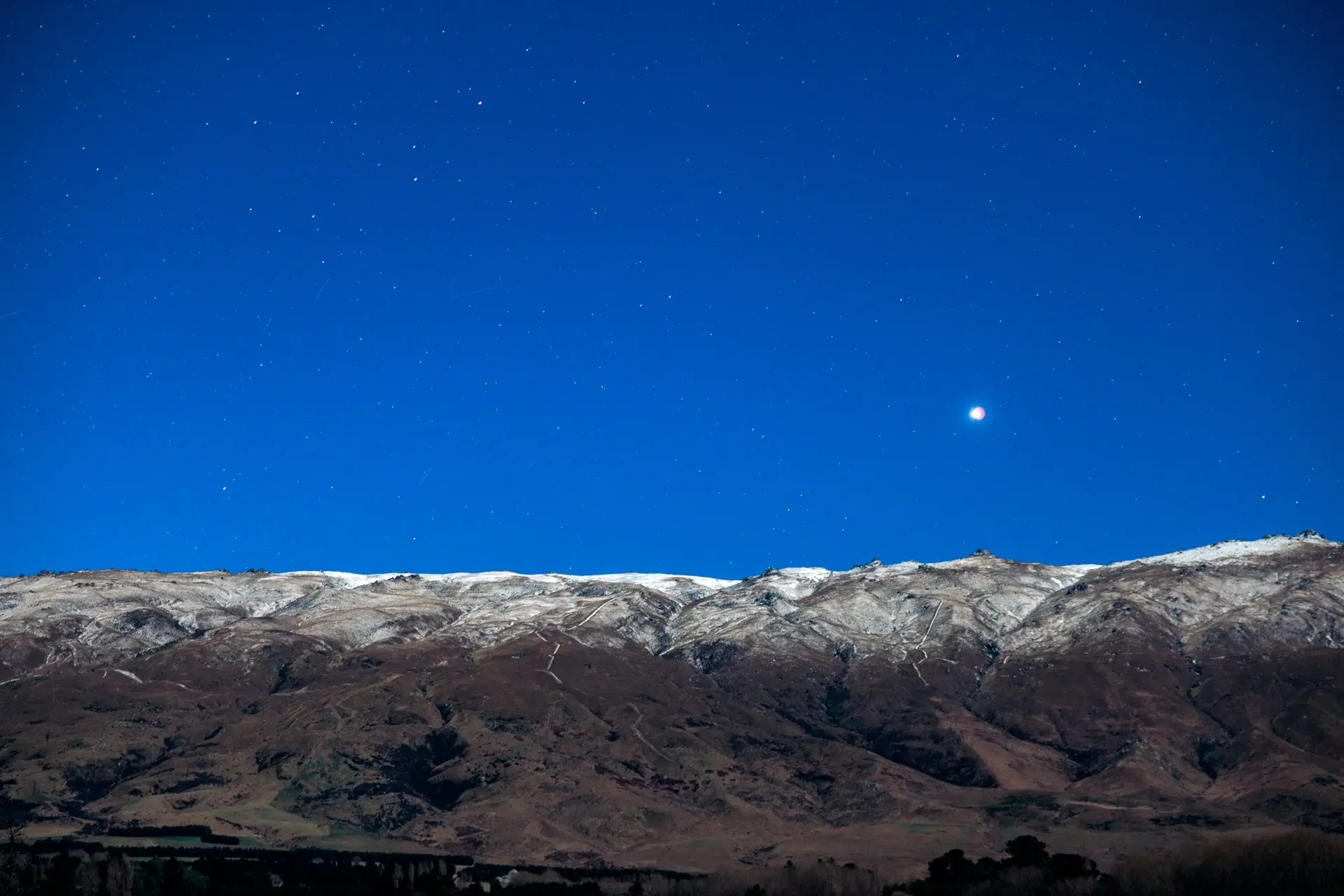
These evenings, you can hardly miss the brightest planet in the sky. If you wander out after sunset and look west, you’ll find it waiting there, shining like a lantern someone left burning above the horizon.
But that feels a bit like giving directions to a place you already know by heart.
So this weekend, I decided to follow my own advice for once.

The moon had flooded the Strath Taieri with light. Snow lingered across the crest of the Rock and Pillar Range, glowing white against a deep blue sky. To Venus’ left, Sirius sparkled furiously, flashing colours as it fought its way through the thick air above the horizon. Venus, by contrast, barely twitched. It hung there with quiet confidence, as though it knew it had nowhere else to be.
Eventually, Venus drifted down towards the mountains.
Venus slipped behind the ridge, vanished, then peeked through a saddle in the hills, only to disappear again. It made one last appearance before finally giving in to the hills for good. Only then did it start to flicker, its steady light unsettled by the cold breath rising from the mountainside.
It struck me, standing there, that we spend a lot of time treating the night sky like a checklist.
See Venus. Find Mars. Watch the Space Station.
The real pleasure, I think, comes from lingering a little longer than you meant to.
From noticing how different stars behave near the horizon. From seeing moonlight transform familiar hills into something almost other-worldly. From standing somewhere quiet enough that there are no competing lights demanding your attention.
Venus will still be there tomorrow evening, and the evening after that.
By all means, go out and look for it.
But once you’ve spotted it, resist the urge to hurry back indoors. Let yourself stand still for a while. The sky, in my experience, has a way of rewarding those who linger.