
A whip’s circuitous journey

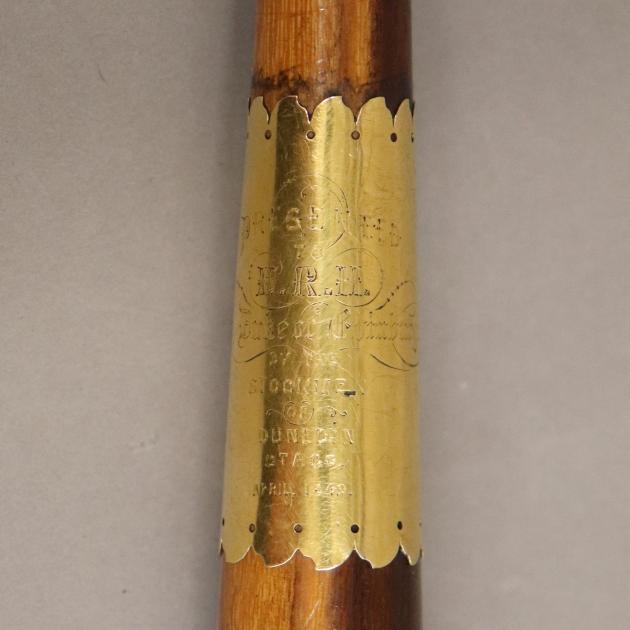
The stock whip presented to the Duke of Edinburgh. The leather thong is a modern replacement....
The stock whip presented to the Duke of Edinburgh. The leather thong is a modern replacement. PHOTOS: TOITŪ OTAGO SETTLERS MUSEUM
Excitement at Dunedin’s first royal visit was capped by gift-giving. But after one gift was given, it began a journey of its own, writes Seán Brosnahan.

In 1867 the Australasian colonies were buzzing with anticipation for the arrival of the first member of the British royal family to make a visit to Australia and New Zealand. The royal in question was Prince Alfred, Duke of Edinburgh, the second son and fourth child of Queen Victoria.

The whip’s gold dedication plate.
The then 25-year-old prince was a captain in the Royal Navy. The Australasian visit was part of a round-the-world cruise by his ship, HMS Galatea, and began in South Australia in October 1867. Over the next five months the Duke made his way through the other Australian colonies (except Western Australia) and was expected to carry on to New Zealand in November or December 1867.

Everything changed, however, when a deranged Irishman attempted to assassinate the Prince during a walkabout in Sydney on 12 March 1868. A bullet fired at point blank range deflected off Prince Alfred’s trouser braces, narrowly missing his spine.

Fortunately, he recovered quickly but the rest of the royal tour was postponed and the Prince returned to Britain. He came back the following year, however, and finally reached New Zealand in April 1869. Starting in Wellington, he made his way south to Dunedin via Nelson and Christchurch, landing at Port Chalmers on Tuesday, April 26.
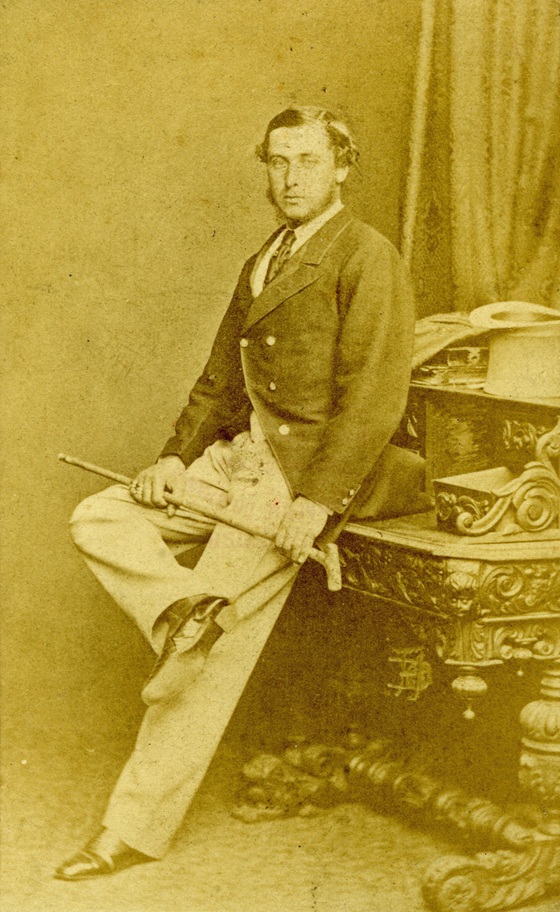
Prince Alfred, the Duke of Edinburgh.
Prince Alfred was the most illustrious celebrity to visit Dunedin to that point and the welcome for him was suitably exuberant. As the ODT recorded, “It seemed as if the citizens of Dunedin had taken an epidemic, and gone simply Prince mad.”

Over the next four days the royal visitor was feted with a non-stop succession of processions, levees, displays, balls and sports meetings, giving expression to the community’s fevered Imperial enthusiasm. It had been the same throughout the colonies; an endless parade of local notables and organisations fawning over this tangible representation of their far-distant sovereign.
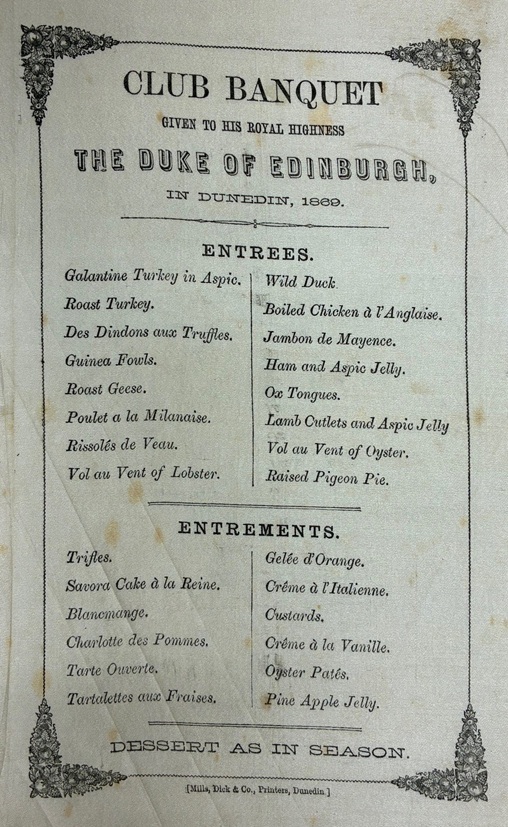
Silk programme for a banquet for the Duke in Dunedin. PHOTO: TOITŪ COLLECTION
At every stop on the royal journey gifts and presentations were also made, surely challenging the storage capacity of the Galatea’s hold. Whatever happened to it all? This stock whip presented to Alfred by “the stockmen of Dunedin” at a race meeting during the visit is one of the few artefacts that seems to have survived and is now in the Toitū collection. Its rarity as a souvenir of that first royal visit probably owes much to Prince Alfred’s subsequent history.

In 1893 he became Duke of Saxe-Coburg and Gotha, a duchy within the German Empire. After his death in 1900 he was succeeded there by his teenage nephew (and grandson of Queen Victoria) Charles Edward the Duke of Albany.

The new Duke sided with Germany during World War 1 and was dethroned in the tumultuous political upheavals at war’s end. The Duke then embraced right-wing causes in the inter-war years and was an early supporter of the Nazi Party. He was convicted by a denazification court after World War 2 for his activities. His properties and possessions were confiscated by the Soviet administration that took control of this part of Germany after the triumph of the Red Army.
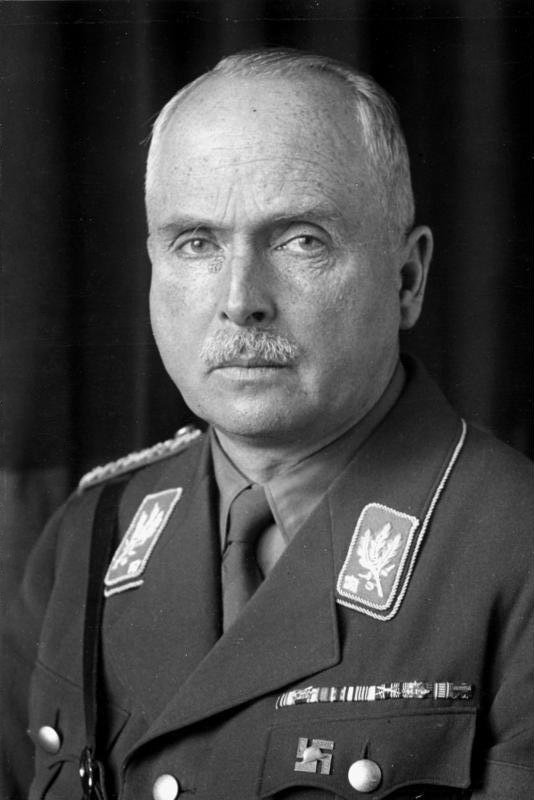
Prince Charles Edward of Saxe-Coburg and Gotha wearing his Nazi Party pin. PHOTO: WIKIMEDIA COMMONS
These periods of disruption and despoliation may have accounted for the loss of many of the colonial souvenirs that belonged to his predecessor, Prince Alfred. What happened to the Dunedin stock whip prior to its recent acquisition by Toitū remains largely a mystery.

Such gaps in provenance — the history of an object — are a real challenge to museums and in many cases cast doubt on the authenticity of an artefact or of the stories attached to it.

In this case we have corroboration from a contemporary account that describes the stock whip being presented and noting that it had an engraved inscription on its mounting: “Presented to H.R.H. the Duke of Edinburgh by the Stockmen of Dunedin, Otago. April, 1869”. This matches precisely with what we can see on the gold panel on the Toitū whip’s handle and which was made by local jeweller John Thompson Telfer.

If only we knew how the whip travelled around the world with the Prince only to end up in Tasmania, from whence it finally returned to Dunedin.

Sean Brosnahan is a Toitū Otago Settlers Museum curator.