

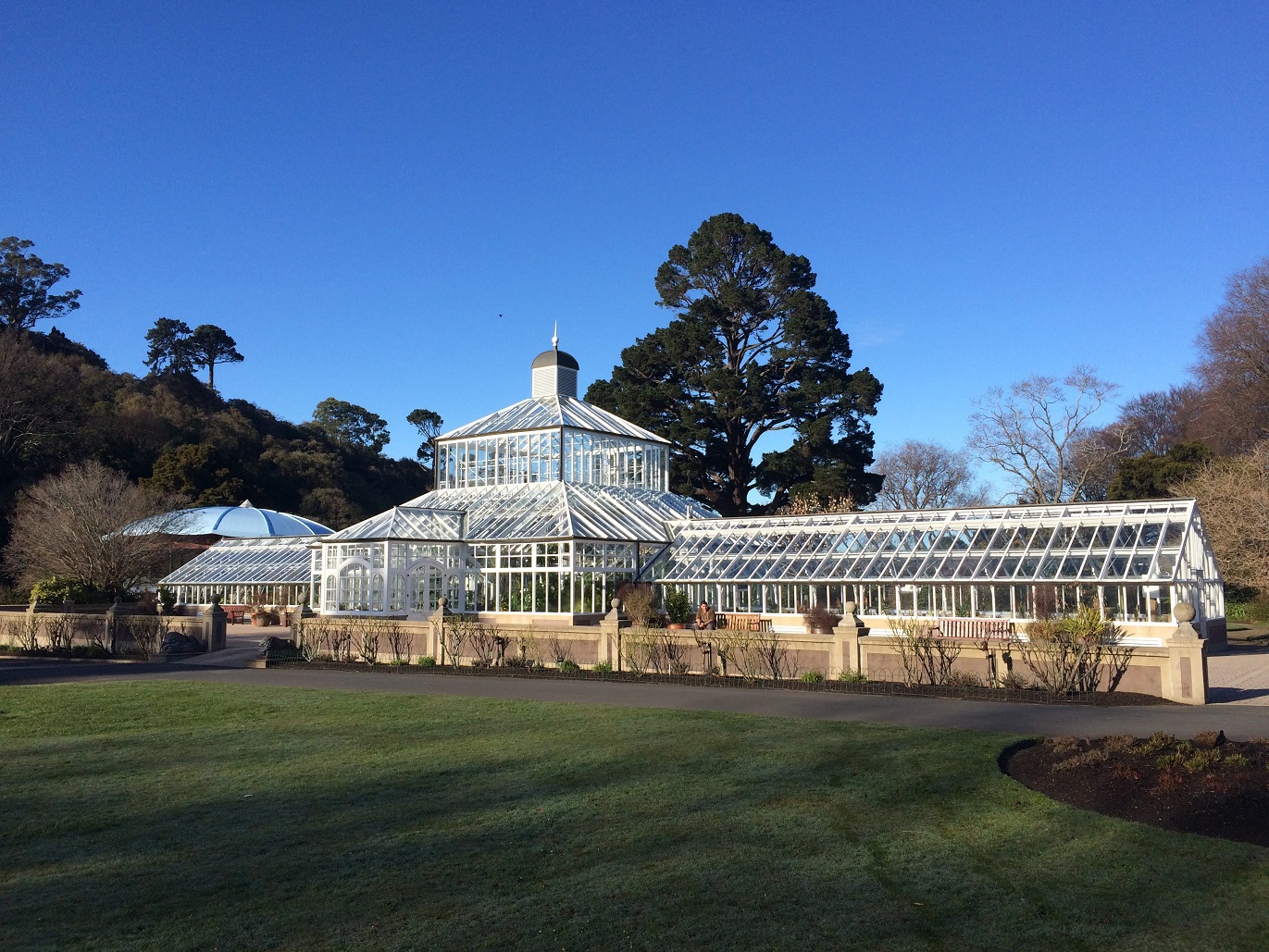
The garden boasts an elegant Winter Garden – an Edwardian glasshouse conservatory constructed in 1908 and opened in 1912. At the time it was said to be the first public conservatory in Australasia.
Winter gardens became fashionable with European nobility between the 17th and 19th centuries. They were built from iron and glass as extensions to existing residences, to house novelty tropical and subtropical plants, and were commonly used as living areas, particularly in winter. Earlier versions of the garden room concept were built from masonry with large windows and glass roofs in either Classical (Greek or Roman) or Gothic (French in origin with pointed arches) architectural styles.
The first large public winter garden was built in Regent’s Park, London in 1842-46, and led to a surge in their popularity. Winter gardens differ from greenhouses in that they are designed to be decorative, recreational spaces, rather than productive.
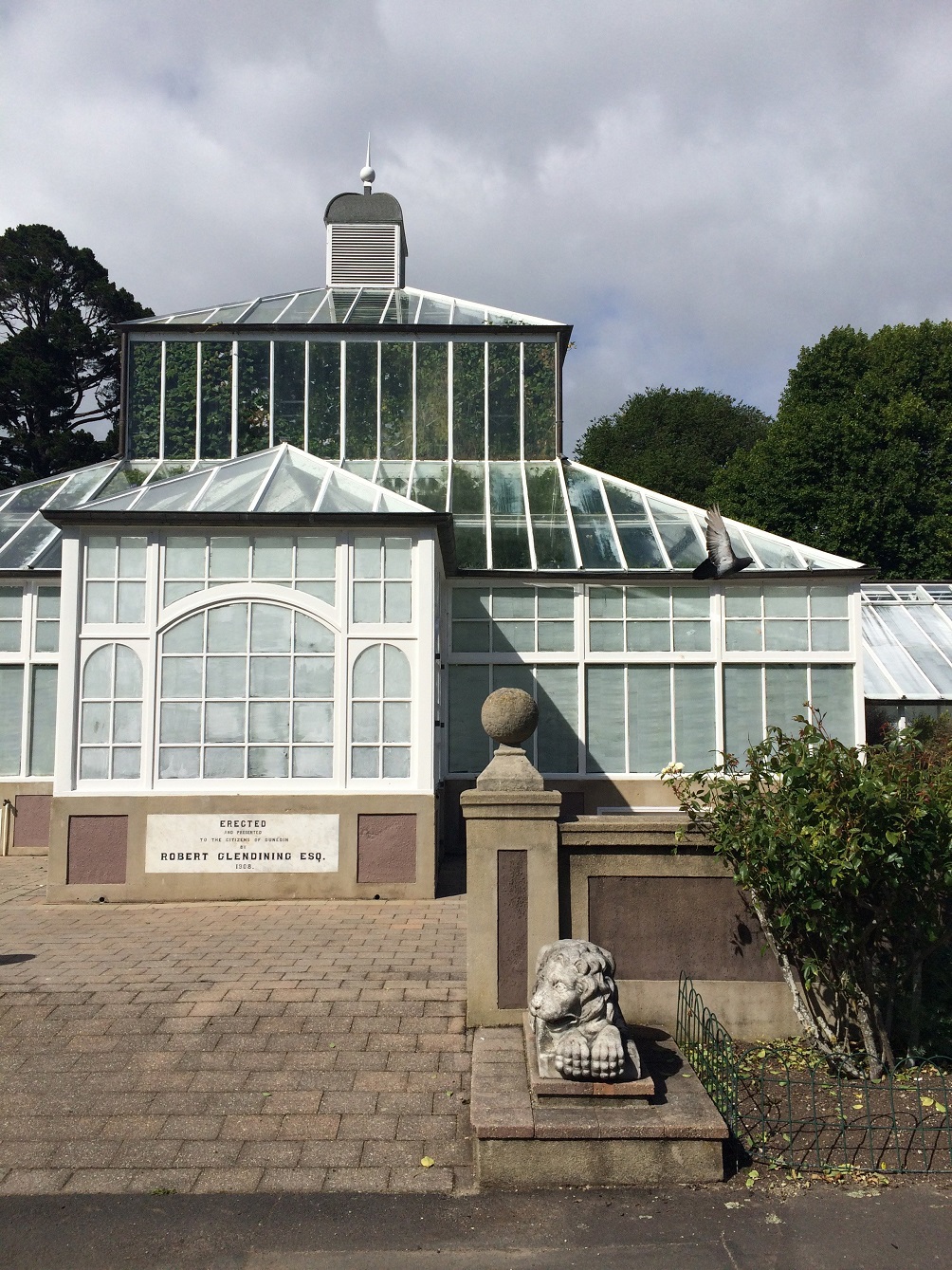
Dunedin’s Winter Garden was funded in part by a generous bequest from local businessman Robert Glendenning (1841-1917). It was based on an award-winning design by Scottish heating, ventilation and electrical engineers Mackenzie and Moncur Ltd, founded by Alexander Donald Mackenzie (b. 1836) and George Greig Moncur (b. 1839) in Edinburgh in 1869. Still in operation today, the firm became experts in the construction of hothouses (winter gardens or conservatories), heating systems (originally running on steam or gas), cooling systems (using both natural and mechanical methods), and iron founding. Clients included the British Royal Family, overseas organisations, hospitals, churches, universities and schools.
Mackenzie and Moncur subsequently expanded their services to include electricity installation in residential houses and an iron foundry to make building and horticultural components. Demand for greenhouses and conservatories declined dramatically after World War 1 because many landed gentry and their gardening staff had served and been killed in the war. During World War 2, the company supported the war effort by installing ventilation for ships, constructing ammunition boxes, and supplying castings for all three services.
Dunedin’s Winter Garden has changed over the years, with the first update — an orchid house addition — completed shortly after the conservatory opened in 1912. In 1960, the structure was modernised and many of the original Edwardian features were covered over. A subsequent restoration project in 1990 reinstated much of the original detailing.
The Winter Garden is now home to three distinct garden rooms — the Tropical House in the central part of the building (maintained at 22-28°C with high humidity), the Sub-tropical Plant Collection in the building’s east wing, and the Cacti and Succulents Collection in the west wing (maintained at a minimum daytime temperature of 18°C, with cool nights and low moisture levels). Dunedin’s ambient outdoor growing conditions are what is called Plant Hardiness Zone 9 – the same as for most of the coastal South Island and much of inland and coastal North Island south of Auckland. This means that average minimum temperatures range from -1°C to -5°C.
Further up the coast in North Otago, the Oamaru Public Gardens are also among the oldest botanic gardens in New Zealand. Officially opened in 1876, they include a Chinese Garden, band rotunda, fernery, fountain and children’s playground, and have a five-star "Garden of Significance" rating. The gardens also boast a charming Display House made from 1400 panes of glass set in timber framing and opened in 1929 to display begonias. It underwent extensive refurbishment in 2008.
In Canterbury, the Christchurch Botanic Gardens was established only 10 days after the Dunedin Botanic Garden, in June 1863, and in Timaru, botanic gardens were established in 1867 with the first glass conservatory added in 1905. Further north, Wellington’s Botanic Garden opened in 1869, while Auckland Domain served as that city’s public gardens from 1841. The official Auckland Botanic Garden didn’t open until 1982.
The book
Extracted from Take Me With You Too!: A Self-Drive Guide to Dunedin’s Engineering Heritage by Karen Wrigglesworth, published by Cliff Creatives, RRP $48


