
PHOTO
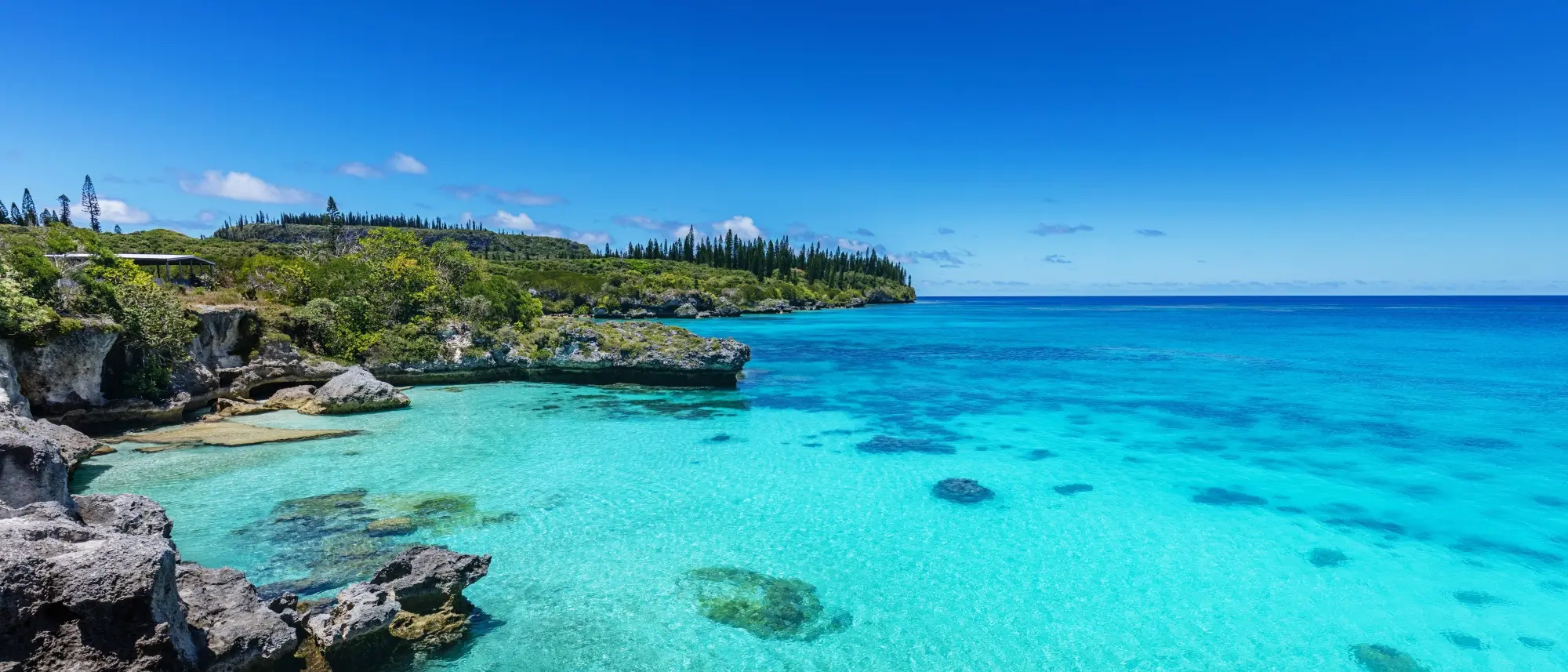
Julie Orr-Wilson wonders if knowing one French phrase and being a fan of Katherine Mansfield is enough when travelling in New Caledonia.
It was no coincidence that in my scant holiday luggage was the weighty tome, The Complete Stories of Katherine Mansfield.
Inscribed, ‘‘Julie, Christmas 1975, Much Love Mum and Dad’’, I realised then that my father would have had nothing to do with its choosing. Not now, nor then, did he know that Katherine Mansfield’s writing had been dear to me since my introduction to The Doll’s House in third form. The pathos, denouement, the psyche and social, woven in words that resonated with me.
It seemed a good idea to take out an insurance against boredom and the aim to re-read this cover to cover seemed an achievable goal.
It was never a goal or aspiration of mine to take an island holiday in the South Pacific.
I had always rejected the idea, disdainfully knowing it usually involved beaches and water. Very unappealing for someone who doesn’t even like taking a bath.
A passing suggestion from my best friend that I might enjoy the island she had just returned from for the third time and that my husband’s demise into a new decade had me want to fulfil his long-held wish to leave the South and ‘‘go somewhere warm in winter’’ gave me an inkling this could be a good idea.
That I should be more open to new experiences spurred me on.
The ‘‘no-bargain, last-minute tickets’’ were justified by my cause.
Now locked in, I began the research and came to the realisation there was little to discover.
My list of places to visit consisted of just three things — Musee de la Seconde Guerre Mondiale Museum, Arto Bello gallery, Tjibaou Cultural Centre. Was that all?
I was less heartened by my dear friend’s email — ‘‘expect nothing from NC but relaxation and snorkelling and French bread and grapefruit and other yummies at little roadside stalls, and you will be happy. NC is a shonky backwater. Love from Me’’.
The taste of another country starts on the plane. Aircalin was no exception. The attendants’ uniforms were burnt orange, representing Grande Terre’s terracotta earth. The plane’s interior was decked out in teal to mirror a World Heritage lagoon. Most of the passengers were obviously islanders.
That there were few holidaymake
rs like us struck a minor chord.
Every announcement was in French, followed by a fast and almost unrecognisable English exposition.
I didn’t mind the French. It was beautiful. What made me mad was my regret. As a third former drafted into French and Latin I had struggled to see their usefulness in my ‘‘big picture’’.
It was only when I hit fifth form, reading more Mansfield, and unable to understand her French references that I came to realise I had made a grave mistake.
Thanks to Katherine Mansfield, I knew one phrase — ‘‘je ne parle pas francais’’.
I thought back to my French teacher — the ’70s dress: walk shorts, walk socks, the reefer jacket, the dapper moustache. Thanks to his passion, patience and persistence I could say hello, good evening and count to 10.
Thanks to my friend’s detailed itinerary we had something to go on. On her advice we hired a small Peugeot.
Leaving Tontouta Airport, on th
e ‘‘wrong side’’ of the road, as I gripped my
seat I commented to my driving husband that we were just like tourists arriving in New Zealand: no test, road code or safety briefing.
He replied with his wonderings about the give way rules. I gripped my seat harder as we crawled toward Noumea, most traffic speeding past in the opposite direction.
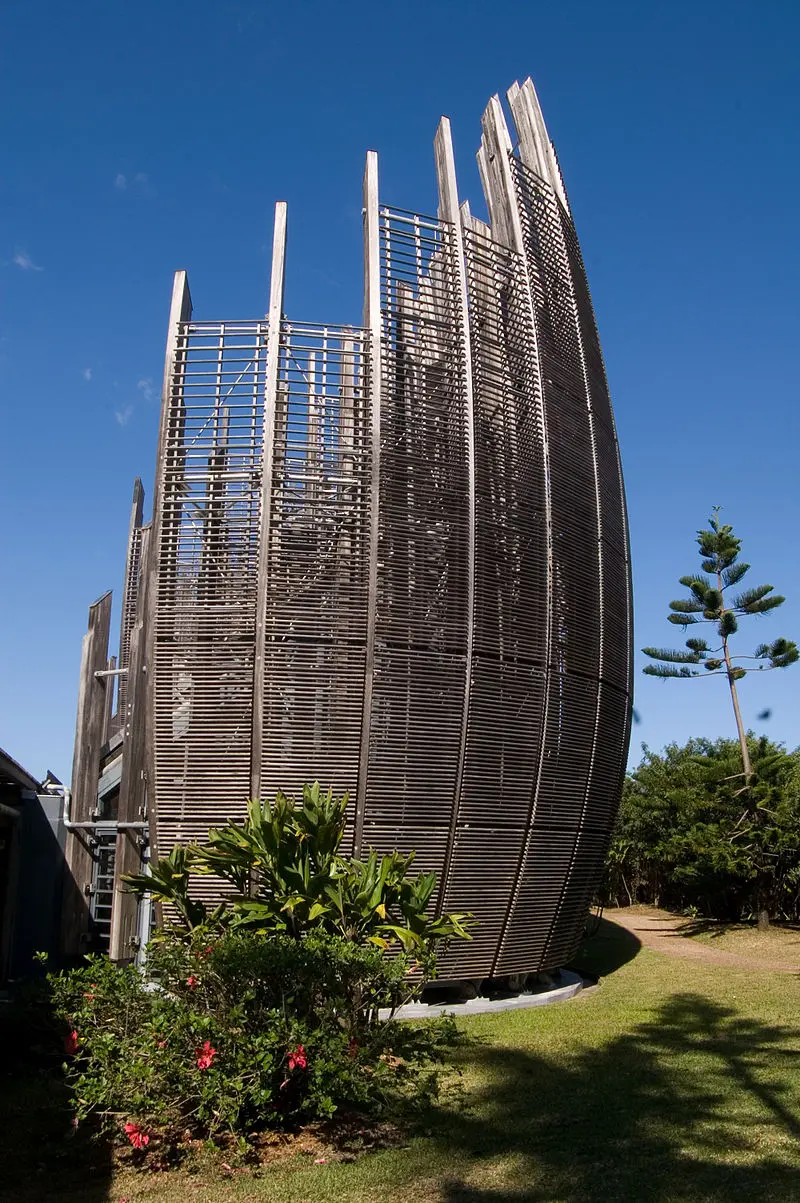
Little did we know it was Bastille weekend, a public holiday, so most things were closed. After a few attempts we found Baie des Citrons and our nondescript hotel.
It was a coincidence that Beau Rivage Hotel was the name of the Bandol hotel Katherine travelled to in January 1918.
In the evening we walked the tourist strip for dinner, settling on exquisite, expensive Japanese.
That night we slept to the sounds of the next-door disco.
I awoke to 15degC, grey skies and rain and my husband smiling, sagely commenting that he was so relieved that this hadn’t been his idea. I loved his generosity. It didn’t stop me being the one to complain.
We were hopeful a good coffee at Noumea’s food market might help us rally but all milk on the island is powdered. We managed to drink something resembling a latte and eat an oily croissant.
It was tempting to buy a gas cooker just so we could sample the fish.
What captivated me most that first morning was the Kanak women’s dress. Breaking all colour rules, the combinations of flora and fauna print fabric, combined in one single style known as ‘‘robes missions’’ were outstanding.
Introduced by the missionaries, this long, wide, loose-fitting dress was intended to cover as much as possible.
Women wearing these wildly clever, creative pops of colour on streets, in villages and in the middle of nowhere provided welcome relief from the endless tropical green.
Armed with lunch and breakfast basics — a board, knife, and a baton of bread — we headed up the west coast past small, inconsequential towns where it was difficult to make out the shops. Past La Foa, a mining service town and on to historic Fort Teremba, a former prison, for our picnic.
Our aim was to traverse across to the east coast and find a place to stay near Canala.
Hours later we reached the coast and saw a Kanak tribal village, a church and the friendly smiles of the village men watching a game of rugby.
We had no tent. The car was too small to sleep in and, buoyed up by a bar of local chocolate, we retraced our three-hour journey in the pouring rain.
What we needed to see was somewhere to stay.
‘‘Je ne parle pas francais’’, I said to a woman at a garage in Moindou.
She found us a guest house.
‘‘Je ne parle pas francais’’, I said to host Newiss but fortunately her English-speaking friend Marina took over, booking us a table at New Caledonia’s most famous fish restaurant, Naina Park at La Foa.
Here the owner spoke English, had lived in Auckland, and went to the trouble of printing out the menu in English.
We didn’t do it justice, opting only for the yellow-eyed tuna, half-roasted (I think she meant seared) with beurre blanc sauce, green beans and French fries.
That night we slept to the sound of a drunken domestic conflict outside our room.
In the morning, a good breakfast was supplied of coffee and croissant.
We drove up to the hilltop area of Farino, where, amid forest with stunning views to the coast, was a food and produce market.
Wandering the stalls with the Kanak and French locals we looked rather out of place.
This had been a fine first stop but now there was nothing to punctuate the second attempt to traverse Grande Terre.
Cattle farms rolled by. Passing a team of cowboys working a group of outstanding Brahmin-charolais cattle, I encouraged my farmer to turn back, to take a look.
Ghislain rode down like the Lone Ranger.
‘‘Je ne parle pas francais’’, I said.
We were invited for lunch and a tour of the ranch. Fifteen guests sat around the table, dining on venison, prawns, salad, bread, tuna, rice and vegetables in coconut cream, followed by cake.
Fortunately Ghislain’s partner Agate spoke English but, sadly, lost in translation, the two farmers struggled to meet. My regret deepened.
The women all speaking English conveyed unforgettable warmth and intimacy to us as guests. Genuine hugs and sadness on parting were exchanged several hours later, with a warning that we must make the coast before nightfall.
Driving in darkness in New Caledonia is a death trap, with drink-driving and speed rife. The number of crashed cars we saw on our journey was testament to this.
Back in our mediocre beach-located hotel, full of locals for the long weekend, it was raining and cold. For two days we spoke to no-one, but hand gestures and smiles got us through.
The friend’s recommendation of snorkelling was scuttled.
Table tennis was the highlight, punctuated by sleep and the book. I felt like a child counting down to Christmas when our time was up on the east coast.
Heading down to Houailou, the driving rain meant another picnic in the car.
Back in Bourail, the brand-new eco-tourist lodge Beurre Park set in farmland hills was a welcome relief. We hardly made it up the drive for the mud and rain.
‘‘Je ne parle pas francais’’, I said to host Patrick. Smiling, he replied: ‘‘It’s OK. I speak English’’.
CNN news and French channels kept us going until his wife’s homecooked dinner.
This retired Parisian couple had followed their dream of opening a lodge. They said they had never worked so hard. Patrick offered me a job.
It was tempting. I needed something to fill in the next four wet days.
We eked out the few tourist activities in Bourail, including a nature walk at Poe Beach, high above the lagoon with views of the luxury Sheraton hotel and its traditional architectural beauty.
At le Musee, it was so touching to find a New Zealand section, some paua shell memorabilia and soldiers’ kit.
Wandering the headstones in the military cemetery, we read aloud names and ages. For our last day in Noumea we planned to take a boat trip to Amedee Island.
The trip was doubful, as extreme weather was forecast. I wanted to climb the 247 steps of the 1861 lighthouse and gaze out on the lagoon. It was closed for renovation.
We went to the aquarium instead, passing all expectations of which we now had none. We saw Picasso triggerfish and long-spined glass perchlet glistening in groups like a chandelier installation.
It was enough to almost turn me vegetarian — the turtles, oh the turtles — all this beauty and I was dry.
From the golden beach of the lagoon I watched kite-surfers cutting through the frigid breeze. I watched a Kanak woman take off her sandals and sink her feet into the sand. Her bright purple and turquoise dress sang out against the lap of the lagoon. I wanted to capture her pleasure on camera but I decided against it.
History holds there has already been enough disrespect.