Most visitors are used to seeing Singapore as an avant-garde destination characterised by its tall and architecturally astute buildings, mega shopping malls, luxury hotels and manicured gardens spilling into the sea, all set against a backdrop of rapid developments and a energetic yet disciplined lifestyle.
However, eyes can’t see what really makes the character of the island nation so unique and diverse. It’s the city’s harmonious cultural tapestry which has been woven by the enduring presence of the British, Chinese, Indian and Arab settlers, all of whom have contributed towards its ongoing growth and success over the decades.

“You must venture beyond the tourist-centric Orchard Rd and Marina Bay Sands areas into unique neighbourhoods that embody this legacy,” advised Lee, a local Singaporean of Chinese descent whom I encountered during my recent trip to this vibrant Southeast Asian city.
He encouraged me to explore Chinatown, Little India, the Arab Quarter and the Colonial District. Heeding his suggestion, I visited all four areas and uncovered a different side of Singapore.

They facilitated the migration of Chinese and Indian individuals to Singapore, where they worked as labourers in tin production, rubber plantations and various other trades. Consequently, due to the large influx of migrants from China, particularly from its southeastern provinces, by the mid-19th century the Chinese constituted 50% of Singapore's population. The Arabs, primarily arriving as traders and merchants from the early 1800s, became quite influential in the region despite their relatively small numbers.
A vibrant fusion of traditional customs and contemporary style greeted me as I stepped into the historic district of Chinatown, where the shop houses shimmered with red lanterns, the scent of burning incense drifted from roadside shrines, colourful street murals adorned the walls, the aroma of soya sauce permeated the atmosphere, and groups of elderly men gathered under a corrugated tin awning, engaged in board games or reminiscing about their youth.
I strolled along Pagoda St, Temple St and Smith St, where meticulously maintained shops continue to narrate tales of merchants, clan associations, and the early life of the community.
The Chinatown Heritage Centre serves as the premier location to explore the history of the enclave. Situated within a trio of exquisitely restored shop houses, this renowned institution brings the nieghbourhood's highlights to life through various mediums, including photographs, personal stories and re-created settings.

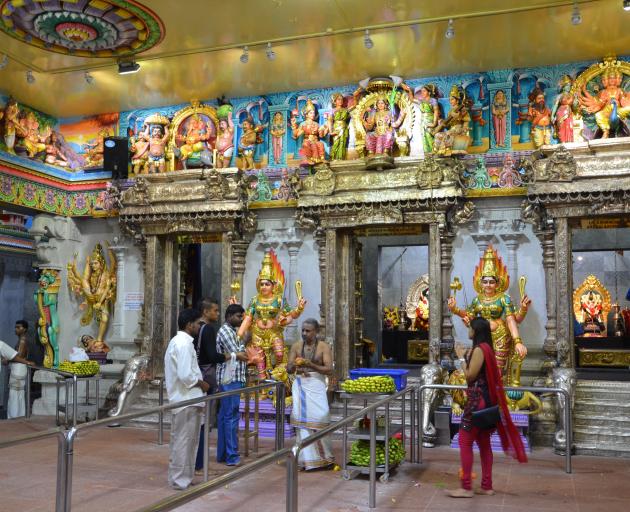
The vibrancy persisted, but the scenes transformed as I ventured into the Little India district, where, much like mother India, visitors are welcomed by crowds, chaos and cacophony. The historic enclave, which stretches along both sides of Serangoon Rd, showcases the finest aspects of Singapore’s Indian community, from its lively culture and colourful lifestyle to remarkable shopping and delicious dining.
The two-storey shop houses, adorned with intricate and colourful plasterwork facades, which contribute to the district's distinctive character, immediately captured my attention. These shops offer a wide array of items that can be categorised as ‘‘Indian’’, ranging from rice, lentils, and spices to framed images of Indian deities and piles of magazines published in India.
In addition to tourists, the main street and its side alleys are predominantly filled with local Indians, dressed in their traditional attire such as saris and dhotis, which made me feel as though I was wandering through the streets of Chennai or Mumbai. The aroma of frying samosas and pakoras coming from the roadside kitchens heightened my appetite, while the vibrant colours and sparkle from numerous sari and jewellery shops captivated my gaze.
The various scenes I observed in Little India were quite fascinating, such as roadside tailors on the footpaths stitching clothes with century-old foot-powered sewing machines, fortune tellers clad in saffron using a parrot to select a card from a box to predict the future for their clients, roti makers at modest Muslim eateries skilfully tossing paper-thin dough into the air before placing it in the frying pan, and hairdressers providing shoulder massages to their clients, likely employing a traditional Indian method.

The colonial district is the hub of the former British administration. The area is packed with several grand buildings many of which have been transformed into museums that vividly showcase the city’s history and cultural diversity through various exhibits. However, the showstopper of the district is the 1887 established Raffles Hotel, which stands as a beacon of classic colonial architecture perfectly preserved among its modern high-rise neighbours.
I ended my cultural exploration at their famous Long Bar, where I enjoyed the nation’s most iconic beverage known as the Singapore Sling, a gin-based cocktail that was originally crafted at this location in the early 20th century by a Chinese bartender named Ngiam Tong Boon. The drink blends Western gin with tropical Southeast Asian ingredients like pineapple juice, expressing the cultural fusion that personifies the nation.
 Legendary Raffles Hotel Singapore.
Travel notebook
Legendary Raffles Hotel Singapore.
Travel notebook
Getting There: Fly Air New Zealand (www.airnewzealand.co.nz) from Dunedin via Auckland to Singapore.
Stay: Mondrian Singapore Duxton (www.mondrianhotels.com) located just minutes away from the heart of Chinatown.
Eat: Kolkata Beacons (www.kolkatabeckons.com.sg) in Little India for authentic delicacies from different parts of India.